In one of P B Srinivas’s and S. Janaki’s best songs, “Maali,” plays the flute (T R Mahalingam). The sound of the flute evokes the call of the cuckoo and the chirping of sparrows. Listening to the song, one feels and sways to the thendral or southern breeze.
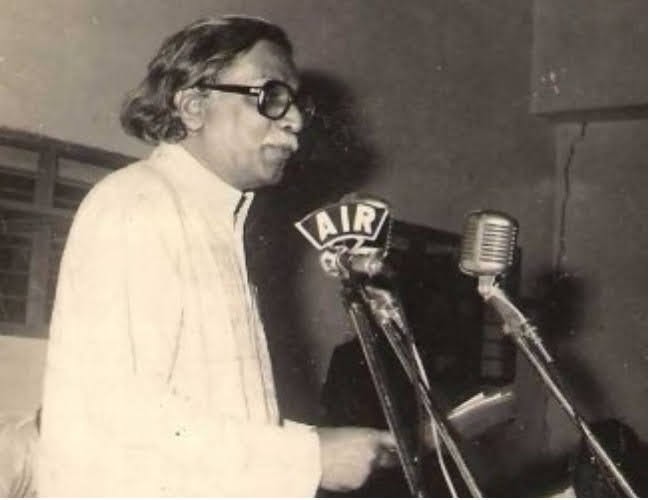
“Oru vattom koodi en ormakal meyunna…” is a song that any Malayalee with musical taste will recognize. Many of us are aware that ONV’s poem inspired it. However, few people remember the composer of this piece, M.B. Srinivasan. This is because MBS was a private person who let his work speak for itself and did not interact with the media.
MBS made a significant contribution to film music by introducing Yesudas, who became a pillar of Malayalam film music. MBS gave Yesudas his first solo song, “Jaathibhedam Mathadvesham,” in “Kalpadukal” (1961), as well as his first duet with Shanta P Nair a famous artist then, in the same film. , In a function to honor Shanta P. Nair, Yesudas said that on hearing that she was to sing with a newcomer, she said, “Aa kutti paadikote, athine enda,” meaning, let the kid sing, it’s OK.
MBS collaborated with all the great singers of the time. S Janaki won a national award for her song “Ettumanoorambalathil…” MBS was once again the man who gave P Jayachandran his memorable award-winning song “Ragam Sree Ragam…” He wrote the lyrics for Usha Uthup’s movie hit “Peethambara O Krishna.”
Birth and childhood
Manamadurai Balakrishnan Srinivasan was born in 1925 to a wealthy family in Chittoor, Andhra Pradesh. Even though neither of his parents was a professional musician, he was exposed to music at a young age. He attended P.S. High School and Madras Presidency College for his secondary and higher education, respectively. During his college years, he was drawn to Marxist principles and became a full-time member of the Communist Party. He was appointed Secretary General of the All-India Student Federation. He also belonged to the Madras Students Organization (MSO). While in college, he was involved in and led numerous anti-colonial agitations. This led him to establish the Madras Youth Choir, which I will discuss later. At the time, Bharatiyar’s songs instilled patriotic fervor, and the freedom struggle was nearing its conclusion.
Meanwhile, MBS, the nephew of CPI leader M.R. Venkatraman, moved to Delhi to work as a private secretary to CPI leader A.K. Gopalan. He was drawn to the Indian Peoples Theatre Association (IPTA). This association assisted him in becoming acquainted with regional strains of plays and music in various parts of the country.
Meanwhile, he met, fell in love with, and later married Zahida Kitchlew, a Kashmiri Muslim and the daughter of freedom fighter Dr. Saifuddin Kitchlew. Pt. Jawaharlal Nehru married them.
Film Music
MBS studied Carnatic, Hindustani, and Western music in the meantime. In 1959, he decided to make a career out of tune.
He worked in the Tamil film industry with director Nimai Ghosh. Both were key figures in the leftist Kumari Films. Its most well-known film, “Padhai Theriyudu Paar,” featured the famous song “Thenankeetru Oonjaliley…” written by Jayakantan and set to the xylophone. He only appeared in about 8-9 films in the Tamil film industry. His political beliefs hampered his Tamil career, so he turned to Malayalam films.
MBS’s most well-known compositions are in the Malayalam film industry. Adoor Gopalakrishnan, MT Vasudevan Nair, Hariharan, K.G. George, Mohan, Lenin Rajendran, and others came to MBS to set music for their films. The ONV-MBS combination produced some of Malayalam film music’s best songs. “Oru vattam…”, “Nirangal than…”, “Manthram pole…”, “Bharatha muniyoru…”, “Ente kadinjool…”, and so on. MBS and ONV’s communist sympathies, combined with their mutual respect, resulted in rare chemistry that gave birth to unforgettable songs.
The challenge for any music director is to have their identity while also being versatile. MBS songs are easily identifiable. He was also versatile enough to provide songs in a variety of styles. Semi-classical (“Ragam Sree Raagam..”), Melody (“Thenankeetru Oonjaliley…”, “Saradindu..”), Western/Pop (“Peethambara..”), or Folk (“Neelakkuda choodi..”, “Machane..”). Although he was not Malayalee, he composed the tune only after the lyrics were written. He deeply respected poets and their works, and his music never distorted or overpowered the vocals. His songs were always challenging, so they didn’t become as popular as songs by other music directors.
MBS saw film music as more than just songs. He was an expert at re-recording. He knew exactly where to use which musical instrument to highlight or underline a scene. He demonstrated how a background score could add meaning to a film through the careful use of tools. He even composed scores for films in which other composers wrote the songs. He demonstrated that silence could be used effectively as music by sparing with BGM. Some of his films had no vocals at all.
Activism
He founded the Madras Cine Musicians’ Union and several South Indian Cine Technicians’ Unions. He ensured that musicians were paid on time (spot payment), and their wages were determined based on their skill and experience. He also assisted in regularizing their working hours. While he worked to improve workers’ security and status, he also reminded them of their role in completing the work. He believed in responsible union activity.
MBS spearheaded the fight to ensure song composers and poets’ performance rights through the Indian Performing Rights Society (IPRS). The result of a European concept is that whenever a song is played on radio and television or in hotel lobbies and public places, the composer and poet receive a royalty payment. This has ensured a reasonably good source of income for people who had many hits in their prime but were no longer active. He served as Chairman of IPRS until his death.
MBS played the lead role of an eccentric professor in John Abraham’s “Agraharathil kazhuthai.” This film became one of the most well-known and perhaps controversial films in Indian cinema history. MBS, being a multi-talented individual, jumped right into the role and excelled.
He worked for the Central Censor Board for a short time. He also served as an adjudicator for numerous national and international music competitions. He was a member of the Sangeet Natak Academy and other cultural organizations.
Death
On March 9, 1988, M.B. Srinivasan died of a heart attack in Kedamath, a small village in the Lakshadweep islands. His son Kabir and wife Zaheeda survived him. Kabir passed on April 4, 2009, and Zaheeda passed away on October 23, 2002.

 Nalla Madras