Elis R. Dungan, the man who introduced MGR to Tamil films

Birth
Elis R. Dungan, or Dungan Ayya, as he was popularly known, was born on May 11, 1909, in Barton, Ohio, U.S.

In the early 1930s, foreigners were addressed as ‘master’ while Dungan was called Dungan Ayya, a more endearing term than ‘master.’ His first forays into photography came about when he bought a box camera to take pictures for his school yearbook. That was his first brush with photography.

Early days
Later, after having saved up enough money working in a gas station, Dungan traveled to Spain and bicycled through most of Spain. He later ended up in Paris, France, where he got a job in the American Library. Duncan’s interest in photography grew during his two years at the Library, and he began doing exhibitions. The library director asked Duncan to take his photography seriously and said he would sponsor him for a university course. That’s how Duncan returned to America. He enrolled at the University of Southern California in cinematography.

Serendipitous meeting
There he met with M. L. Tandon, serendipitously, the son of a wealthy film producer who invited him to visit India. Tandon wanted Dungan to direct Indian movies and raise them to the level of the existing Hollywood productions for viewers in India and the world. It was to be a six-month trial run. Manik Lal Tandon directed the 1935 Tamil film Bhakta Nandanar (transl. Devotee Nandanar) with K. B. Sundarambal, a Carnatic singer and stage artist, and made his film debut. 

This was also Ellis R. Dungan’s first film. There is no known print of the film, making it a lost film.

In a later interview, Duncan remarked that the six-month stint ended as a fifteen-year journey with the Indian movie industry.

Indian cinema in the 1930s
In the 1930s, the Indian film industry was at a nascent stage. Drama troupes were made to stage their plays in a studio. Nothing had to be done. The actors knew their dialogues, and everyone knew their part. A static camera was placed, and the stage was adequately lit up. This meant boring long shots, and most films had a theatrical feel with the actors exaggerating their emotions and delivering their dialogs at the top of their voices.

Changes to Indian Cinema
Dungan changed all that. He said that he had a tough time sobering down the actors of those days and getting them to deliver the dialogs in a normal tone. Most actors in those days were chosen more for their singing talent than their acting prowess.

Dungan struggled to get the actors to emote naturally during the close-up shots.

Dungan was also credited with using mid-range and close-up shots of the scene instead of a long static shot. He introduced a lot of Hollywood technics in his Tamil films, despite technical limitations at that time.

Around the same time, Himanshu Roy’s Bombay Talkies had hired a German crew led by Franz Osteen. Franz worked from 1935 until 1939 and directed the film Achuth Kanya, which starred Devika Rani and Ashok Kumar and was a super hit.

Ellis R. Dungan popularized contemporary makeup, the moving camera, and cabaret dance numbers for Tamil Cinema and moved Tamil cinema away from stage plays’ influence. Dungan, who trained in Hollywood, introduced some crucial techniques to the industry at its infancy in each department, which would have a unique place in its history.

Dungan also introduced the track and trolley to Indian cinema. In fact for a long time, it was called the Dungan track-and-trolley!

Popular films of Ellis Dungan
Dungan mainly worked on religious and historical films during the earliest days of Tamil filmmaking; the movie is talked about because it has daring close-up scenes. It was with Iru Sagodarargal (1936) that Dungan emerged as the leading filmmaker of the newly developing Tamil film industry. The film was shot in Bombay in the Saroj Filmtone studio. It was pivotal to establish a more polished film language for Tamil films, mainly merely photographed dramas and little else. Iru Sagodarargal (1936) is one of Dungan’s best-known films and one of his favorite. In a language and culture that he knew nothing about and was unfamiliar with Tamil. He hired translators, known as rush directors, who were fluent in English and Tamil.

Although born as an Irish American, Dungan made highly appreciated devotional and historical films like;

  1. Sathileelavathi (1936),
  2. Iru Sahotharargal (1936),
  3. Ambikapathi (1937),
  4. Sakunthalai (1940),
  5. Meera (1945),
  6. Ponmudi (1950) and
  7. Manthirikumari (1950)

The film Ambikapthi, starring the then superstar, M.K. Thiagaraja Bhagavathar, had the famous kissing scene with M.R. Santhalakshmi. It is said many returned to see the kissing scene repeatedly! Many at that time felt that M.K.T. did not know how to act. However, the same film was remade in 1957 with Shivaji Ganesan, one of India’s finest, in the lead. Many felt the earlier Ambikapathi was much better. Dungan’s Ambikapathy was filmed based on a Romeo and Juliet style, including the balcony scene, which resembled a Hollywood production.

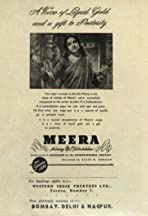
Meera, starring M. S. Subbalakshmi Meera is a 1945 Indian Tamil-language musical drama film directed by Ellis R. Dungan and written by Kalki Krishnamurthy. 

The film, based on the life of the 16th century mystic and poet Mirabai, stars M. S. Subbulakshmi as the title character, a zealous devotee of Krishna who considers him to be her husband. 

Despite marrying Rana (Chittoor Nagaiah), she lives her own life, which her husband and family find unacceptable. 

Sadasivam wanted to make a film that would make his singer wife Subbulakshmi’s music accessible to the general public, so he began looking for a good story; Subbulakshmi chose Meera’s story. 

To maintain credibility and historical accuracy, the film was primarily shot on location in North India, including Jaipur, Vrindavan, Udaipur, Chittor, and Dwarka, at Newtone Studio in Madras. 

Meera was released on November 3, 1945, Diwali day, and quickly became a critical and commercial success. 

This prompted the production of a Hindi-dubbed version, with a few scenes reshot, which was released two years later on November 21, and was also a success. 

Despite the fact that the Hindi version made Subbulakshmi a national celebrity, it was her final film as an actress, after which she decided to concentrate solely on her musical career.

Introduction of M.G. Ramachandran
Ellis Roderick Dungan made his directorial debut with Sathi Lilavathi, the first film of the future Tamil Nadu chief minister, M.G. Ramachandran. Dungan had no Indian language skills, an issue that never affected his career as a filmmaker in Indian languages, mainly Tamil.

Dungan directed some renowned Tamil movie actors in his director role, including M. G. Ramachandran in Sathi Lilavathi, T. S. Balaiya, Kali N. Ratnam, and N. S. Krishnan. He was acknowledged for introducing various new techniques in Indian cinema.

Role in the Second World War
During the Second World War, the American Cinematographer made A Short-Return Soldier (1945), a Tamil movie starring T. S. Balaiah, to support the war effort.

From 1941-1945, the United States entered the Second World War. Dungan served as an official photographer for the Madras Government and made wartime newsreels, propaganda films, and a handful of documentaries for The Indian News Parade.

He also filmed the final journey of Mahatma Gandhi.

Return to the USA
Ellis R Dungan returned to the States. Before his final Tamil film, Manthiri Kumari was completed. His wife, Elaine Dungan, who was not an Indophile, didn’t share his passion for making movies and wanted to return to America. So, she gave him an ultimatum, which I am guessing went something like this: either me or the film. So, like any good husband, he dropped his project and returned to the States. T R Sundaram, the studio owner, completed the film. Thus, his last film in Tamil was Manthiri Kumari in 1950. Karunanidhi was the scriptwriter for this film, and much alliteration and social ideology were heavily promoted in the film’s dialogues.

Interestingly, Karunanidhi wanted M.G.R. to be the lead. Still, Dungan felt M.G.R. was not photogenic enough for the role because M.G.R had a cleft in his chin. Ultimately a compromise was reached, and in Mandiri Kumari, M.G.R is seen sporting a small goatee to hide the notch in his chin!

Projects in America
In America, he formed Ellis Dungan Productions, which made documentaries, industrial films, and similar films for almost two decades, starting in 1963.

An American in Madras, a documentary film by U. S. based filmmaker Karan Bali, examines Ellis R. Dungan’s contributions to the art of cinematography and his later years as a director of documentary films. The hour-long documentary on Dungan was made in 2013 using information from West Virginia state archives and interviews with people who knew Dungan.

Ellis R. Dungan, the man credited for launching M.G. Ramachandran into Tamil filmmaking with his 1936 movie Sathi Lilavati, passed away in Wheeling, West Virginia, in 1958. He was paid Rs 100 to make his movie Sathi Lilavati.

“Of all the Tamil stage-movie films that I directed in India, my Meera is considered my best film by my peers and the critics in the field,” said Dungan.

I am inclined to agree.

M.K. Thiagaraja Bhagavathar – the first Tamil film superstar

M.K.T.

MKT’s birth

Mayavaram Krishnasamy Thiagaraja was born on March 1, 1910, to Krishnamurthi Achari and Manikatthammal. His place of birth was close to Mayiladuthurai Town in Mayavaram, Tamil Nadu. The family occupation was making gold ornaments; the Visvabrahmin goldsmiths.

Krishnaswamy Thiagaraja later became a famous South Indian actor in Tamil films. He adopted the stage name Thiagaraja Bhagavathar, also known as M.K.T. He also worked as a producer and Carnatic music singer. M.K.Thiagaraja Bhagavathar is also widely considered the first Tamil cinema superstar.

The first superstar of Tamil films

Critics and movie historians have acknowledged Bhagavathar as the first Tamil cinema superstar. Together with Chinnappa, another famous actor, set the double-star culture that still rules the Tamil industry. MKT achieved demigod status in Tamil Nadu. From 1934 to 1959, Bhagavathar appeared in 14 films, 6 of which were box-office hits. 

Between 1934 and 1944, Bhagavathar made nine films, all hits. The movies were Pavalakodi, Sarangadara (1935), Sathyaseelan (1936), Chintamani, and Ambikapathi , Thiruneelakantar, Ashok Kumar (1941), Sivakavi (1942) and Haridas.

In 1937, Bhagavathar was cast as Bilvamangal in the Chintamani, directed by Y. V. Rao. The film was the second consecutive success for Bhagavathar in 1937, breaking records established by Chintamani. Bhagavathar’s next film was his production, Sathyaseelan (1938), which performed laudably. Bhagavathar’s second movie, Naveena Sarangadhara (1936), was directed by the film’s director again, K. Subramaniam, and was based on the play Sarangadhara.

In 1937, Bhagavathar was offered the lead role in Ambikapathy, made by American film director Ellis R. Dungan. The master filmmaker, K Subramaniam, saw a Hindu mythological drama. The play was Pavalakkodi (Coral vine), where Bhagavathar played the role of Arjuna. Thoroughly impressed by the performance, the genius moviemaker planned a movie in which Bhagavathar would star. Thoroughly impressed with the performance, businessman Lakshmana Chettiar decided to produce a film based on the same story, with Bhagavathar playing the lead role.

One of the immortal melodies of Tamil Cinema, which is classical Carnatic based, Elam inba mayam, was sung by M.L. Vasanthakumari-P. Leela as a duet, in Manamagal (1951), produced and directed by the iconic personality and comedic supremo, N. S. Krishnan.

Haridas – the film that held a record

Madurai-based distributor Royal Talkies released the movie Haridas starring the first Tamil film superstar, M.K. Thyagaraja Bhagavathar, in Tamil Cinema. The movie was released on October 16, Diwali day, 1944. Haridas created the record for the longest consecutive run in a single theater in Broadway theatres for 784 days. This record was, however, broken by Chandramukhi (2005), starring another very popular actor Rajanikanth.

M.K.T. was very popular, but his fame ended when he was arrested in 1944 for murdering Lakshmikanthan. 

First signs of trouble with the press

C. N. Lakshmikanthan was a well-known Madras Presidency film journalist. His foray into journalism began in 1943 when he launched Cinema Thoothu. This film weekly magazine was highly successful due to the extensive gossip columns. Many actors and actresses responded by shelling out big bucks to “buy” his silence. As a result, Lakshmikanthan established a prosperous career. 

Lakshmikanthan attempted to run the magazine with forged documents but was forced to close shop after a few months. Things came to a halt when film actors M. K. Thyagaraja Bhagavathar and N. S. Krishnan, as well as film director Sreeramulu Naidu, submitted a memorandum to Madras Governor Arthur Oswald James Hope, requesting that the magazine’s license be revoked. Governer Hope complied, and the magazine’s license was revoked.

Unfazed, Lakshmikanthan launched a new magazine, Hindu Nesan, in which he continued his scandalous stories about Bhagavathar, Krishnan, and a few other top actors, actresses, and film people of the time. The strategy paid off handsomely, and Lakshmikanthan purchased his printing press.

Life after jail time

Although M.K.T. went on to appear in Tamil films upon release from jail, none of them did very well. Before he was arrested, he had signed on to do another 12 films but lost interest, and the few films he did post-release were unsuccessful. In 1934, the film Pavalakkodi was made by Krishnasamy, Thyagaraja Bhagavathar, which began as a successful stage play performed by an ensemble that toured Tamil Nadu, Sri Lanka, Malaysia, and Singapore, where the play was staged hundreds of times.

He is considered one of the most successful Tamil movie actors ever.

The entry of the atheist movement in the industry

It is believed that M.K.Thyagaraja Bhagavathar’s absence from the film industry allowed Dravidian atheist movements to enter and make their mark on the Tamil film industry.

His end

On November 1, 1959, the superstar M.K.T. died in Madras. 

His mortal remains were brought to his Tiruchi home and buried at the Sangliyandapuram community cemetery.

Cited Sources

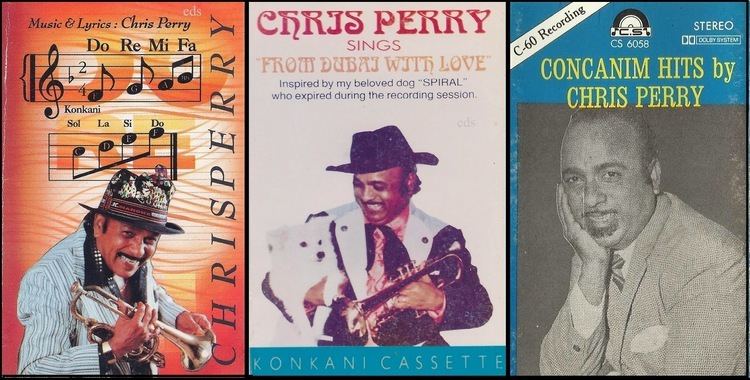
Chris Perry – arranger and the re-inventor of Konkani pop

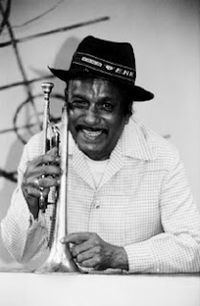
Chris Perry – image courtesy Alchetron

Chris Perry was born in Borda in 1928 as Kristovam Pereira, the second of eight children born to Agostinho and Espiciosa Pereira.

Goa, the smallest Indian state, located on the Arabian Sea in southwestern India and was a Portuguese territory from 1510 until 1961. While Konkani is the official language, most Goans were taught in Portuguese before 1961. Many Goans are Catholic, speak Portuguese, and hold Portuguese family names. Goa was India’s most Westernized region during Portuguese colonization and 19th-century inflows of British and other Westerners. It is a home of Western music, with Goa being the home to most Indian jazz musicians.

Perry was raised in a musical family and began performing on the tiatr (musical theatre) stage at a young age, playing the role of Bab Pinto. He began to produce his own Tiatr plays and is known for the plays Noxibantlo Nhovro, Padricho Lob, and Vid Mog Kornaranchem in the region.

He became an accomplished musician, especially in the trumpet and the saxophone. He was known for perfect timbre (absolute pitch) and his ability to change between the trumpet and the saxophone mid-song. He was also a prolific singer-songwriter, having written several hits during his era.

Perry infused jazziness in the traditionally Goan music while Anthony Gonsalves, another arranger and violinist, helped introduce Western sounds to Bollywood.

Chris started working in the Bombay movie industry as a violinist during the 1940s, becoming one of Bombay films’ most important arrangers of music. He performed in many Hindi films, notably Kabhi Kabhi and Trishul.

One of the more recognized acts from the 1970s scene was trumpeter Chris Perry and singer Lorna Cordeiro, the resident artists at the Venice club in Central Bombay. Chic Chocolat, the trumpeter, became a fixture in downtown Bombays Taj Mahal hotel, (click on link to listen) working with Chris Perry, the genius who had re-invented Konkani popular music. (click to listen) If you read my article on Chic Chocolate, that is the same Chris Perry I am referring to. Perry moved between Bombay and Kolkata (now Kolkata) in the late 50s and had his own band, The Chris Perry Band.

Chic Chocolate – Taj Mahal Foxtrot

Perry had to engage in an accepted practice of finding gigs, even after making a name for himself. Goan musicians met at Alfreds, a Kolkata restaurant, every morning. Perry, Tony Cyril, Dennis Vazo, Johnny Rodriges, Johnny Baptista, and Mike Machado had tables. Anyone planning a nighttime event would “book” musicians, for example, “one trumpet, and one piano”. . Each musician was paid Rs. 15, and Rs.18 if he wore white jackets and black trousers.

Bombay was a very cosmopolitan city by the late fifties, and people came from around the world. Everything was becoming Westernized, with Western influences flooding, especially fashion and music. The best restaurants served Western food and had dance floors featuring Jazz bands. La Bella, located in the Bombays Fort area, was at the top of the list of such restaurants.

Everybody was there, and every night was packed. Reporters kept away from the doors as alcohol was still tightly banned and obviously nobody wanted the goings-on to be reported in the Press. However, Chris Perry was known to get his feet into Bombay’s doors at La Bella, and since Goa was still under Portuguese rules, he had to get a special visa to perform there. Perry and his band were a regular act in the 1960s at the Venetian, the elaborate disco in Astoria hotel in Bombay. The Astoria was located on Churchgate Street, the city’s musical and entertainment district and Venice were known as the “jazz man’s jazz club,” drawing musicians from across India. In 1958, Dave Brubeck performed there, as did Duke Ellington in 1963.

Perry was considered to be brilliant, a perfectionist, and was obsessed about his musicality. His drummer, Diogo DeSouza, said, “Anyone who joined his band ended up honing their craft The group began touring, stopping in Delhi, Mussoorie, Shimla, and Ooty before settling in Bombay..”

He would carefully write out the arrangement for each player, expecting them to play exactly as he had written. Even if one note was misplayed on any instrument, he could detect it from afar. According to DeSousa, Perry once gave a black eye to one of the band members for not playing a note correctly. Since this happened on the performance day, he brought the musician an ice pack and gave the rest of the band dark glasses. This became a trend setter and since then, the band always wore dark glasses for night performances!

Perry saw 16-year-old singer Lorna Cordeiro performing “Underneath the Mango Tree” at the Bandra fair, Bombay, in 1960. Cordeiro, also from Goa, was brought to Bombay by musician Raymond Albuquerque after winning the Connie Francis Sound-Alike Contest while she was still at school. He offered her a place in his band, as she was outstanding and had received an excellent reaction from the crowd. She agreed, and Perry became her mentor.

Perry worked with her for six months before introducing her to audiences, teaching her to dress, move onstage, and use the mic. She made her debut at The Lido at Calcuttas elegant Firpos restaurant, singing an arrangement of Ella Fitzgerald’s “Cry Me a River.” Cordeiro was signed by His Master’s Voice company (HMV), which initially refused to let him record in Konkani. Perry fought on her behalf, and HMV relented. Cardeiros’s career took off following the album’s release. She became known as just Lorna and became a household name across India.

Perry’s songs were memorable, thumping, romantic, and blended Goan folk and jazz elements. These songs were immediate hits, getting lots of airplay thanks to their romances. Audiences were drawn to Lorna and the apparent chemistry between her and Perry.

Nachom-ia Kumpasar Let’s Dance to the Rhythm), a musical strung together with 20 of her songs composed by her music mentor, Chris Perry, in the Sixties and Seventies show cases their relationship both musically and socially.

Despite Perry being a Catholic man married with three children and the difference in their age, the two began an extremely public, non-marital affair. Offstage, Perry was jealous of Lorna and would hit any man that spoke to her. Their dalliance ended in 1973, with Perry returning to his wife and family.

The rumor was that he forced Cordeiro to sign a contract that she could not perform on stage with any other band. Perry was said to have used physical force to enforce that contract. However, Chris Perry’s son, Glenn Perry, challenged this. Perry claims in his lawsuit that Lorna and Monserrate worked together to bring up several allegations against his late father, including that Chris Perry had made a 20-year deal prohibiting Lorna from singing.

“Lorna was simply the singer that sang Chris Perry’s songs. She did not compose, write lyrics, or perform the music. She was an absolute newcomer to the musical world. Chris Perry molded her to become a great singer through teaching and mentoring her, just as a flower would blossom from a bud.

Glenn claimed her father had chronic Parkinson’s and was not able to speak out during the years leading up to his 2002 death. Glenn said: “I am 100% committed to telling the truth. To fight against that stigma, I am going to do what is necessary to reclaim the good name of my dad,” said Glenn Perry, adding that he has confidence in the legal system and that the truth will eventually prevail.

Despite being a megastar, Cordeiro was forced out of the music business. She never married and became a recluse and an alcoholic. She made a successful comeback in 1995.

A street in Margao was named after legendary singer Chris Perry at Goa’s Heritage Festival as a gesture of respect for his contributions to Konkani music and the film industry. Perry supported other musicians’ careers, with her songs being covered by Mohammed Rafi, Asha Bhonsle, Usha Uthup, Adolph Fernandes, Seby Fernandes, Hema Sardesai, Lulu Fortes, K. Alvares, Ophelia, Mohana, M. Boyer, and H. Britton.

Chris Perry died on 25 January 2002, following complications of Parkinson’s disease.

M. S. Subbalakshmi – the nightingale

BIRTH

Born on September 16, 1916, in Madurai to Subramania Iyer and Shanmukhavadivu, Madurai Shanmukhavadivu Subbulakshmi, her brother Saktivel, and her sister Vadivambal grew up surrounded by classical music. Her grandmother Akkammal was a violinist, and her mother was a veena artist. M.S., as she became known, was introduced to music at a young age, learning her first lessons from her mother. She made her stage debut when she was only 13 years old.

RELOCATION

She was already a well-known Carnatic vocalist when she relocated to Chennai in 1936. Then, she met T. Sadasivam, a senior executive at Ananda Vikatan, a Tamil weekly. They married in 1940. During her more than 50-year career, M.S. received numerous awards. In 1998, she was awarded India’s highest civilian honor, the Bharat Ratna.

AWARDS

M.S. was the first woman musician to be awarded the Sangita Kalanidhi title by the Music Academy in Chennai in 1968. She returned to music after a brief stint in film. M.S. also received the Padma Bhushan (1954), Padma Vibhushan (1975), Kaalidas Samman (1988), and Ramon Magsaysay Award (1974). She performed at the inaugural India Festival in London in 1982 and in Tokyo, Bangkok, Hong Kong, Manila, Singapore, and Malaysia. She introduced Carnatic music to the West at the Edinburgh Festival in 1963 and the United Nations in 1964. (1966). Many universities awarded her the Doctor of Letters degree, including Sri Venkateswara University (1971), Delhi University (1973), Benaras Hindu University (1980), and the University of Madras (1987). The Viswa-Bharati University, Santiniketan, bestowed her with the Desihothama (doctoral degree).

CHARITY

MS donated the proceeds from his recordings and concerts to various charities. M.S. raised crores of rupees for charity through her shows, with the help of her husband. In 1944, the first charity concert was held for the Kasturba Memorial Fund. The other beneficiaries were

  • The Tirumala Tirupati Devasthanams
  • The Ramakrishna Math
  • The Nanak Foundation
  • The Subramanya Bharati memorial at Ettayapuram
  • The Hindu Temple in Flushing, New York
  • Bharatiya Vidya Bhavan
  • The Kamakshi temple in Kancheepuram
  • Sankara Nethralaya 
  • Cancer Institute
  • Voluntary Health Services
  • The Music Academy

FILM CAREER

Subbulakshmi appeared in four films directed by Ellis Dungan: Sevasadanam, Sakuntalai, Savithri (1941), and Meera (1945), two of which were successful. Sevasadanam, directed by C. Subramaniam and based on Premchand’s novel Bazar-e-Husn, was released in 1938. Meera, which first appeared in Tamil cinema in 1945, established Subbulakshmi as a national icon.

Following the film’s success, Indian classical singer MS Subbulakshmi left the industry to pursue live music full-time.

DEVOTIONAL MUSIC

Subbulakshmi dedicated herself completely to her chosen field, film or music, and her progress was meteoric. Movies did not interest her but her husband persuaded her to do some, keeping the concrete financial objectives, ensuring idealistic, saccharine themes, and emphasizing music. Subbulakshmi had reigned supreme for nearly ten years and five films.

She has sung bhajans in ten languages, each setting high standards for diction, purity and emotional content. Many leaders and political giants of the time, including Mahatma Gandhi, Jawaharlal Nehru, and Rajaji, praised her vocal abilities. M.S. was a devout follower of Kanchi Paramacharya. The Paramacharya wrote the benediction “Maitreem Bhajata,” which M.S. sang at the end of her concerts at the United Nations and Carnegie Hall. She recorded Venkatesa Suprabhatam for HMV, and the royalties go to the Tirupati Tirumala.

Devasthanam’s Veda Patasala (school).  Another of her recordings was Bhaja Govindam, a hymn by Adi Shankaracharya and Vishnu Sahasranamam, which contains 1000 names of Vishnu. I grew up listening to this particular vinyl since my parents would play this record every day, early morning!

THE END

ACCORDING TO HOSPITAL AND FAMILY SOURCES, M S Subbulakshmi died in Chennai on Saturday night, December 11, 2004, due to complications. She was 88 years old.

Sadasivam, her husband, died in 1997.

Anthony Prabhu Gonsalves – musician, arranger; unparalleled.

When composers Laxmikant-Pyarelal and lyricist Anand Bakshi sat down to work on the music for the film Amar Akbar Anthony, the original lyric was ‘My name is Anthony Fernandes”. After much humming and hawing, they concluded that ‘My name is Anthony Fernandes’ did not sound appealing and wasn’t rolling off the tongue well. Pyarelal suggested naming the character Anthony Gonsalves. It was his way of honoring his violin teacher, Anthony Gonsalves.

Anthony Prabhu Gonsalves was born in the picturesque coastal village of Majorda in south Goa in 1927. Jose Antonio Gonsalves, his father, was a choirmaster at Majorda’s Me de Deus church. 

Anthony studied Indian Classical Music and developed techniques for writing Indian Classical Music pieces in staff notation and harmonizing them with western music pieces. He could compose music and integrate it into a complete score for a song in western staff notation. This was the most challenging job those days since most music directors of the Hindi film industry were not familiar with Western staff notation. Pyarelal Sharma, of the Laxmikant Pyarelal duo, who is widely regarded as one of the best composers in the country, still speaks of him in awe. In 1958, Gonsalves founded the Symphony Orchestra of India, blending Indian and Western music, featuring playback singers Lata Mangeshkar and Manna Dey as soloists. Lakshmikant and Pyarelal, who were on top of the game as composers in the Bombay film industry, played in the symphony as instrumentalists.  Such was the respect the duo had for Anthony Gonsalves. 

Every Sunday, his apartment at Sushila Sadan on Bandra’s Linking Road was open to eager students, two of whom – R.D. Burman and Pyarelal – would go on to become significant composers themselves. Unlike many of his Goan contemporaries, whose western-trained ears couldn’t quite wrap themselves around the sinuous lines of Hindustani tunes (though they could play them well enough from a score), Gonsalves developed a deep love for raga-based music.

He also collaborated with Anil Bishwas, Gulam Haidar, Shyam Sundar, Naushad, Sachin Dev Burman, Ghulam Mohammed, Salil Chowdhary, and Madan Mohan, among others. 

Anthony’s psyche was harmed by an incident in 1959, from which he never fully recovered. B.V. Keskar, the then-Minister of Information and Broadcasting, refused to let Anthony compose a score for an animation film because Keskar held the barbaric view that “Indian Christians should not even be provided with jobs.” This was the same person who prohibited harmonium use on All India Radio. 

Anthony moved to Syracuse, New York, in 1965 to join the university’s music department. He became a member of the American Society of Composers, Publishers, and Authors after moving to the United States in 1958. There, his son Kiran and daughter Laxmi were born. He returned to India in the early 1970s and settled in his ancestral village of Majorda. He never worked in the music industry again. All the symphonies and orchestral scores he wrote and conducted during his career are housed in a rusted trunk. Symphony in Raga Multani, for example, is a testament to his lifelong love of Indian Classical Music. He still hopes that they will be revived and replayed someday.

At the 41st International Film Festival of India in Panaji, Gonsalves received the Karmaveer Puraskar, a national people’s award, at 83. 

Anthony Gonsalves died on January 18, 2012, at 84, in Goa. 

Arrangements:

Hum Aap ki ankhon mein -Pyaasa

Baithi Hoon Teri Yaad Ka – Village Girl’ 45 – Shyam Sundar  |  Dil Jalta Hai to Jalne De – Pahli Nazar’ 45 – Anil Biswas  |  Zamaane Ka Dastoor Hai Yeh – Lajwaab’ 50 – Anil Biswas  |  Chhalak Raha Hai – Dholak’ 51 – Shyam Sundar  |  Seene Mein Sulagte Hain Armaan – Taraana’ 51 – Anil Biswas  |  Yeh Raat Yeh Chandni Phir Kahaan – Jaal’ 52 – SD Burman  |  ‘All Songs’ – Do Beegha Zameen’ 53 – Salil Chowdhary  |  Hum Aapki Aankhon Mein – Pyasa’ 57 – Sd Burman

M.B. Sreenivasan – a music director par excellence

In one of P B Srinivas’s and S. Janaki’s best songs, “Maali,” plays the flute (T R Mahalingam). The sound of the flute evokes the call of the cuckoo and the chirping of sparrows. Listening to the song, one feels and sways to the thendral or southern breeze. 

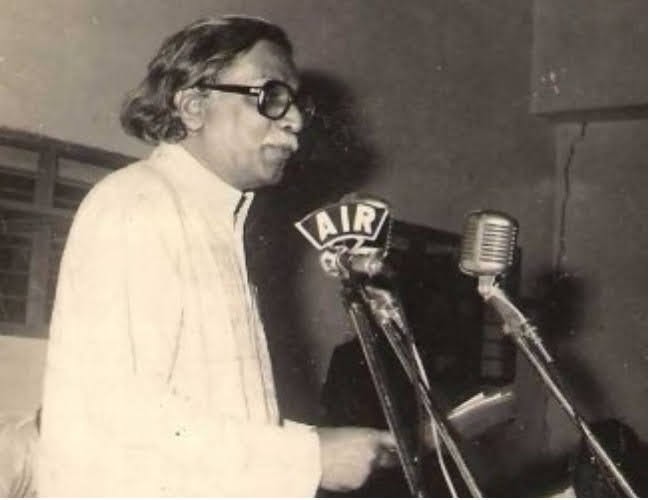
“Oru vattom koodi en ormakal meyunna…” is a song that any Malayalee with musical taste will recognize. Many of us are aware that ONV’s poem inspired it. However, few people remember the composer of this piece, M.B. Srinivasan. This is because MBS was a private person who let his work speak for itself and did not interact with the media. 

MBS made a significant contribution to film music by introducing Yesudas, who became a pillar of Malayalam film music. MBS gave Yesudas his first solo song, “Jaathibhedam Mathadvesham,” in “Kalpadukal” (1961), as well as his first duet with Shanta P Nair a famous artist then, in the same film. , In a function to honor Shanta P. Nair, Yesudas said that on hearing that she was to sing with a newcomer, she said, “Aa kutti paadikote, athine enda,” meaning, let the kid sing, it’s OK. 

MBS collaborated with all the great singers of the time. S Janaki won a national award for her song “Ettumanoorambalathil…” MBS was once again the man who gave P Jayachandran his memorable award-winning song “Ragam Sree Ragam…” He wrote the lyrics for Usha Uthup’s movie hit “Peethambara O Krishna.” 

Birth and childhood 

Manamadurai Balakrishnan Srinivasan was born in 1925 to a wealthy family in Chittoor, Andhra Pradesh. Even though neither of his parents was a professional musician, he was exposed to music at a young age. He attended P.S. High School and Madras Presidency College for his secondary and higher education, respectively. During his college years, he was drawn to Marxist principles and became a full-time member of the Communist Party. He was appointed Secretary General of the All-India Student Federation. He also belonged to the Madras Students Organization (MSO). While in college, he was involved in and led numerous anti-colonial agitations. This led him to establish the Madras Youth Choir, which I will discuss later. At the time, Bharatiyar’s songs instilled patriotic fervor, and the freedom struggle was nearing its conclusion.

Meanwhile, MBS, the nephew of CPI leader M.R. Venkatraman, moved to Delhi to work as a private secretary to CPI leader A.K. Gopalan. He was drawn to the Indian Peoples Theatre Association (IPTA). This association assisted him in becoming acquainted with regional strains of plays and music in various parts of the country. 

Meanwhile, he met, fell in love with, and later married Zahida Kitchlew, a Kashmiri Muslim and the daughter of freedom fighter Dr. Saifuddin Kitchlew. Pt. Jawaharlal Nehru married them. 

Film Music 

MBS studied Carnatic, Hindustani, and Western music in the meantime. In 1959, he decided to make a career out of tune. 

He worked in the Tamil film industry with director Nimai Ghosh. Both were key figures in the leftist Kumari Films. Its most well-known film, “Padhai Theriyudu Paar,” featured the famous song “Thenankeetru Oonjaliley…” written by Jayakantan and set to the xylophone. He only appeared in about 8-9 films in the Tamil film industry. His political beliefs hampered his Tamil career, so he turned to Malayalam films. 

MBS’s most well-known compositions are in the Malayalam film industry. Adoor Gopalakrishnan, MT Vasudevan Nair, Hariharan, K.G. George, Mohan, Lenin Rajendran, and others came to MBS to set music for their films. The ONV-MBS combination produced some of Malayalam film music’s best songs. “Oru vattam…”, “Nirangal than…”, “Manthram pole…”, “Bharatha muniyoru…”, “Ente kadinjool…”, and so on. MBS and ONV’s communist sympathies, combined with their mutual respect, resulted in rare chemistry that gave birth to unforgettable songs. 

The challenge for any music director is to have their identity while also being versatile. MBS songs are easily identifiable. He was also versatile enough to provide songs in a variety of styles. Semi-classical (“Ragam Sree Raagam..”), Melody (“Thenankeetru Oonjaliley…”, “Saradindu..”), Western/Pop (“Peethambara..”), or Folk (“Neelakkuda choodi..”, “Machane..”). Although he was not Malayalee, he composed the tune only after the lyrics were written. He deeply respected poets and their works, and his music never distorted or overpowered the vocals. His songs were always challenging, so they didn’t become as popular as songs by other music directors. 

MBS saw film music as more than just songs. He was an expert at re-recording. He knew exactly where to use which musical instrument to highlight or underline a scene. He demonstrated how a background score could add meaning to a film through the careful use of tools. He even composed scores for films in which other composers wrote the songs. He demonstrated that silence could be used effectively as music by sparing with BGM. Some of his films had no vocals at all. 

Activism 

He founded the Madras Cine Musicians’ Union and several South Indian Cine Technicians’ Unions. He ensured that musicians were paid on time (spot payment), and their wages were determined based on their skill and experience. He also assisted in regularizing their working hours. While he worked to improve workers’ security and status, he also reminded them of their role in completing the work. He believed in responsible union activity. 

MBS spearheaded the fight to ensure song composers and poets’ performance rights through the Indian Performing Rights Society (IPRS). The result of a European concept is that whenever a song is played on radio and television or in hotel lobbies and public places, the composer and poet receive a royalty payment. This has ensured a reasonably good source of income for people who had many hits in their prime but were no longer active. He served as Chairman of IPRS until his death. 

MBS played the lead role of an eccentric professor in John Abraham’s “Agraharathil kazhuthai.” This film became one of the most well-known and perhaps controversial films in Indian cinema history. MBS, being a multi-talented individual, jumped right into the role and excelled. 

He worked for the Central Censor Board for a short time. He also served as an adjudicator for numerous national and international music competitions. He was a member of the Sangeet Natak Academy and other cultural organizations. 

Death 

On March 9, 1988, M.B. Srinivasan died of a heart attack in Kedamath, a small village in the Lakshadweep islands. His son Kabir and wife Zaheeda survived him. Kabir passed on April 4, 2009, and Zaheeda passed away on October 23, 2002. 

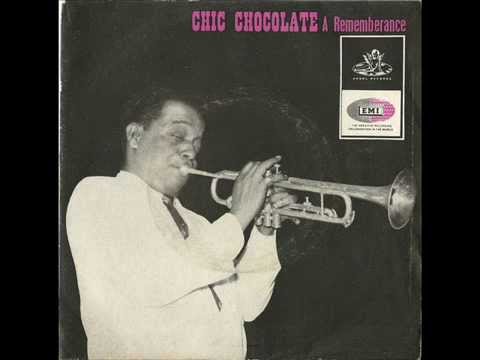
Chic Chocolate – the Louis Armstrong of India

Summary

Antonio Xavier Vaz, better known as Chic Chocolate, was a popular jazz musician in Bombay. He also worked as a composer and trumpet player for Hindi film scores.

Chic Chocolate and Chris Perry led a two-trumpet barrage at the Green’s Hotel. Chic Chocolate was a nightclub performer for the majority of his career, but he was also a talented film composer, recording and arranging soundtracks for a number of films. 

Chic was a successful Bollywood music composer. In 1951, he worked as a music director for the first time on Nadaan. Aa Teri Tasvir Bana Lu by Talat Mahmood and Sari Duniya Ko Piichhe Chodkar by Lata Mangeshkar were two of Nadaan’s most popular songs. Chic Chocolate was a part of C. Ramchandra’s team. Two of Ramachandra’s most popular Bollywood songs are Gore Gore O Banke Chore from Samadhi and Shola Jo Bhadke from Albela. Chic Chocolate is to be credited for these songs. Lata Mangeshkar sang the song Koi Dard Hamara Kya Samjhe in the 1952 film Rangili, on which they collaborated. He is remembered today for his collaboration with Madan Mohan and his work with Naasir in the 1956 film Kar Bhala. Chic worked as the film’s assistant music director. 

The movie Albela featured him in a song sequence with his band dressed in frilly Latin-inspired costumes, as well as a cameo appearance. Chic wore the costumes from the film for his subsequent live performances. 

Chic and his family, including his wife Martha and their children, lived in a Colaba apartment until he died in May 1967, at the age of 51. Chetan Anand’s Aakhri Khat was released shortly after. Several shots in the movie showed Chic Chocolate playing his trumpet from the bandstand during the blues song Rut Jawan — This episode is sponsored by · Anchor: The easiest way to make a podcast. https://anchor.fm/app

Transcription