All things, movies, music and philosophy; from a South Indian, Madras born native's perspective!
Author: Nandakumar Nayar
My name is Nandakumar Nayar, but you can call me Nanda, Nandu, or Nandan, depending on who you’re talking to. I studied Chemistry in college and ended up working in the airline and tourism industry.
Back in school, I was part of a band that played a mix of Carpenters, Beatles, Eagles, CCR, Jethro Tull, and Indian popular music. I’m a self-taught guitarist and keyboardist, but I also trained in vocal Indian classical music. I’ve worn many hats over the years - making short films, composing music, podcasting, writing blogs, and more. I’ve earned the title of ‘Jack of All Trades, but Master of None,’ but I often end up being better than a master of one.
I’m not one to hide my accomplishments, so you can probably guess that modesty isn’t my middle name.
A boy has been pining for a girl in his class. Unfortunately, he doesn’t have the nerve to profess his love to her. Several times, he approaches the girl, but his knees quake, and his mouth dries up. All he can manage is a ‘hi,’ and that in a raspy voice. The school term is over, and she doesn’t show up the following year.
The boy is utterly heartbroken.
The wife is pregnant with their second child. The husband strays and has an affair with another woman. The wife is devasted, and she ends up having an abortion.
The wife is utterly heartbroken.
So, what is the recurring theme here? Heartbreak.
Heart and emotions
Now arises the question, why does everyone refer to the heart when there is a strong emotional loss or, for that matter, a great joy? I grieve with all my heart, a heartful thanks for what you did for me; it’s with a heavy heart that I have to tell you this and so on.
The logical man stands up and says that all this is horse poop. A brain is necessary to feel emotion. A heart is a muscle mass responding to periodic electrical impulses that make it beat. And many nodding heads give more credence to the statement. Much sentimental baloney, right?
The ‘little brain’
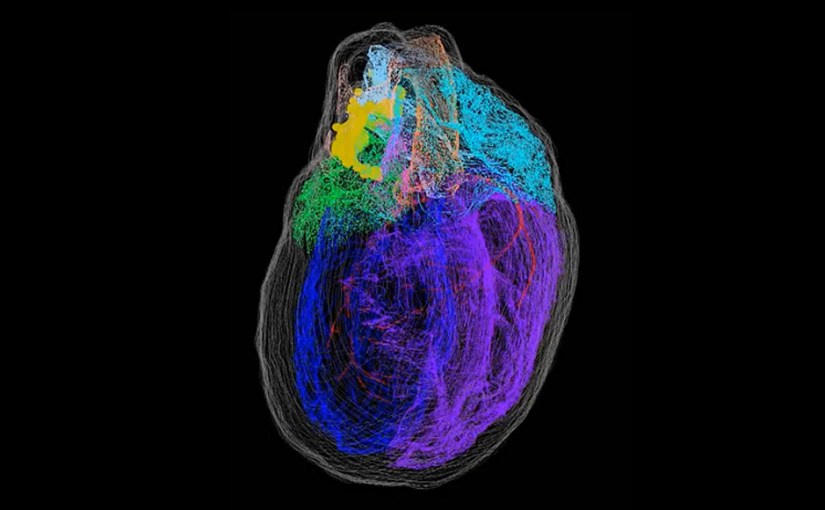
And lo and behold, recent findings by Dr. Armour in 1991 discovered that the heart has its “little brain” or “intrinsic cardiac nervous system.” This “heart brain” is composed of approximately 40,000 neurons that are alike in the brain, meaning that the heart has its own nervous system.
Quote: Scientists have reported that pain is always created by the brain. This may not be entirely true. Pain is not only a sensory experience but also can be associated with emotional, cognitive, and social components. The heart is considered the source of emotions, desire, and wisdom. Therefore, the aim of this article was to review the available evidence about the role of the heart in pain modulation. End quote
At his point, the logical man has an egg on his face, a gooey duck egg at that.
Not only does the heart have its own brain, but it also acts independently.
Personality changes after a heart transplant?
Not to be outdone, the logical man pipes up again. “So, what happens when a heart is transplanted?” “Does the recipient exhibit the traits and desires of the owner?”
There is the case of Claire Sylvia, a professional dancer, who was the recipient of the heart of an eighteen-year-old boy who died in a motorcycle accident. After the transplant, Claire craved Kentucky Fried Chicken and beer. The hallmarks of an eighteen-year-old. The family didn’t pay much attention to this until when Claire started walking, she had the purposeful stride of a man. That led to an investigation as to who the donor was. It usually is not easy to find the donor, but with the right amount of persuasive pressure, the secrecy was lifted, and the truth unfolded.
Me no physician, but this leads me to think that if the heart feels and stores memories and emotions, there is a need to cure the ache in the heart and not just in the logical brain.
Put another way, is the pain or the emotion in the heart, the subconsciousness that has been bandied about for so long?
Since the emotive heart is probably not in sync with the brain in the head most of the time, is there a way to sync the two?
Does music help?
If the brain and the heart are not in sync, do we live life in conflict always?
Would syncing be the way to attain a superconscious state?
I tried asking these questions to the logical man. He just gave me a blank stare and walked away.
The family sat down for lunch. All were being served. An eleven-year-old boy wanted ghee (clarified butter), but was refused. He created a scene and walked out of the house.
Everyone thought he would return once the hunger pangs started gnawing at his innards. The boy had other ideas. He headed to the nearest railway station and boarded a train to Gwalior with not a penny in his pocket. When the train conductor went around, checking for free boarders, this boy would sing songs of Panditrao Nagarkar and Narayanrao Vyas and impress them. Most Maharashtrian folks used to be connoisseurs of popular music, so he got away and rode for free. Some conductors did not appreciate music, and they handed him over to the authorities. He did spend a few nights in jail!
Reach Gwalior or bust
So, long story short, it took the boy nearly two months to reach Gwalior.
Why Gwalior? Because Gadag, where the boy lived, had no music teachers. And he wanted to sing like Abdul Karim Khan Sahib, whose song he first heard on a gramophone recording. Gwalior was famous for the arts. It was also where Ustad Hafiz Ali Khan sahib lived, the father of Amjad Ali Khan, the renowned sarod player. Gwalior used to serve one meal for all who were learning music, obviously as an encouragement to the arts. That kept him alive. The rest of the time, he was with his guru.
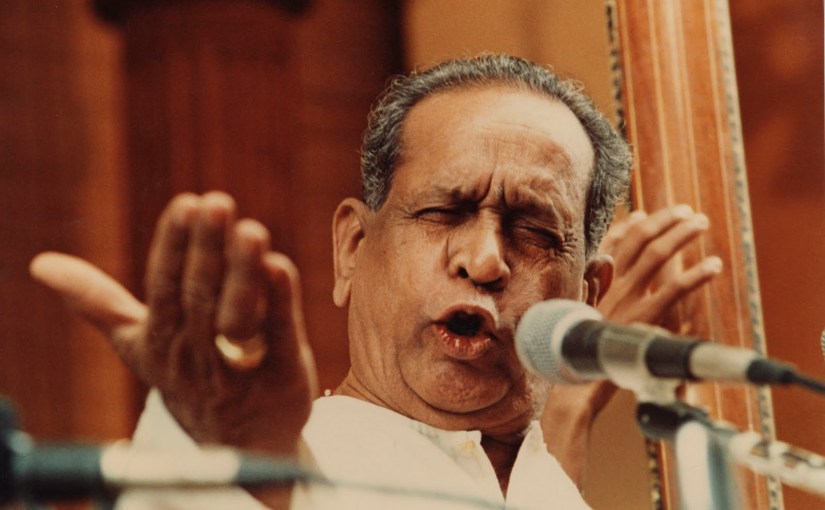
This is how the journey began for Bhimsen Gururaj Joshi, who later became the renowned Pandit Bhimsen Joshi, the first Indian singer to win the Bharat Ratna (2008), who emerged as the face of Khayal Gayaki.
Once during an interview with Gulzar, the famous lyricist of Indian films, about why he walked away from home after being denied a spoonful of ghee, the maestro explained that the ghee was just an excuse to walk away from home.
Kolkata, here we come
When he realized that Hafiz Ali Khan sahib was busy traveling to various cities for concerts, the young Joshi took off to Kolkata and landed as a domestic servant to Pahari Sanyal, a Bengali singer, and film actor. Joshi used to listen to all the rehearsals and grab whatever he could learn. In later years, Pandit Bhimsen Joshi was singing at a conference of musicians, and Pahari Sanyal was in the audience. Pahari Sanyal had no clue that this was the same boy, now a famous artist, who was once a domestic help in his house. After the concert, Pahari Sanyal went over to congratulate Pandit Bhimsen Joshi for an outstanding recital. The maestro then told Pahari Sanyal that he was the same Joshi, a domestic help at the Sanyal’s household! I am sure many would have given an arm and a leg to glimpse Pahari Sanyal’s face at that moment!
Anyway, getting back on track, the middle-aged Joshi headed to Delhi, where he heard of the father and uncle of Ustad Nasiruddin Dagar, to learn the dhrupad singing style. He had no money to pay fees, so he headed to Jalandhar to meet with Bhakt Mangat Ram, a visually handicapped singer, to learn dhrupad.
Life takes a full circle
At the Hariballab conference, he came across Vinayak Rao Patwardhan, who asked him what his purpose for all this travel was. Almost akin to the story of the musk deer searching the forest for the origin of the scent, when all along the deer had it on its tail, Patwardhan told him that there was Sawai Gandharva a teacher near his very village at Gadag, in the Dharwar district. At this point, his life took a full circle, and returned to his native land and enrolled in the Gandharva Mahavidyalaya, headed by Sawai Gandharva, a disciple of Ustad Abdul Karim Khan, the singer who inspired the young Joshi to start his music career.
Kirana Gharana
Pandit Bhimsen Joshi followed the aesthetics of Kirana Gharana. The word Kirana comes from the village near Sonepur/Panipat, where the mythological character Karna was born. Karna was mispronounced as Kirana. According to Pandit Bhimsen Joshi, the gharana tradition is like Karna, the warrior prince; do or die!
Kirana Gharana boasts of a proud lineage of artists; Roshanara Begum, Ustad Kale Khan, incidentally, her father, Ustad Vilayat Khan sahib, and many others.
His Bollywood foray
Pandit Bhimsen Joshi abhorred the title ‘pandit’ as he felt too many half-baked musicians started calling themselves pandit. He much preferred to be called Bhimsen Joshi without any honorifics. He wasn’t a film music fan. His forays into the industry were rare. One such occasion was when he sang for the film Basant Bahar.
When Manna Dey had the jitters!
The scene was a competition; the resident Ustad’s voice was Pandit Bhimsen Joshi, and the hero Bharat Bushan’s voice was Manna Dey. In true Bollywood style, the hero could never lose a competition, so it comes down to Manna Dey being pitted against Pandit Bhimsen Joshi and Manna Dey winning. Manna Dey recalls how petrified he was and flatly refused. It was Pandit Bhimsen Joshi who encouraged and encouraged him to sing. The sheer magnanimity and the absolute confidence in the art!
Fast cars were his passion
Besides being an outstanding singer, Pandit Bhimsen Joshi was a car aficionado. He used to drive fast and was a mechanic too! When his car broke down, he would repair the vehicle himself. He had a Fiat, a Ford, and later a Mercedes. He used to travel mainly by air and by train, but certain towns did not have an airport, and train ticket reservations were difficult. So, he bought a used car, hired a driver, and the whole family set out to Mysore for a Dusherra concert. The driver, who barely knew driving, and didn’t have a license, plunged into a 40ft ravine on his way back. Fortunately, Pandit Joshi and his family survived the crash without a scratch. Pandit Joshi attributed it to the quality of cars then. He then decided to drive his cars – the motto was that if he were fated to die in a road crash, it had better be when he had his hands on the steering wheel!
Some highlights
HMV released his first album of devotional songs in 1942.
He was the first musician from India whose concerts were advertised through posters in New York City, United States.
Pt. Joshi is remembered for his famous ragas, including Shuddha Kalyan, Miyan Ki Todi, Puriya Dhanashri, Multani, Bhimpalasi, Darbari, Malkauns, Yaman, Asavari Todi, Miyan Ki Malhar, and others.
He was instrumental in organizing the Sawai Gandharva Music Festival annually as a homage to his guru, Pandit Sawai Gandharva.
In 1998, he was awarded the Sangeet Natak Akademi Fellowship.
Subsequently, he received the Bharat Ratna, India’s highest civilian honor, in 2009.
The maestro passed into eternity on January 24, 2011. He was 88
His thoughts on modern-day singers
When asked what he thought of the modern-day singers, he said they were a talented lot, intelligent and worldly-wise, but none of their renditions lived in the ears of the listeners for long. They are heard and forgotten.
Now that’s a pretty broad brush he used there. Dear reader, what do you think?
About two and a half decades back, I was a tour operator, organizing and conducting inbound tours from the UK and USA. I had a modest office off Lattice Bridge Road when I started this operation. Lattice Bridge road, known as L.B. Road, bisected Indira Nagar and Thiruvanmiyur. My office was on the Indira Nagar side.
My first glimpse of the man
Every day I used to see a person with a starched white shirt and a white dhoti go past my office, most times in the morning and sometimes in the evening too. He used to walk with a purposeful gait. He had rather long hair coming out from his ears, which was accentuated even more so because he had a thinning hairline. His hair, or whatever was left of it, would be oiled and neatly combed back. His forehead was swathed in vibuthi or sacred ash, punctuated by a red vermilion dot just above the bridge of his nose. A light dusting of talcum powder dressed his face. To describe this gentleman’s personality even more clearly, I would say he looked like the ‘common man’ in R.K. Laxman’s cartoons. And I don’t mean this disrespectfully.
His personality intrigued me, which led me to enquire about who he was. Somehow, this reached his son’s ears, and the son paid a visit to my office, asking why I was enquiring about his dad! I explained that something about his dad differentiated him from the other passers-by.
My meeting with him
Then I heard of Manakkal Rangarajan and that he was a Carnatic musician. I told his son that I would like to meet with him.
I met with him later that week, and after the customary salutations and preambles, I asked if he would teach my daughter Carnatic music. He hesitated a bit but said he would check her aptitude first. So, I took him home; I lived a stone’s throw away from my office on the Thiruvanmiyur side. She passed the skill or talent test, and the lessons started in earnest, the week after.
She had the fortune of learning music from him. At that time, she was also learning dance from Kalakshetra. Today she is an accomplished Bharatanatyam artiste herself, but she still remembers with pride that she is a student of Manakkal Rangarajan. The vocal exercises he taught her allowed her to render brigas with speed. Brigas or brighas are note ornamentations that enhance the beauty of the rendering.
His birth and background
Manakkal Rangarajan (13 September 1922 – 26 February 2019) was a Carnatic music vocalist from Manakkal village, Trichy district. He was known for his unique brand of Carnatic music.
Manakkal is a village in Valangaimana taluka, Thiruvarur District, Thiruvarur district, Tamil Nadu State.
Rangarajan’s father, Santhana Krishna Bhagavathar, was an exponent of the Harikatha but did not impart any musical lessons to Rangarajan. His mother’s name was Seethalakshmi Ammal. Shri. Rangarajan had five brothers. He was the youngest. He started singing in concerts from the age of fifteen.
His rendition of songs such as Ninnuvina (Navarasakannada), Sarasasamadana (Kapinarayani), and Nenarunchinanu (Malavi) was eagerly lapped up by the audience at his concerts. Artists like Murugaboopathi and Umayalpuram Sivaraman enjoyed accompanying him. So did the violin vidwans such as Kumbakonam Rajamanickam Pillai, Mysore Chowdiah, Lalgudi Jayaraman, and T.N. Krishnan.
The Tiruvyaru incident
He used to sing at Tiruvayaru, the birthplace of Shri. Thyagaraja for the music festival. The story goes that M.S. Subbalakshmi, the reigning queen of Carnatic music and a film star, sang before Shri. Rangarajan’s concert. She had a huge fan base, and when MS finished her concert, everyone went to see her off. Shri. Rangarajan had an empty audience. Then he let loose a volley of fast-paced krithis, and everyone came running back to listen to him!
A nice documentary
Later, I started attending his concerts. I once heard him perform at the Music Academy, Madras, and recall a Sankarabharanam (a Carnatic Raga) aalapana, in which he reached the tara sthayi sadjam (the third-octave root note) with exquisite precision.
Manakkal Rangarajan used to render rare Pallavi performances at the Music Academy, Madras, using both hands for the thalams (beat cycles), composed from various nadais (beat structures).
Rangarajan is one of the rare musicians who has never compromised with principles and traditions to gain popularity.
Music critic Subbudu stated in one of his reviews that had Manakkal taken up Hindustani music or Western music, he would have outclassed them all because of his distinctive, bell-like voice and his reach.
People who followed the career of Shri. Rangarajan worshipped his music, said his brigas were breathtaking and that it was the way they heard it, not just in his heyday but even long after.
Manakkal Rangarajan passed away on February 26, 2019
Velacheri was a calm, quiet place. It had all the hallmarks of a quaint village; lush paddy fields irrigated by the waters of a rather vast lake that looked endless during monsoons. St. Thomas Mount and the Pallavaram hills framing the north-western and western horizons were visible. The air was so clear that I could count the stars at night; they were like shimmering lights against the inky black sky, which was not lit up by the city glow as there were no large colonies nearby, and electricity hadnʼt reached all houses, including ours.
The location
The bus stand was at the intersection of Brahmin Street and Velacheri High Road. The bus stand was an arrangement of cement benches with red oxide slabs, and it was a kind of meeting point for most residents. There was a certain lazy, languid air about the place until the bus arrived. After that, it became a beehive of activity, and everybody jostled with each other to get on to the bus first, to claim a vacant seat. Invariably, there would be a village do-gooder who would yell out to the milling, jostling mass.
The know-all at the bus stop
“Make way for the ladies, especially the ones with children. Everyone will be able to get in. Donʼt hurry,” he would shout out, with the authority of one who has seen several hundred arrivals and departures. Then there was another group; the dashing young men dressed in their finest. They would remain a distance away from the bus with studied nonchalance, and once the bus began to move, they would run alongside the bus for a while and jump on the alighting steps. These ʻfootboardʼ travelers, as they were called, would hang in sometimes on just a toehold, and this would get admiring looks from the girls on the bus. To them, this meant everything. To some, this was a way of getting a free ride!
When the bus departed, the mix of people changed, so new topics were invariably started or old ones repeated to a new audience. So there were always varied points of view every time.
The village park
Behind the bus stand was the village park that came to life in the evening. A community radio blasted out programs from a station called Vividbharati. The park had one lone gardener, who rarely smiled but was always digging a hole or pruning a croton bush and was the employee of the village panchayat. He wore khaki half-pants and a khaki shirt. Under his half-pants were bright-colored boxers that were bigger than his khakis, giving the impression that beneath that drab exterior was a bright side to his personality. He also wore a huge watch with a stainless steel bracelet that contrasted brilliantly against his sunburned, brown skin.
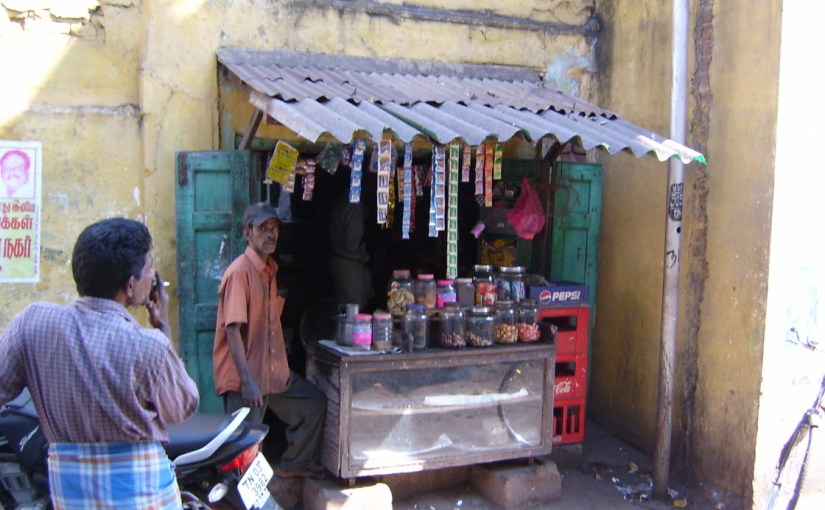
A few shops were next to the bus stand; to the right was a shop selling cigarettes, beedis, and brightly colored candy. The different varieties of candy were all stored in identical jars. The shop also sold lemonade which was made fresh every time. The shopkeeper would use soda instead of water for an extra ten paise. The soda bottle was fully recyclable. It had a marble inside the bottle, and it rested in the upper quarter of the bottle. During manufacturing, the gas inside the bottle would force the marble up the opening and push it to shut onto a rubber ring washer near the bottle’s opening. To open the bottle, a wooden peg was used to push down the marble, and depending on when the soda was prepared; it would either be a mini-explosion or a soft swoosh.
Mani Store
On the opposite side, some distance away was the main grocery store called Mani Stores. The term grocery store was more for convenience as it was a mishmash of fancy merchandise. The proprietor, whose name was Mani, was a pioneer of sorts. While most other shops were small cubby shacks selling peanuts, colored candy, and essentials like lentils and rice, Mani stocked luxurious items like fancy soaps, talcum powder, lotions, and perfumes.
Mani resembled a famous Tamil film actor, or at least that was the opinion of many residents of Velacheri. He knew it and played it to the hilt by mimicking certain signature mannerisms of the star. Teenage girls in their half-sarees would giggle when they passed by his shop. Somehow, I could see only a vague resemblance; I not being much of a moviegoer those days. My parents believed that movies caused moral turpitude and were the cause of all evils in society. So, my comparison was limited to posters and paintings of the film star plastered all over the walls of the nearby transformer factory.
Every evening, Mani would get his assistant to sweep the entrance to his shop and sprinkle water to cool down the bit of earth heated by the post-afternoon heat of the sun. This gave rise to a warm, earthy smell, not unlike what you would encounter after a summer rain. Mani would then switch on his prized transistor radio. It was a Bush Baron, a Cadillac among transistor sets, and it would belt out music at such loud volumes that you could hear it until you reached the park. From there, the radio in the park took over. So, it was a kind of relay race. Thankfully, they were all tuned to the same station, so it did not sound like so many popular remixes of today.
Mani had one failing. He hated to admit his ignorance. So, when somebody asked for something that he hadnʼt a clue about, he would pretend to look for it. His search was bound to bring no results since he did not know what he was looking for. So, he would say he had run out of stock after a point. Later, he trained a sidekick, a small boy with a leaky nose.
At times, he hadnʼt a clue what I wanted.
“Give me a pack of Marie biscuits,” I would ask.
“Boy, give sir Hari biscuits,” Mani would yell to the boy inside. His trained sidekick would yell out that they were out of stock. He nor his sidekick had a clue what Marie biscuits were. I would begin to do an about-turn and start walking out of the shop when Mani would call out to me in an apologetic tone.
“Stock just over, sir. I will get it surely next week” I knew he was bluffing. Mani would never exhibit his ignorance. After all, his was ʻtheʼ grocery store in the village!
This used to go on. I then decided to teach him a lesson and would ask if he had a stock of various brands of ice cream and things of that nature, knowing he did not have a deep freezer. Nobody had one because an uninterrupted electricity supply was unheard of in the state of Madras.
Later, it became a game, and I became more adventurous. Those days, it was lonely in Velacheri, and this was one way of keeping my mind busy! Once I remember I asked him for a Ford Mustang. Another time, it was for a Soyuz spacecraft. Some months later, he saw through my game. Some bystander must have told him, behind my back, that I was pulling his leg.
Later, whenever he was unfamiliar with an item, he would ask me with a half-smile. “ Sir, I hope you are not trying to fool me,” asked Mani.
He was a sport, and he enjoyed the exchanges with me.
The over run
Mani survived for about five years as being the only ʻsupermarketʼ in town. When the village became an overgrown municipality, many traders set up businesses on both sides of the now Velacheri High Road. Maniʼs shop lost all the luster and exclusivity it once had. His transistor set, which could be heard until the beginning of the park fence, was lost in the din due to a combination of the overall increase in ambient noise levels and the arrival of cassette recorders in every one of the new shops. Also, his Bush Baron was no longer at its prime and started fading out with Maniʼs importance of being the only supermarket in town.
It was about this time that I finished my schooling, and I moved to Bombay for my future education with stars in my eye. This plan did not work for several reasons, so after about a year, I was back at Velacheri, more affluent in the experience of living, traveling, and working in a vast metropolis, with valuable lessons on how folks behave when you start living with them.
For the old time’s sake, I visited Mani. He had a pair of thick bifocals, and his curly hair, which once was shiny black and draped his forehead like a mini unicorn horn, was thin and lay limp. All the charisma had gone. I wondered how all this happened in just one year. His store, which generally used to burst at its seams with stock, had almost nothing.
“ Mr. Mani, I want a bottle of Horlicks,” I asked for old-time’s sake. His face broke into a glow of recognition, and he gave me a wide smile. Two of his front teeth were missing.
Instead of yelling out, he ambled into the dark recess of his small store! He no more had an assistant.
“ No stock, sir. Not like before, sir. I have very few customers, so I donʼt get enough sales to buy new merchandise. Good times are behind us, sir, “ said Mani with a strange smile. Mr. Mani might have changed in appearance, but his attitude was still the same.
That was the last time I saw him. His store was demolished to give way for a multilayered textile showroom.
There is a scene in the movie where the character played by Nagesh is getting his first break as an actor. He has paired apparently with the most popular lady star of that time, played so well by our beloved Achi Manorama.
The director, played by S.V. Ranga Rao, is hilarious! Caught in the crossfire between this first-time greenhorn actor played by Nagesh and this fussy, demanding diva played by Manorama, S.V.R. so convincingly plays the role of a harried director that he stands out as an unforgettable character in the entire movie! At least for me!
Who was S.V. Ranga Rao
To the young ones of today, here is a synopsis of the legendary actor, S. V. Ranga Rao, or S.V.R. as he was popularly known.
Samarla Venkata Ranga Rao (July 3, 1918 – July 18, 1974) was a South Indian actor, film director, and producer. He is an internationally recognized actor and was awarded the title “Vishwanata Chakravarthi.” He was also the first Indian actor to win an international award. He is considered an all-rounder actor who could carry any role given to him. With the famous mannerism of “orey dongrey” from Jagath Jettilu, he is still a household name in Andhra Pradesh and Telangana.
Rao was born to Lakshmi Narasayamma and Koteshwara Rao Naidu, a customs inspector from Nuzvidu, Krishna district, Andhra Pradesh. His mother, Lakshmi Narasayamma, was a fervent devotee of Lord Venkateshwara, who named the boy after him.
At the early age of 12, the boy showed a tremendous interest in acting on stage. Two goals were still clearly set in his mind: pursuing a master’s degree in literature and taking an active role in theatre and cinema.
His first foray into the film world
S.V.R. got an invitation from one of his relatives, B.V. Ramanandam, to play the hero in his film “Varoodhini .” It was an excellent beginning for the young man. However, the movie “Varoodhini” bombed at the box office. Producers hesitated to give him any roles after that. S.V.R. was disillusioned with the filmdom and left the Madras Presidency (as was the term used for a collection of Southern Indian States then) and reached Jamshedpur, where he took up a job as a budget assistant with Tata Steel. However, his love for acting never really went away. He married Leelavathi in December 1947 and settled down to a domesticated life.
Then came an opportunity to play the villain in the film, “Palletoori Pilla,” produced by B.A. Subba Rao came his way. His father passed when he was about to board the train to Chennai, so he had to stay back and finish all the rituals a son was expected to do. After performing the final rites, S.V.R. reached Chennai, but it was too late. Another actor had already replaced him.
His first real break
Lucky for him, he got a break with Vijaya Pictures, who offered him the most memorable role of a “Nepali Mantrikudu” in the “Pathala Bhairavi.” He also played the same role in the Tamil version. Immediately, he shot into the limelight. Pathala Bhairavi was followed by another hit, “Pellichesi Choodu” (1952). At this point, he had established himself in the industry. The iconic status of a superstar took time to come to him. He struggled a lot and, from that struggle, rose the great actor of all time. Maya Bazaar and Nartanasala are among his famous movies.
The roles he played
He acted almost every character in history. He showed a kind of recklessness and disregard in his dialogue delivery. This controlled nonchalance was something that appealed to me very much!
S.V.R. was the first Indian to get an international award at the Djakarta International Film Festival for his role of Keechaka in Nartanasala. His dialogue delivery was unmatched. Those days, no one in the industry could deliver dialogues, even in Sanskrit, with so much ease and aplomb, complete with the required histrionics. Even N.T.R., who was great at dialogues in Telugu, used to stammer in front of S.V.R. This was the rumor those days!
His compatriot Gummadi once exclaimed, “Fortunate are we to have S.V.R. born in India, but S.V.R. is unfortunate to have born here, for if he were born in the West, he would have been one of the top 5 actors of all time in the world.”
S.V.R.’s relatives and family circles ridiculed him, saying that he was a fool to go after chances in cinemas by shunning government jobs.
Some trivia
L.V. Prasad gave S.V.R. lots of moral support and encouragement.
“Maya Bazaar” automatically brings about the picture of S.V.R. as Ghatothgacha
His role as “Nepali Mantrik” in “Pathala Bhairavi” will continue to be remembered by millions of people.
As Keechaka in “Narthanasala,” S.V.R. proved himself to be the ultimate when it came to acting the mythological films.
He was a passionate game hunter, sporting an excellent firearm that a friend in the British Indian army gave him. One day, he was hunting a deer, and the deer stopped running and looked straight into the eyes of S.V.R. as if questioning him, “What will you get if you kill me?” S.V.R. never hunted after that.
S.V.R. and Gummadi went to International Film Festival in Spain for the film Raju Peda, where they met Sir Richard Attenborough. S.V.R. played Peda (poor man), and Sir Attenborough commented that S.V.R. should have played the role of the Raju (king).
His transition to immortality
He died on July 18, 1974, after suffering from severe heart failure. But he continues to live in the hearts and minds of the Telugu and Tamil people.
Salil Chowdhury, better known by his nickname “Salil-da,” was an accomplished artist who contributed to the film industries of Hindi, Bengali, and southern India. He created some immortal tunes in Malayalam films. The film Chemeen, the first South Indian film to win the Indian President’s Gold Medal, had songs composed by Salil da. He composed songs for films in 13 languages, around 75 Hindi films, 41 Bengali films, and 27 Malayalam films, besides Marathi, Tamil, Telugu, Kannada, Gujarati, Odiya, and Assamese films.
His prime years of productivity were the 1950s and 1960s. The fact that he could perform well in so many different styles was one of his greatest assets.
He was a gifted composer and musician who excelled in the flute, esraj, violin, and piano. The most popular songs to come out of Bollywood were written and performed by him, and he is remembered with great affection.
His place of birth and musical influences
On November 19, 1923, Salil Chowdhury was born in the small Bengali village of Sonarpur. He grew up in the rural Bengali town of Harinavi. However, he also spent considerable time in Assam, where his father was a doctor with a military posting.
Salil spent much of his childhood listening to his father’s collection of Western classical music. As a result, he carried this musical inspiration with him for most of his life. The young Salil was taught the importance of incorporating social consciousness into artistic practice. His father first introduced him to the idea of combining art and politics. The hardships and social conditions of the times were reflected in the plays that his father would perform for the villagers and laborers.
His Alma Mater
Calcutta’s Bangabhaashi College was his alma mater. There, his interest in politics blossomed. He started caring about the “Quit India” movement and the plight of the poor. A member of the Communist Party of India since joining after college, he participated in the Peasant Movement of 1945.
His social activities
Joining the Indian Peoples Theatre Association (IPTA) followed shortly after he became engaged in the peasant movement. A more politically aware populace was one of the goals of this theater’s productions. These theaters toured from village to village, putting on plays that often-addressed British imperialism, social injustice, and the growing freedom movement. As a result, Salil Chowdhury was compelled to take his work with the IPTA into the shadows, where he remained for the better four years.
His transition from flute playing to songwriting
He started as a flute player but eventually became a songwriter. He spent his time among ordinary people, writing, composing, and performing. The government banned his plays and poems, making it impossible to find a commercial publisher interested in them. Many of the works he produced during this period have vanished. It was a tough life for IPTA performers. Many people helped for free, but others, like Salil-Da, were paid. In their quest to get where they needed to go, they frequently walked and occasionally went days without eating. Sometimes the police would show up and start randomly beating people if they found out where the troupe was performing. There was a high loss of life due to torture, violence, and starvation.
Salil Chowdhury stood out during his time with the IPTA because he brought a fresh perspective to the band’s music. His familiarity with Western concepts of harmony, so different from traditional Indian music, was honed over the years by listening to his father’s collection of Western classical music. Eventually, he and the IPTA had a falling out. He was leaving for several reasons, including Communist Party infighting, personal jealousy of his success, and the Party’s attempts to censor his writing.
The turning point in his life
During this time, something significant happened in his life. “Rikshawalla” was the title of his Bengali short story. A Bengali film adaptation of this story was a smashing success. The success of this film had a lasting impact on Salil-Da.
In 1953, Salil Chowdhury adapted his Bengali film “Rikshawalla” into Hindi and began working in Bombay’s film industry. The original title of this movie in Hindi was “Do Bigha Zameen.” Since this film did so well, many others in the Hindi genre followed. Notable among them were Madhumati (1958) and Do Bigha Zameen. Throughout the 1950s and 1960s, Salil Chowdhury’s schedule was jam-packed.
The immortal song
Bombay Youth Choir
He and Ruma Ganguly founded the Bombay Youth Choir in 1957. Western ideas of harmony were a significant inspiration for this.
On occasions, he was hired by music directors to compose the background score while they choreographed the songs and dances. His work as a background composer for other music directors includes the track “Anokhi Raat” (1968).
One of the defining features of his approach was the degree to which it ran counter to the industry standards for making movies at the time. When working with a lyricist, the standard procedure was to get in touch with the lyricist first, then bring the lyrics to the music director. For each song, Salil-Da would write the music and the lyrics. Many people attribute his music to be exceptional.
Jingles
Strange as it may sound, Salil wrote the lyrics and composed the music of several ‘jingles.’ In the ’50s and ’60s, they were not called jingles; instead, they were songs recorded to promote products or give critical social messages. Salil composed some songs for Rexona Soap, Lipton Tea, Hamam Soap, CookMe cooking powder, Paludrin tablets, Dulaaler Taal Michhri (Palm Sugar !), etc. He also composed a song warning villagers about Malaria and asking them to take Paludrin! A couple of record collectors have managed to discover these old 78rpms. Seems like they are from ’67-’68. – ‘Ato rang roop mayaa’ – Sabita for Hamaam Soap – Geeta Dutt sang Hindi, Gujarati, and Marathi versions of the Hammam Soap. – Geeta Dutt also sang the well-known jingle for Rexona soap – “Rexona sabun ke gandh se milaa hai.” This song has four versions. Although the song is in Hindi, the versions have commentaries in Hindi, English, Tamil, and Bengali. The record was released in a 78 record and was specially made by the Gramophone Company of India for Hindusthan Lever Ltd. It was a Lintas record (QC1710). ‘Chaa bono bihaarini’ – song for Lipton Tea sung by Tarun Bannerjee and Supriti Ghosh and directed by Asit Sen. Was released on a 78rpm record. There is also a Hindi version of this song, released on a 78rpm record.
* A song about the anti-malaria medicine “Paludrin” warning the villagers about Malaria and advising them to take Paludrin. There is also a Hindi version.
A friendly but informative and educative song forvisitors to the big city of Calcutta about the menace of pickpockets on the buses and streets. The song “Kono ak pocketmaarer kaahini shonaai shono” was based on Salil’s classic “Kono ak gaanyer bondhu” and a 78rpm record was released.
Salil da also composed the following commercials – – Commercial on CookMe Spice powder. – Commercial for Dulaler Taal Michhri (cane sugar from Dulal) – 12-second piano music for HMT watches – Excellent title music for Bombay Film Festival documentary (Year unknown)
Does the name Rasipuram Krishnaswami Iyer Narayanaswami ring a bell?
“Sometime in the early 30’s,” Graham Greene recalled, “an Indian friend of mine called Purna brought me a rather traveled and weary typescript — a novel written by a friend of his — and I let it lie on my desk for weeks unread until one rainy day.” The English weather saved an Indian voice: Greene didn’t know that the novel “had been rejected by half a dozen publishers and that Purna had been told by the author . . . to weight it with a stone and drop it into the Thames.”
A novel that was made into a film by Vijay Anand
Greene loved the novel, “Swami and Friends,” found a publisher for it in London, and so launched India’s most distinguished literary career of recent times, that of Rasipuram Krishnaswami Narayan.
Rasipuram Krishnaswami Iyer Narayanaswami, better known as R. K. Narayan, became one of India’s most prolific authors.
R.K. Narayan was born in 1906 in Madras (now known as Chennai, Tamil Nadu), British India, to an ordinary Hindu family. He was raised in the city of Madras and in the city of Mysore, India, where he attended the prestigious Maharaja’s College.
Because his mother was sick and his father was a teacher who was often away, Narayan was raised in Madras by his grandmother and uncle. Narayan’s grandmother sparked his interest in language and humanity. He claims that the Christian chaplain’s mockery of the Hindu gods during his time at the Christian Mission School ultimately led him to embrace Hinduism.
In 1930, Narayan earned his diploma from Maharaja’s College in Mysore. He tied the knot in 1934, but his wife Rajam passed away in 1939 from typhoid. He never married again. Hema was his only child.
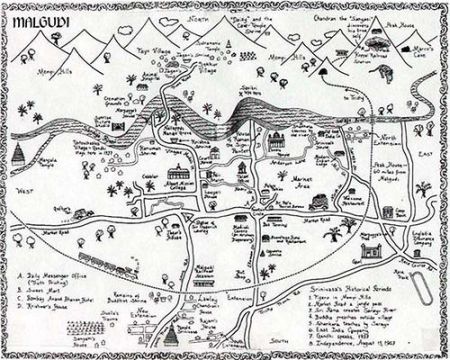
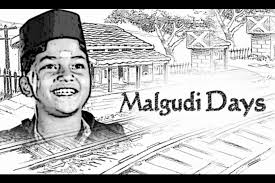
the town called Malgudi
With his first novel, Narayan fabricated a small southern Indian town called Malgudi, an entirely fictional urban city in Southern India. Critics later likened this town to the imaginary county Yoknapatawpha, invented by William Faulkner. Faulkner set most of his novels in this mythical city. Like Narayanan, Faulkner’s novels were also grounded in compassionate humanism and celebrated the humor and energy of ordinary life.
During my tenure with a foreign airline in Kochi, my wife and I often visited a small market near Kakanad. Those were the days of extreme power crisis in Kerala, perennial power-cut. When we did have power, it was low-voltage. So, the market, which sold mainly woven baskets, ropes, and other kinds of quaint merchandise, lit up by hurricane lanterns, had an aura of time gone by.
I promptly named the market Malgudi.
the troika of Indian authors
The troika of R. K. Narayan, Raja Rao, and Mulk Raj Anand was the leading English-language writers of India. My personal choice was precisely in this order; at times, Mulk Raj Anand held second place, but R. K. Narayan was always my first choice. Probably because the language he used and the description of the settings of his stories were all very South Indian, this is something that I could easily relate to, the primary reason being that I am South Indian! Also, his humor was strangely Wodehousian, like if P.G. Wodehouse were a South Indian, he would probably write like Narayan. And I say this as a compliment to Narayan.
Narayan’s stories are grounded in the real world, with characters from all walks of life and various situations. As time passes, everyday occurrences become increasingly absurd due to random chance, human error, or misunderstanding. The hero is just as likely to experience good fortune as bad. The characters believe everything will work out for the best, regardless of their intentions or actions. Western goods, attitudes, and bureaucratic institutions collide in Malgudi with established norms and values. Because Malgudi accepts only what Malgudi it wants according to its private logic, the modern world can never win a clear-cut victory.
Critic Anthony Thwaite of the New York Times praised Narayan for creating “a world as richly human and volatile as that of Dickens” in his review of Narayan’s novel The Painter of Signs from 1976. The protagonist of his next book, A Tiger for Malgudi (1983), is a tiger whose holy master attempts to teach him the meaning of life. In 1987, he published his fourteenth novel, Talkative Man, to mixed reviews.
his life in while he was 80
Even as he entered his 80s, Narayan was still having books published. In 1994, he published Grandmother’s Tale and Other Stories, which Publishers Weekly hailed as “an exemplary collection from one of India’s most distinguished men of letters” because it focused on the woman who had first inspired him to write: his grandmother. For Booklist’s Donna Seaman, this collection of short stories spanning over half a century of Narayan’s career represents “an excellent sampling of his short fiction, generally considered his best work” from “one of the world’s finest storytellers.”
his quotes
In his own words, Narayan once said, “Novels may bore me, but never people.”
Some of his other quotes were: “life is about making right things and going on..” ― R.K. Narayan
“You become [a] writer by writing. It is a yoga.” ― R. K. Narayan
“The difference between a simpleton and an intelligent man, according to the man who is convinced that he is of the latter category, is that the former wholeheartedly accepts all things that he sees and hears while the latter never admits anything except after a most searching scrutiny. He imagines his intelligence to be a sieve of closely woven mesh through which nothing but the finest can pass.” ― R. K. Narayan
“To be a good writer anywhere, you must have roots both in religion and family. I have these things. I am rooted.”
He would often describe some writers,
“His writing is interesting, but the writer has no roots.” ― R. K. Narayan.
Says N.Ram, chairman of The Hindu;
He didn’t leave the house much except to see his great-grandchildren. He would also show up at my home out of the blue and say, “I am giving you trouble,” while pointing at the couch. That was where he sat, holding his walking stick. As a matter of fact, I can still picture him here.
The Southern Spice at the Taj was always a go-to for us. He had his preferred table and order (usually a dosa or appam) down to a science. In terms of nutrition, he was highly self-controlled. When he ate, he wouldn’t have anything to eat or drink beforehand.
Though his son-in-law has diabetes, he never experienced any of its symptoms. However, he had a soft spot for sweets, especially chocolate and Indian candies. He’d scour the house for treats when he got hungry late at night.
His stories always had an O. Henry-like twist at the end.
AMONG THE BEST-RECEIVED OF NARAYAN’S 34 NOVELS ARE:
The English Teacher (1945),
Waiting for the Mahatma (1955),
The Guide (1958),
The Man-Eater of Malgudi (1961),
The Vendor of Sweets (1967), and
A Tiger for Malgudi (1983).
Narayan also wrote several short stories; collections include
Lawley Road (1956),
A Horse and Two Goats and Other Stories (1970),
Under the Banyan Tree and Other Stories (1985), and
The Grandmother’s Tale (1993).
In addition to works of nonfiction (chiefly memoirs), he also published shortened modern prose versions of two Indian epics, The Ramayana (1972) and The Mahabharata (1978).
Narayan passed away on May 13, 2001, in Madras (Chennai), the city of his birth.
Think idly-sambar, and what image pops up in your head immediately?
Yes, the logo of Nalla Madras has eight excellent, fluffy idlis, vadas, chutney, and sambhar.
Nalla Madras logo
And where would you find this heavenly breakfast?
“Go to any self-respecting place serving tiffin, I say” would be a Subramaniam’s answer.
Well, if you asked a Kapoor, the answer would be, “Go to any Madrasi hotel bhai.”
Peoples of any state South of the Vindhyas were Madrasis to my brethren living in the North of the Vindyas. We in the South would refer to those north of the Vindhyas as Hindi-kaaranga (Hindi wallahs).
I’m talking mid-70s up until late90s.
Each was the object of ridicule for the other. I can’t blame the people. Hindi films showed South Indians as comical figures with a tuft and dhoti (think actor Mehmood). Tamil films portrayed our North Indian brethren as merciless, fat, usually cast as pawn brokers, speaking pidgin Tamil.
Thanks to A R Rehman and the RRRs and PS1’s and the internet, and general increased awareness, such terms are no longer in vogue, which is fantastic. The Kapoors and the Sharmas know that Tamil Nādu is different from Karnataka, which is different from Kerala, which is different from Andhra, and so on.
Wait, what? There are two Andhras now? What’s the other one called? Oh yes, Telangana.
Rombo confusing saar.
Now going back to idly-sambhar. Supposing you had a reporter from a popular South Indian newspaper stop you on the street in a busy Chennai intersection at a traffic light and ask you.
“Sir, do you know from where did the idly and sambar originate?” You would probably look at the guy weirdly and ask if his head is screwed in the right place.
If the reporter persisted, you would probably turn on the most indignant glare and reply,
“C’mon bro, everyone knows that idly-sambar is from Chennai and is a very popular all over the South and now in the North of India too.”
Ding Ding – correct answer! This is what you would expect to hear.
Instead, the reporter would smash it right back into your forehand with a smirk.
“You are wrong, sir.”
You start to react indignantly, but suddenly you hear a lot of honking behind you, spiced up with some cuss words questioning your parentage, etc., and you suddenly realize the light has turned green and you have been holding up the traffic.
So, you speed away, shaking your head and punching the air. If you were on a motorcycle or scooter, that is.
Difficult to punch the air inside a car, especially if you are driving a car like the Maruti 800.
All this spiel to just talk about the origins of the idly and sambar? Yes, like they would say in Chennai.
“Build up saar.”
Idly-sambar
Let’s get to know the idly batter, er….better.
There are many theories of where the humble idly originated.
According to food historian KT Acharya, the chef employed by a Hindu-Buddhist king of Indonesia may have been the mastermind behind the invention of idly and was the person responsible.
Acharya mentions an Indonesian dish called kedli, which, according to him, is like an idly. The chef must have pinched this recipe, changed the ratio of the ingredients and shape, and proudly presented it to the king.
“O Mighty One, I present to you, my culinary invention, the Idly .”And the king must have awarded the chef a thousand gold coins. It might have turned into a thousand lashes if some jealous sous-chef ratted to the king that it’s just a rehash of the kedli.
Since this is not mentioned anywhere in the history books, I presume the chef neatly pocketed the thousand gold coins and must have had a wild night with his mates.
Yet another theory suggests that South India and Arabia had a long-standing trading relationship well before the arrival of the prophets; Arab traders settled in South India and made certain rice cakes that were later recognized as idlis.
Yet another theory claims that the idly is a version of the Ida. This dish came to South India in the 10th century CE when the silk-weaving community of Saurashtra settled in Tamil Nadu.
I would go with the idly from Indonesia theory. Why? Just simbly ….did I just give away my Kerala roots?
Now to dive into the origins of sambar.
His Highness Shahu Maharaj
According to one version of a legend, the souring agent called ‘Kokum,’ a tropical fruit used mainly in Western India, ran out while a king named Shahu Maharaj, who owed allegiance to Sambhaji Maharaj, son of the great Maratha warrior Shivaji Maharaj, was preparing a famous Maharashtrian dish with lentils called ‘Amti.’
The king substituted tamarind for the ‘Kokum,’ and bingo, the sambar, was born.
Why would the great king Shahu Maharaj don an apron and go to the kitchen to prepare Amti when he had thousands of vassals waiting on him hand and foot? I don’t know.
My guess is it must have gone on like this.
Sambaji Maharaj: “I feel like eating some Amti today. Ask the royal cook to prepare some Amti.”
After about ten minutes, the shivering royal cook said, “A thousand apologies, O mighty one, we are out of kokum.”
A less benevolent king might have said, “What, no kokum? All you must do is cook, and you can’t keep track of your pantry stocks?” “Off with his head.”
However, Sambaji Maharaj was a kind ruler who thought outside the box.
“Never mind, add tamarind instead,” said Sambaji Maharaj, and voila, a new dish was born.
KokumTamarind
Another legend has it that during one of Shambhaji’s visits to Thanjavur, South India, the royal kitchens created a special lentil dish they named Sambhar in his honor. For the uninitiated, Thanjavur was ruled by the Marathas, and the mighty Maratha kings visited Thanjavur off and on. The Maharaja is sure to have ended up with king-sized saddle sores at the journey’s end.
It’s a long ride on the back of a horse. Express trains take two full days to complete the journey, giving you an idea of the distance involved. Someone must have come up with a salve to get rid of a sore behind, but that’s another story for another blog.
Kottu, a dish described in Tamil literature, is often viewed as the ancestor of sambhar, and the concept of combining lentils and vegetables in a single dish is common in traditional Tamil cooking.
Interestingly, the lentils’ Tuvar Dal’ (also called ‘Toor’) and ‘Arhar,’ popular dals in Western India, form the basis of the Sambhar. Also, the Tuvar Dal is not widely known in Tamil Nadu, so using a Maharashtrian Dal in a well-known Tamil dish may seem strange.
So, QED.
Idly – from Indonesia Sambar – from Maharashtra
So the next time you slurp your sambar and eat melt-in-your-mouth idlis, think of the Indonesians and the Maratha kings.
Doubt if you will, but I have said what I had to say.
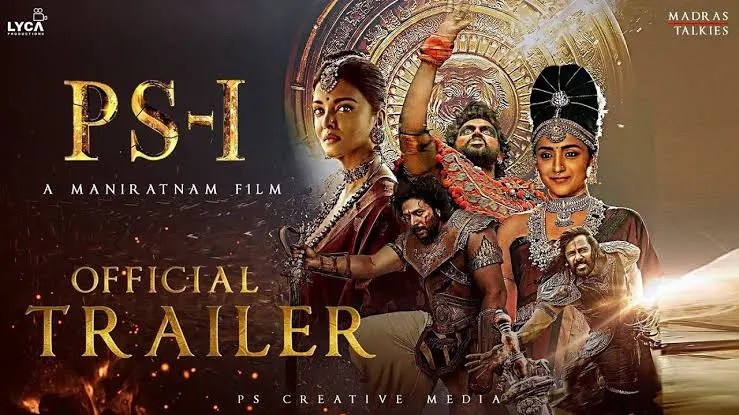
The production cost of PS1 (Ponniyin Selvan – part 1) was around US$ 60 million – source, the vast internet.
The director of this movie, Mani Ratnam, was not likely constrained by budgets. I suppose he could hire the best top-tier talent available. Not just actors but the best technicians as well. The sets are lavish, bordering on garishness, and the entire production smacks of a fairy-tale setting. Which probably was the central idea of this film.
To each his own, I guess. I prefer realism in my movies.
And there are movies made with shoestring budgets.
The tale of another production
This production dragged on for years due to the lack of funding, which caused frequent setbacks. The director could not raise any money from film producers, so he couldn’t hire the best available talent. Most crew members lacked experience and worked on an unpaid basis. Ravi Shankar, not yet the legendary sitar player, composed the score.
Battling all these constraints, the final product, however, manages to convey a very pure, personal story partly because of everyone involved’s relative innocence. It was later called “one of the greatest pictures ever made” by Philip French, a film critic for The Observer.
The film was Pather Panchali (Song of the Open Road), in which a family in a small village in the Indian state of Bengal endures abject poverty.
The director?
Satyajit Ray.
Pather Panchali – 1955
His birth
Satyajit Ray was born May 2, 1921, in Calcutta [now Kolkata], India, and died April 23, 1992, in Calcutta
His early days
Ray’s father passed away when he was young, so he was raised by his mother. Both his grandfather and father were authors and artists. He attended a public school where he learned Bengali. He then transferred to Presidency College, the best university in Calcutta, where he was instructed in English. As a result, he could graduate from high school in 1940, having achieved native proficiency in both languages.
At Santiniketan
In 1940, his mother encouraged him to enroll in art classes at Rabindranath Tagore’s Santiniketan University, located north of Calcutta. At Santiniketan, Ray, whose previous life experiences had been limited to the urban and Western spheres, was exposed to Indian and other Eastern art and developed a deeper appreciation for both Eastern and Western culture.
His first job
Back in Calcutta in 1943, Ray worked as a commercial illustrator for a publishing house. He also worked as an art director for a British-owned advertising agency, eventually rising to prominence as a typographer and book-jacket designer.
Inspiration
Pather Panchali, a novel by Bibhuti Bhushan Banarjee, was one of the books he illustrated in 1944. This book first sparked his interest in the novel’s potential as a film.
Ray’s lifelong love of movies led him to try his hand at screenwriting and, in 1947, to help establish the Calcutta Film Society. In 1949, while French director Jean Renoir was in Bengal to film The River, he inspired Ray to pursue a career in film.
The bleak story, low production style, and shooting with non-professional actors, Vittorio De Sica’s The Bicycle Thief (1948) inspired Ray to film Pather Panchali.
Ray’s primary creative influence was Rabindranath Tagore, whose works inspired some of Ray’s finest films. Ray’s most accomplished film is probably Charulata(1964; The Lonely Wife), a tragic love triangle set in a privileged, Westernized Bengali family in 1879. Ghare Baire (1984; The Home and the World) is a sad study of Bengal’s first revolutionary movement. Set in 1907-08 during the period of British rule, Teen Kanya (1961); “Three Daughters,” English-language title, is a varied trilogy of short films about women.
Some international accolades
Martin Scorsese described his work, and I paraphrase, ‘treasures of cinema that should be watched by “everyone with interest in films.”
The Japanese master Akira Kurosawa went further: “Not to have seen his movies means existing in the world without seeing the sun or the moon.”
His movies are still relevant to this day and are still being screened at festivals. Ray retrospectives are still being screened across the world.
A fair conclusion?
Will a Bahubali or a PS1 survive the passage of time? With folded hands and bended knees (gross exaggeration), my answer is no.
And I say this with all the humility that I can muster.
Ray’s techniques that appeal to me
Real life characters that you can relate to
His frame has no unnecessary clutter and is steady
No exaggerated moves or histrionics by any of his cast
Screenplay based on good, grounded stories
The ability to capture the essence of the story and present it in the right perspective
His ability to leave the viewer with a creative space within his movies
Silence when required, music only when required
NO SONG AND DANCE SEQUENCES
Two of my favorite Ray films
It isn’t easy to pick my favorites, like asking a parent who is their favorite child.
Jalsaghar My first Ray film was Jalsaghar (The Music Room), one of Ray’s finest films. The protagonist of Jalsaghar is Biswambhar, a feudal lord. He self-destructs himself by staging musical performances spending his limited money, to best the oafish young son of a moneylender.
The film investigates the idea that the period just before a system fails is prime time for creative peak performance. Biswambhar is stuck in his ways and will eventually be undone by his stubbornness. Jalsaghar was adapted from a short story by Bengali author Tarasankar Bandyopadhyay.
Although Jalsaghar was met with lukewarm reviews upon its initial release in India, it won the Presidential Award for best film in India. It was instrumental in establishing Ray’s reputation as a director beyond India. As time has passed, it has been widely hailed as one of the greatest movies ever made and is now considered a cinematic classic.
Angantuk The movie shows a Calcutta resident Anila Bose receives a letter from someone posing as her missing uncle, Manmohan Mitra. The latter decides to return to India to spend time with his only living relative, Anila, after living abroad for 35 years. While Anila anticipates it with excitement, Sudhindra, Anila’s husband, has doubts. Their son, Satyaki, quickly becomes friends with him after introducing himself as an anthropologist who has visited every continent.
When Anila mentions her grandfather’s will, Sudhindra immediately suspects that he has come to collect his share of the inheritance. While their son is convinced that he is who he says he is, Anila begins to have doubts about his identity.
The film’s central conflict revolves around the family’s efforts to learn the man’s true identity. Sudhindra puts the guest through a battery of tests, including a review of his identification documents. However, the visitor’s mind-reading skills cause embarrassment for both Sudhindra and his friend Rakshit. In a last-ditch effort to get to the bottom of things, Sudhindra has a lawyer friend interrogate the visitor. The lawyer makes no headway, and the lawyer’s temper flares up, and he tells the visitor to “either come clean or just clear out.”
The guest leaves the following morning. The family begins searching for him and tries to win him back, and now they know he has visited the executor of the will.
Later they find out that Manmohan has left them his inheritance after he moves to Australia.
Utpal Dutt plays the part of Manmohan Mitra brilliantly, and so too do the rest of the cast.
The Ray movies that I have experienced are: Pather Panchali (Song of the Little Road) (1955) 115min B/W Aparajito (The Unvanquished) (1956) 113 min B/W Parash Pathar (The Philosopher’s Stone) (1957) 111 min B/W Jalsaghar (The Music Room) (1958) 100 min B/W Apur Sansar (The World of Apu) (1959) 106 min B/W Devi (The Goddess) (1960), 93 min B/W Mahanagar (The Big City) (1963) 131 min B/W Charulata (The Lonely Wife) (1964) 117 min B/W Kapurush-O-Mahapurush (The Crowd and the Holy Man) (1965) (Two-part film – The Crowd and The Holy Man, running at 74 min and 65 min respectively, B/W) Nayak (The Hero) (1966) 120 min B/W Joi Baba Felunath (The Elephant God) (1978) 112 min Colour Ganashatru (Enemy of the People) (1989) 100 min Colour Agantuk (The Stranger) (1991) 120 min color
For me, the benchmark of any movie I watch is a Ray movie, and only a few measure up to his creations.
The end
Kolkata, came to a complete halt after Ray’s death in 1992. At 6 feet and 3 inches tall, his man was justly hailed as one of the city’s most towering creatives. But he was more than just a Bengali director or even an Indian director; he was one of the most influential people in the postwar cinema.
He still towers over any present, past, or, I daresay, maybe even future filmmakers. (gross exaggeration, one last time)
His swag was unique, and fans were utterly smitten. This guy could be slummier than the lowest slum dweller. Yet, he knew how to present himself with panache, dressing in well-tailored clothes and smoking 555s (an elite brand of cigarettes those days) in the style of a Westerner. He lived the life of a prince in his heydays, but in the end, he was broke and died a pauper.
In 1958, he married Sheila, an Anglo-Indian and the granddaughter of Coimbatore-based filmmaker Swamikannu Vincent. Their wedding was attended by many well-known people in the film industry and politics, such as chief minister Kamaraj. The first few days of their marriage had been smooth sailing.
His first heartbreak
Little did he know that his wife was cheating on him. One day, Sheila came clean about her secret love affair. He was devastated and bewildered by this news but took it squarely on the chin. He begged her to stay with him.
Several days later, she made a suicide attempt that he prevented. It was then that the couple decided to formally separate. In a few days, Sheila left for London, and he gave her all the support she needed despite her having jilted him.
A few days later, she wed a doctor in London with his blessings in a letter. The husband sacrifices his dignity and love for his ex-wife’s happiness. This is the stuff movies are made of.
His birth
He was born to JP Rodrigues & Roslyn, a couple from Tuticorin, in 1927. Christened Joseph Panimayadasan Rodriguez, he changed his name.
This was the name by which he became famous.
This is the story of Chandrababu, Babu, to his close friends.
Chandrababu was born to a wealthy and prominent Christian Paravar family. His father was a freedom fighter and the publisher of a newspaper called Sudhandhira Veeran. The British government seized the paper and the family’s other assets in 1929 when he was arrested for participating in the satyagraha movement and deported to Sri Lanka. His father took a job at a Tamil newspaper in Colombo, Sri Lanka, and the whole family moved there. Rodrigues later returned to Chennai in 1943 and worked as a journalist for the Tamil newspaper, Dinamani. The family made Triplicane their home.
Before his family relocated to Chennai, Chandrababu attended schools at St. Joseph’s College, Grandpass, Colombo, and Aquinas College. While in Colombo, Chandrababu got Westernized as Colombo was steeped in Western culture in those days. It is said that this was where Chandrababu got his panache and Western ways.
His first low point in life
Chandrababu gave off an impression of being utterly heartless by not attempting to earn and support his family. He also was perceived as an individual with a lack of self-control and decency because of his ways. This made him stand out as an oddity in a group of upstanding citizens. This was the low point in Chandrababu’s life. He often slept hungry, but figured out a way to get a hearty meal before long. He would stroll along the Marina and into Santhome, where he knew he could hang out with people his age. One was Vedachalam, or Veda, as he is more commonly known in Tamil cinema.
Veda was a prolific music director who frequently got his ‘inspiration’ from Hindi and English music, inspiration being a decent replacement for the verb copy.
Tabla Ramu, or Ramu, was another of his friends in the film-music industry. They used to hang out with Veda and had a good time listening to movies and music and daydreaming. They would feed Chandrababu, take care of him, and just have him sing and dance with gay abandon. This was in the 1950s before the slums had taken over Santhome beach.
Despite his family’s disapproval, Chandrababu strongly desired to pursue a career in acting. Only his friend Ganapathy inspired him to develop his acting abilities. Chandrababu was so good at it that he was asked to sing and dance at social gatherings, even as a kid.
Chandrababu met actors Sriram and B. R. Panthulu in his early years and later T. R. Mahalingam through them. His first role was in the supporting cast of the 1947 film Dhana Amaravathi, but he had trouble finding work after that.
Wikimedia Commons
The suicide attempt
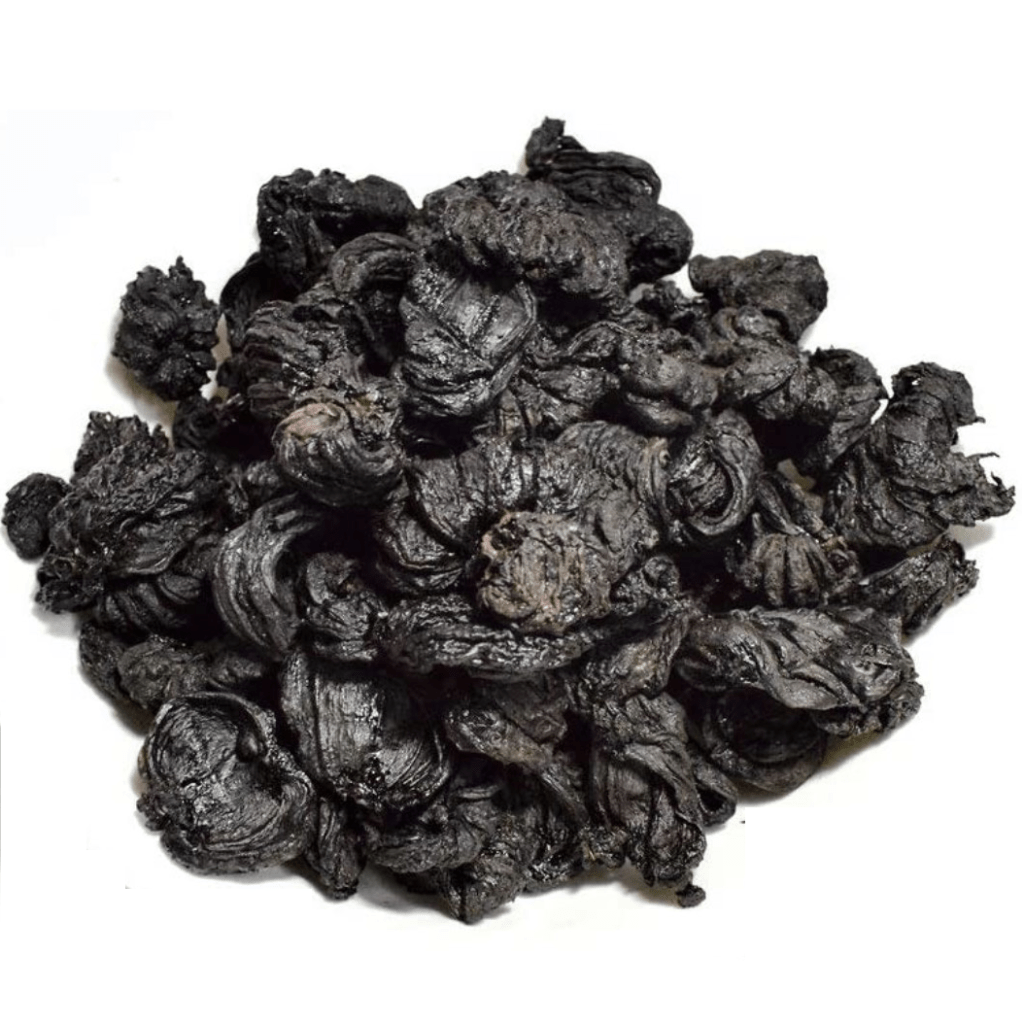
In 1952, out of desperation, he ate copper sulfate crystals in an unsuccessful suicide attempt. His suicide note read that he had been depressed over being unable to meet S. S. Vasan. He also wanted his body to be turned over to B. S. Ramaiah, the director of his solo film. This attempt was in the cafeteria of Gemini Studios. Luckily for him and the industry, he was rushed to the hospital in time and recovered. One of those who rushed him to the hospital was Pudukottai Ganesan, the casting assistant at Gemini Studios. Pudukkotai Ganesan became the famous actor Gemini Ganesan in later years.
Suicide is illegal, so the police had to detain him. When the judge heard the reason for his attempted suicide, the judge asked him to demonstrate his acting skills during the trial. The judge was so impressed by Chandrababu’s performance of a Shakespearean monologue he decided to spare him jail time. After hearing about this incident, director Vasan cast Chandrababu in a small role in his 1952 film Moondru Pillaigal. The actor so impressed the director that he predicted that Chandrababu would become a famous actor. In the same year, Chandrababu acted in Chinna Durai and Mohana Sundaram.
Yodlee Yodlee
Chandrababu was inspired to yodel by western musicians like Gene Autry and Hank Williams, whose music he adored. Supposedly, he was the only South Indian singer-actor who could yodel. The song Poda Raja Podi Nadaydaa was the first time yodeling had been heard in a South Indian film. This song was in the movie Chinna Durai, which T. R. Mahalingam produced and directed.
Chandrababu’s yodeling skills!
Chandrababu received Rs 200 for his work in the movie Mohana Sundaram. He soon became the top comic by playing comedy routines in films with leading actors; Pudhaiyal with Sivaji Ganesan, Nadodi Mannan with MGR, and Mamanmagal with Gemini Ganesan. Who would have expected that he would earn over Rs.100,000 (roughly $10,000) per year at the height of his career? He made history as the highest-paid South Indian comedian, almost on par with the top-billed actors of the time, MGR and Shivaji Ganesan.
Connecting with his fanbase
It was said that Chandrababu would drive to the slums in his Fiat car to chat with the dwellers. It was simply his way of being cordial and being in touch with reality. Chandrababu also did this to show that he, like them, is human. He was known for his speeding. Incidentally, he was one of the film industry’s two fastest and most daring drivers. The other was Gemini Ganesan.
Chandrababu acted in seventy-six movies and showed great versatility, with many actors comparing his singing, dancing, and acting style to that of Danny Kaye and Bob Hope. His ascent in the film industry was achieved with his sheer versatility.
Chandrababu tried constructing a luxurious mansion where he could drive his car up to his bedroom on the first floor, possibly to browbeat the film industry. He had been insulted enough in his lowly years. He would also insist that the producers carry his cigarette tin. R.S. Manohar, a longtime friend and film villain would beg him not to force producers to do this.
Nothing was off-limits
Chandrababu was a straight shooter. He did not conform to the fake humility of the Tamil film industry, where there were no equals. Either you were an ‘anne’ (big brother) or a ‘tambi’ (younger brother). You don’t need a MENSA score of 140 to understand that this was a polished way of showing class distinction. But for Chandrababu, there was no kowtowing this philosophy. If you were an idiot, he called you that to your face.
After the Indo-Pakistani war ended in 1965, a similar but even more shocking incident occurred in New Delhi. Many actors and actresses from South Indian films made the trip to New Delhi to perform for the servicemen and women who had served their country. Top actor Sivaji Ganesan shared the stage with Gemini Ganesh, Savithri, Jayalalitha, Padmini, Devika, P. Suseela, Kannadasan, Al. Srinivasan, M. S. Viswanathan, P.B. Sreenivos, and dozens more. As a result of an invitation from Dr. S. Radhakrishnan, the Madras team was able to spend the evening at the Rashtrapathi Bhavan.
The President requested a musical performance from MSV. Chandrababu sang, “Pirakkum podhum azhuginraai…” MSV accompanied him on the harmonium. The song and the comedian’s performance brought the President to tears, and he showered praise on the singer and the lyricist, Kannadasan. Chandrababu suddenly jumped up from the floor and onto the President’s lap, pinching his cheeks and exclaiming, “Kanna, nee periya rasiganda!” in Tamil (meaning: you are a great fan,my dear). The philosopher seemed unperturbed by the situation, laughing the whole time. So that was Chandrababu for you.
One of the greatest ‘heroes’ of that time, M.G. Ramachandran, or MGR as known, commanded such an extreme following and fawning in the industry; he was simply Mr. MGR to him. In private, the rumor was that for Chandrababu, the initials MGR stood for ‘Mighty Graceless Rapscallion.’ Regardless, Chandrababu still cast MGR in a film he directed. He arranged with a financier to direct his first film Maadi Veettu Ezhai with M. G. Ramachandran as the hero. As a result of Ramachandran’s lack of cooperation, he was ultimately unsuccessful in this endeavor. The film project was also dropped. Scriptwriter Aroordhas chronicled the reasons for Ramachandran’s non-cooperation in his 2002 memoirs. It is because Chandrababu became abusive towards Ramachandran’s elder sibling M. G. Chakrapani.
There was also the renowned lyricist Kannadasan who got on to his wrong side. Even though he wrote Kavalai Illaadha Manindhan with Chandrababu as the protagonist, he never overcame the difficulties of that decision.
The downward spiral of doom
By now, Chandrababu was caught on a downward spiral with alcohol and prescription medication. Despite his destructive lifestyle, MGR offered him a helping hand by offering him a role in his production, Adimai Penn, released in 1969.
Chandrababu’s role as a rickshaw puller in Sabhash Meena was not recognized, although he outshone Sivaji Ganesan, the then top-notch talent in histrionics then, simply because he had made enemies in high places. This naivete led to his ultimate downfall. It was too late for Chandrababu to change his fortunes in the 1950s.
Chandrababu’s final shot was to act and direct a film, Thattungal Thirakkappadum, in 1966. The film was highly acclaimed for its cinematography but was not a box-office success.
Chandrababu spent his last days penniless. During his final years, he stayed in the house of his good friend M. S. Viswanathan until his death on 8 March 1974. Sivaji Ganesan arranged all his last rites and was buried in Quibble Island, Chennai.