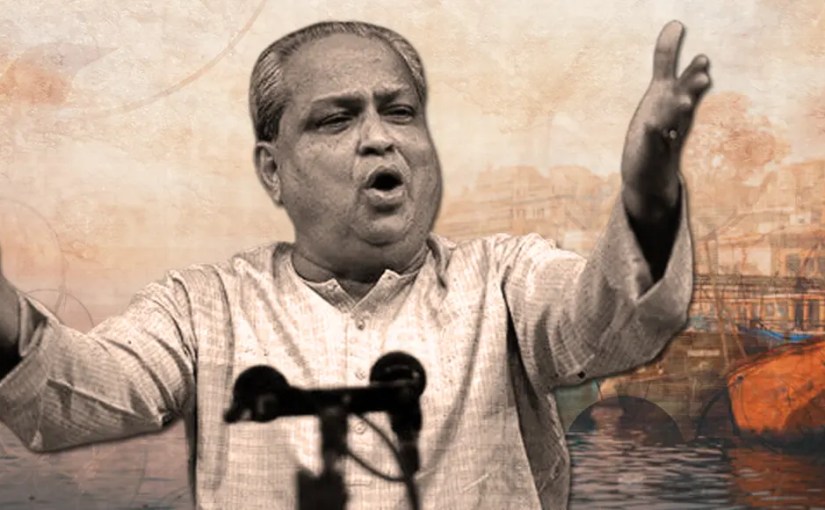
Karaoke, a Dunning-Kruger effect?

It was past the time the cows came home. The good missus and I were squeezing out the few minutes between verticality and horizontality.

Jeez!

It was time to go to bed because the next day was a working day. However, The good wife was on her phone, scrolling through the various videos that social media algorithms were feeding her device.

There was this dude who was singing away to glory. That video was to entice people to a local bar that hosted karaoke events every weekend.

I use the word ‘entice’ with care because he was doing such a horrible job of singing the song that it probably was bait to get people over; two, er..three classes of people.

  • One, those who think they can do a better job and
  • Two, those who felt if he can do it, I can.
  • Three, those repulsed by the singing, muttering, if this is the standard, then even wild horses cannot drag me there.

Now, how can you find wild horses in a city? Exactly.

“Doesn’t he know he can’t sing?” asked my wife.

My reply was, “the poor bloke may not even know enough to know that he can’t sing.”

As soon as those words popped out, I had a surreal experience. I heard myself speak something I never knew existed in my knowledge bank.

The next day, after all the necessary expulsions and intakes, I headed straight to my laptop to find out why people sometimes overestimate their capabilities.

It was then that I stumbled upon the Dunning-Kruger effect.

What is the DK effect? And I am not talking about Dinesh Kartik, you cricket crazies.

The Dunning-Kruger effect

Here it is, courtesy Chat.openAI

Quote:
The Dunning-Kruger effect is a cognitive bias in which people with low ability at a task overestimate their ability. It is named after a 1999 study by David Dunning and Justin Kruger, in which they found that people who scored poorly on a test of their sense of humor also tended to overestimate their sense of humor. The effect is related to metacognition, or the ability to think about one’s thinking. People with low ability at a task may be unable to accurately assess their knowledge because they lack the metacognitive skills needed to do so. This can lead to a phenomenon known as “illusory superiority,” in which people believe they are more skilled or knowledgeable than they really are.
Unquote

The DK effect pervades the entire universe, irrespective of gender, race, or color.

Rombo, sorry, saar/madam, but that includes you and me.

Consider a scenario. You are flying at 30,000 ft and into your third glass of wine. The PA system crackles into life.

“Is there a pilot on board?”

A smart aleck pipes up. ” Actually, there should be two in the cockpit.”

He looks around for applause for the beautiful joke. Or so he thinks.

The steward is not amused.

“We have an emergency on board, and the pilots are incapacitated. I repeat, is there anyone here who can land a plane safely?”

If you raise your arm to volunteer to fly the plane because you watched a few videos on YouTube or if you played a flight simulation game, don’t blame it on the wine.

It’s a case of a full-blown Dunning-Kruger effect.

A boy who ran away from home

The family sat down for lunch. All were being served. An eleven-year-old boy wanted ghee (clarified butter), but was refused. He created a scene and walked out of the house.

Everyone thought he would return once the hunger pangs started gnawing at his innards.
The boy had other ideas. He headed to the nearest railway station and boarded a train to Gwalior with not a penny in his pocket. When the train conductor went around, checking for free boarders, this boy would sing songs of Panditrao Nagarkar and Narayanrao Vyas and impress them. Most Maharashtrian folks used to be connoisseurs of popular music, so he got away and rode for free. Some conductors did not appreciate music, and they handed him over to the authorities. He did spend a few nights in jail!

Reach Gwalior or bust

So, long story short, it took the boy nearly two months to reach Gwalior.

Why Gwalior? Because Gadag, where the boy lived, had no music teachers. And he wanted to sing like Abdul Karim Khan Sahib, whose song he first heard on a gramophone recording. Gwalior was famous for the arts. It was also where Ustad Hafiz Ali Khan sahib lived, the father of Amjad Ali Khan, the renowned sarod player. Gwalior used to serve one meal for all who were learning music, obviously as an encouragement to the arts. That kept him alive. The rest of the time, he was with his guru.

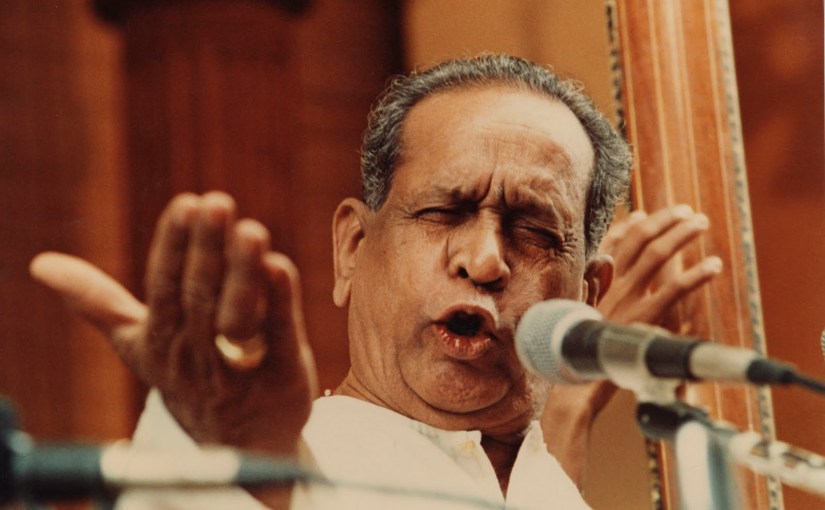
This is how the journey began for Bhimsen Gururaj Joshi, who later became the renowned Pandit Bhimsen Joshi, the first Indian singer to win the Bharat Ratna (2008), who emerged as the face of Khayal Gayaki.

Once during an interview with Gulzar, the famous lyricist of Indian films, about why he walked away from home after being denied a spoonful of ghee, the maestro explained that the ghee was just an excuse to walk away from home.

Kolkata, here we come

When he realized that Hafiz Ali Khan sahib was busy traveling to various cities for concerts, the young Joshi took off to Kolkata and landed as a domestic servant to Pahari Sanyal, a Bengali singer, and film actor. Joshi used to listen to all the rehearsals and grab whatever he could learn.
In later years, Pandit Bhimsen Joshi was singing at a conference of musicians, and Pahari Sanyal was in the audience. Pahari Sanyal had no clue that this was the same boy, now a famous artist, who was once a domestic help in his house. After the concert, Pahari Sanyal went over to congratulate Pandit Bhimsen Joshi for an outstanding recital. The maestro then told Pahari Sanyal that he was the same Joshi, a domestic help at the Sanyal’s household! I am sure many would have given an arm and a leg to glimpse Pahari Sanyal’s face at that moment!

Anyway, getting back on track, the middle-aged Joshi headed to Delhi, where he heard of the father and uncle of Ustad Nasiruddin Dagar, to learn the dhrupad singing style. He had no money to pay fees, so he headed to Jalandhar to meet with Bhakt Mangat Ram, a visually handicapped singer, to learn dhrupad.

Life takes a full circle

At the Hariballab conference, he came across Vinayak Rao Patwardhan, who asked him what his purpose for all this travel was. Almost akin to the story of the musk deer searching the forest for the origin of the scent, when all along the deer had it on its tail, Patwardhan told him that there was Sawai Gandharva a teacher near his very village at Gadag, in the Dharwar district. At this point, his life took a full circle, and returned to his native land and enrolled in the Gandharva Mahavidyalaya, headed by Sawai Gandharva, a disciple of Ustad Abdul Karim Khan, the singer who inspired the young Joshi to start his music career.

Kirana Gharana

Pandit Bhimsen Joshi followed the aesthetics of Kirana Gharana. The word Kirana comes from the village near Sonepur/Panipat, where the mythological character Karna was born. Karna was mispronounced as Kirana. According to Pandit Bhimsen Joshi, the gharana tradition is like Karna, the warrior prince; do or die!

Kirana Gharana boasts of a proud lineage of artists; Roshanara Begum, Ustad Kale Khan, incidentally, her father, Ustad Vilayat Khan sahib, and many others.

His Bollywood foray

Pandit Bhimsen Joshi abhorred the title ‘pandit’ as he felt too many half-baked musicians started calling themselves pandit. He much preferred to be called Bhimsen Joshi without any honorifics.
He wasn’t a film music fan. His forays into the industry were rare. One such occasion was when he sang for the film Basant Bahar.

When Manna Dey had the jitters!

The scene was a competition; the resident Ustad’s voice was Pandit Bhimsen Joshi, and the hero Bharat Bushan’s voice was Manna Dey. In true Bollywood style, the hero could never lose a competition, so it comes down to Manna Dey being pitted against Pandit Bhimsen Joshi and Manna Dey winning. Manna Dey recalls how petrified he was and flatly refused. It was Pandit Bhimsen Joshi who encouraged and encouraged him to sing. The sheer magnanimity and the absolute confidence in the art!

Fast cars were his passion

Besides being an outstanding singer, Pandit Bhimsen Joshi was a car aficionado. He used to drive fast and was a mechanic too! When his car broke down, he would repair the vehicle himself. He had a Fiat, a Ford, and later a Mercedes. He used to travel mainly by air and by train, but certain towns did not have an airport, and train ticket reservations were difficult. So, he bought a used car, hired a driver, and the whole family set out to Mysore for a Dusherra concert. The driver, who barely knew driving, and didn’t have a license, plunged into a 40ft ravine on his way back. Fortunately, Pandit Joshi and his family survived the crash without a scratch. Pandit Joshi attributed it to the quality of cars then. He then decided to drive his cars – the motto was that if he were fated to die in a road crash, it had better be when he had his hands on the steering wheel!

Some highlights

  •  HMV released his first album of devotional songs in 1942.
  •  He was the first musician from India whose concerts were advertised through posters in New York City, United States.
  •  Pt. Joshi is remembered for his famous ragas, including Shuddha Kalyan, Miyan Ki Todi, Puriya Dhanashri, Multani, Bhimpalasi, Darbari, Malkauns, Yaman, Asavari Todi, Miyan Ki Malhar, and others.
  •  He was instrumental in organizing the Sawai Gandharva Music Festival annually as a homage to his guru, Pandit Sawai Gandharva.
  •  In 1998, he was awarded the Sangeet Natak Akademi Fellowship.
  •  Subsequently, he received the Bharat Ratna, India’s highest civilian honor, in 2009.

The maestro passed into eternity on January 24, 2011. He was 88

His thoughts on modern-day singers

When asked what he thought of the modern-day singers, he said they were a talented lot, intelligent and worldly-wise, but none of their renditions lived in the ears of the listeners for long. They are heard and forgotten.

Now that’s a pretty broad brush he used there. Dear reader, what do you think?

Manakkal Rangarajan – the speedster in brighas!

Back in time in India

About two and a half decades back, I was a tour operator, organizing and conducting inbound tours from the UK and USA.  I had a modest office off Lattice Bridge Road when I started this operation.  Lattice Bridge road, known as L.B. Road, bisected Indira Nagar and Thiruvanmiyur. My office was on the Indira Nagar side.

My first glimpse of the man

Every day I used to see a person with a starched white shirt and a white dhoti go past my office, most times in the morning and sometimes in the evening too.  He used to walk with a purposeful gait.  He had rather long hair coming out from his ears, which was accentuated even more so because he had a thinning hairline.  His hair, or whatever was left of it, would be oiled and neatly combed back. His forehead was swathed in vibuthi or sacred ash, punctuated by a red vermilion dot just above the bridge of his nose. A light dusting of talcum powder dressed his face. To describe this gentleman’s personality even more clearly, I would say he looked like the ‘common man’ in R.K. Laxman’s cartoons.  And I don’t mean this disrespectfully.

His personality intrigued me, which led me to enquire about who he was.  Somehow, this reached his son’s ears, and the son paid a visit to my office, asking why I was enquiring about his dad!  I explained that something about his dad differentiated him from the other passers-by. 

My meeting with him

Then I heard of Manakkal Rangarajan and that he was a Carnatic musician.  I told his son that I would like to meet with him.

I met with him later that week, and after the customary salutations and preambles, I asked if he would teach my daughter Carnatic music.  He hesitated a bit but said he would check her aptitude first.  So, I took him home; I lived a stone’s throw away from my office on the Thiruvanmiyur side. She passed the skill or talent test, and the lessons started in earnest, the week after.

She had the fortune of learning music from him. At that time, she was also learning dance from Kalakshetra. Today she is an accomplished Bharatanatyam artiste herself, but she still remembers with pride that she is a student of Manakkal Rangarajan.  The vocal exercises he taught her allowed her to render brigas with speed.  Brigas or brighas are note ornamentations that enhance the beauty of the rendering.   

His birth and background

Manakkal Rangarajan (13 September 1922 – 26 February 2019) was a Carnatic music vocalist from Manakkal village, Trichy district.  He was known for his unique brand of Carnatic music.

Manakkal is a village in Valangaimana taluka, Thiruvarur District, Thiruvarur district, Tamil Nadu State.

Rangarajan’s father, Santhana Krishna Bhagavathar, was an exponent of the Harikatha but did not impart any musical lessons to Rangarajan.    His mother’s name was Seethalakshmi Ammal. Shri. Rangarajan had five brothers. He was the youngest. He started singing in concerts from the age of fifteen.

His rendition of songs such as Ninnuvina (Navarasakannada), Sarasasamadana (Kapinarayani), and Nenarunchinanu (Malavi) was eagerly lapped up by the audience at his concerts. Artists like Murugaboopathi and Umayalpuram Sivaraman enjoyed accompanying him.  So did the violin vidwans such as Kumbakonam Rajamanickam Pillai, Mysore Chowdiah, Lalgudi Jayaraman, and T.N. Krishnan.  

The Tiruvyaru incident 

He used to sing at Tiruvayaru, the birthplace of Shri. Thyagaraja for the music festival. The story goes that M.S. Subbalakshmi, the reigning queen of Carnatic music and a film star, sang before Shri. Rangarajan’s concert. She had a huge fan base, and when MS finished her concert, everyone went to see her off. Shri. Rangarajan had an empty audience. Then he let loose a volley of fast-paced krithis, and everyone came running back to listen to him!

A nice documentary

Later, I started attending his concerts. I once heard him perform at the Music Academy, Madras, and recall a Sankarabharanam (a Carnatic Raga) aalapana, in which he reached the tara sthayi sadjam (the third-octave root note) with exquisite precision.

Manakkal Rangarajan used to render rare Pallavi performances at the Music Academy, Madras, using both hands for the thalams (beat cycles), composed from various nadais (beat structures).

Rangarajan is one of the rare musicians who has never compromised with principles and traditions to gain popularity.    

Music critic Subbudu stated in one of his reviews that had Manakkal taken up Hindustani music or Western music, he would have outclassed them all because of his distinctive, bell-like voice and his reach.  

Titles & Awards

People who followed the career of Shri. Rangarajan worshipped his music, said his brigas were breathtaking and that it was the way they heard it, not just in his heyday but even long after.

Manakkal Rangarajan passed away on February 26, 2019

Cited Sources

Salil da – the complete composer

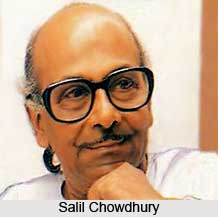
Who is Salil Chowdhury?

Salil Chowdhury, better known by his nickname “Salil-da,” was an accomplished artist who contributed to the film industries of Hindi, Bengali, and southern India. He created some immortal tunes in Malayalam films.  The film Chemeen, the first South Indian film to win the Indian President’s Gold Medal, had songs composed by Salil da.  He composed songs for films in 13 languages, around 75 Hindi films, 41 Bengali films, and 27 Malayalam films, besides MarathiTamilTeluguKannadaGujarati, Odiya, and Assamese films.

His prime years of productivity were the 1950s and 1960s. The fact that he could perform well in so many different styles was one of his greatest assets. 

He was a gifted composer and musician who excelled in the flute, esraj, violin, and piano. The most popular songs to come out of Bollywood were written and performed by him, and he is remembered with great affection. 

His place of birth and musical influences

On November 19, 1923, Salil Chowdhury was born in the small Bengali village of Sonarpur. He grew up in the rural Bengali town of Harinavi. However, he also spent considerable time in Assam, where his father was a doctor with a military posting. 

Salil spent much of his childhood listening to his father’s collection of Western classical music. As a result, he carried this musical inspiration with him for most of his life. The young Salil was taught the importance of incorporating social consciousness into artistic practice. His father first introduced him to the idea of combining art and politics. The hardships and social conditions of the times were reflected in the plays that his father would perform for the villagers and laborers. 

His Alma Mater

Calcutta’s Bangabhaashi College was his alma mater. There, his interest in politics blossomed. He started caring about the “Quit India” movement and the plight of the poor. A member of the Communist Party of India since joining after college, he participated in the Peasant Movement of 1945. 

His social activities

Joining the Indian Peoples Theatre Association (IPTA) followed shortly after he became engaged in the peasant movement. A more politically aware populace was one of the goals of this theater’s productions. These theaters toured from village to village, putting on plays that often-addressed British imperialism, social injustice, and the growing freedom movement. As a result, Salil Chowdhury was compelled to take his work with the IPTA into the shadows, where he remained for the better four years. 

His transition from flute playing to songwriting

He started as a flute player but eventually became a songwriter. He spent his time among ordinary people, writing, composing, and performing. The government banned his plays and poems, making it impossible to find a commercial publisher interested in them. Many of the works he produced during this period have vanished. It was a tough life for IPTA performers. Many people helped for free, but others, like Salil-Da, were paid. In their quest to get where they needed to go, they frequently walked and occasionally went days without eating. Sometimes the police would show up and start randomly beating people if they found out where the troupe was performing. There was a high loss of life due to torture, violence, and starvation. 

Salil Chowdhury stood out during his time with the IPTA because he brought a fresh perspective to the band’s music. His familiarity with Western concepts of harmony, so different from traditional Indian music, was honed over the years by listening to his father’s collection of Western classical music. Eventually, he and the IPTA had a falling out. He was leaving for several reasons, including Communist Party infighting, personal jealousy of his success, and the Party’s attempts to censor his writing. 

The turning point in his life

During this time, something significant happened in his life. “Rikshawalla” was the title of his Bengali short story. A Bengali film adaptation of this story was a smashing success. The success of this film had a lasting impact on Salil-Da. 

In 1953, Salil Chowdhury adapted his Bengali film “Rikshawalla” into Hindi and began working in Bombay’s film industry. The original title of this movie in Hindi was “Do Bigha Zameen.” Since this film did so well, many others in the Hindi genre followed. Notable among them were Madhumati (1958) and Do Bigha Zameen. Throughout the 1950s and 1960s, Salil Chowdhury’s schedule was jam-packed. 

The immortal song

Bombay Youth Choir

He and Ruma Ganguly founded the Bombay Youth Choir in 1957. Western ideas of harmony were a significant inspiration for this. 

On occasions, he was hired by music directors to compose the background score while they choreographed the songs and dances. His work as a background composer for other music directors includes the track “Anokhi Raat” (1968). 

One of the defining features of his approach was the degree to which it ran counter to the industry standards for making movies at the time. When working with a lyricist, the standard procedure was to get in touch with the lyricist first, then bring the lyrics to the music director. For each song, Salil-Da would write the music and the lyrics. Many people attribute his music to be exceptional.

Jingles

Strange as it may sound, Salil wrote the lyrics and composed the music of several ‘jingles.’ In the ’50s and ’60s, they were not called jingles; instead, they were songs recorded to promote products or give critical social messages. Salil composed some songs for Rexona Soap, Lipton Tea, Hamam Soap, CookMe cooking powder, Paludrin tablets, Dulaaler Taal Michhri (Palm Sugar !), etc. He also composed a song warning villagers about Malaria and asking them to take Paludrin! A couple of record collectors have managed to discover these old 78rpms. Seems like they are from ’67-’68.
‘Ato rang roop mayaa’ – Sabita for Hamaam Soap 
– Geeta Dutt sang Hindi, Gujarati, and Marathi versions of the Hammam Soap.
– Geeta Dutt also sang the well-known jingle for Rexona soap – “Rexona sabun ke gandh se milaa hai.”
This song has four versions. Although the song is in Hindi, the versions have commentaries in Hindi, English, Tamil, and Bengali. The record was released in a 78 record and was specially made by the Gramophone Company of India for Hindusthan Lever Ltd. It was a Lintas record (QC1710). 
‘Chaa bono bihaarini’ – song for Lipton Tea sung by Tarun Bannerjee and Supriti Ghosh and directed by Asit Sen. Was released on a 78rpm record. There is also a Hindi version of this song, released on a 78rpm record. 

* A song about the anti-malaria medicine “Paludrin” warning the villagers about Malaria and advising them to take Paludrin. There is also a Hindi version. 

A friendly but informative and educative song for visitors to the big city of Calcutta about the menace of pickpockets on the buses and streets. The song “Kono ak pocketmaarer kaahini shonaai shono” was based on Salil’s classic “Kono ak gaanyer bondhu” and a 78rpm record was released. 

Salil da also composed the following commercials –
Commercial on CookMe Spice powder.
– Commercial for Dulaler Taal Michhri (cane sugar from Dulal)
– 12-second piano music for HMT watches 
– Excellent title music for Bombay Film Festival documentary (Year unknown)

(Source: salilda.com)

His transition to immortality

Salil Chowdhury’s end came suddenly and untimely on September 5, 1995. He lives on with the melodies he created.

He came, he saw, he composed an unforgettable tune, and he left

For those of you who prefer to listen than read

The song Janaki Jaane, from the 1988 Malayalam movie, Dhwani, was composed and written by two gentlemen of Muslim faith, sung by a Christian, and is about Lord Rama. The lyrics are so endearing and beautifully written in Sanskrit, and it goes like this:

During our suffering, you are our only friend,
Only you can end our fear
To cross to the ocean of samsara, you are the only boat
O Lord Rama, the one who Sita knows so well

Unfortunately, so much is lost in translation.

Now take a trip back to 1936. A Jewish refugee composer, a Parsee violinist, composed a tune in the raga Shivaranjini, played every day at dawn in India and probably in the house of overseas Indians and Indophiles.

1988: The song Jaanaki Jaani was composed by Naushad, written by Yusuf Ali Kecheri, and sung by Yesudas. These men have achieved so much greatness that there is no title like Shri. or Mr. that will do them justice, so I have just referred to them with their names.

1936: This tune was composed by Walter Kaufmann, a Jew, and played by violinist Mehli Mehta a Parsi, for a radio station first founded by Professor M V Gopalaswamy, who taught Psychology at Mysore University. Some of you must have guessed it by now. It is the signature tune of All India Radio.

Mehli Mehta, incidentally, is the father of composer-conductor Zubin Mehta.

Almost eight decades have passed since the composition of this piece is based on the raga Shivaranjini. However, the lilting violin notes played over a tambura still manage to evoke a sense of longing. The signature tune was followed immediately by Vande Mataram.

There is doubt if he created this melody solely as a signature tune for AIR or was it was part of a symphony he composed. Whatever that may be, the bottom line: the music is Kaufmann’s, and Mehli Mehta played the violin. No doubts about that.

For the very few who have not heard this signature tune

Kaufmann’s early days

From 1927 to 1933, Walter Kaufmann led opera productions in Berlin, Karlsbad, and Eger, Bohemia, during the summer months. The German University in Prague accepted Kaufmann’s dissertation on Gustav Mahler in 1934. Still, he declined to accept the doctorate after learning that his supervisor, Prof. Gustav Becking, was the leader of the local Nazi youth group. So carrying a letter declining the award of a doctoral degree, he went to the post office and then to a travel agent.

“I carried this letter to the post office, went to the biggest travel agent and bought myself a ticket to Bombay with the money I had received for the operetta (which he had composed),” Kaufmann recalled in his autobiography, which was based on memoirs recorded in 1934 but written up in the 1970s when he was a Professor of Musicology at Indiana University, Bloomington.

He arrives in Bombay

Boarding the Conte Verde in Venice, he arrived in Bombay, where he stayed with a friend until he could secure more permanent housing. His first wife, Gerty Herrmann, a French instructor and niece of Franz Kafka, joined him shortly.

It is reported that someone asked him why Bombay? He replied it was the easiest place to get a visa!

After arriving in Bombay, his first exposure to Indian music took him by surprise. He soon realized that Indian music would take some time to learn, so he decided to sell his return ticket to fund his stay. Regardless, he could not return to Europe while fascism was in power, so he remained in India for another 12 years until the end of World War II. India ended up saving both his and his wife’s lives. They had a daughter whom they named Katherina.

Kaufmann adapted to Indian culture in a way few of his fellow ex-pats could. A low salary and a position as director of European music at All India Radio (AIR) in Bombay awaited him in 1935. From 1937 to 1946, Walter Kaufmann lived in India and served as AIR’s music director.

When the All-India Radio station first went on air in 1939, he wrote an opera called “Anasuya” to celebrate the occasion. Although it had a European theme, the story was set in a fantastical Maratha kingdom.

Several people, including Mehli Mehta, under his leadership, founded the Bombay Chamber Music Society and established the Bombay Chamber Music Society, which performed every Thursday. Kaufmann taught piano in Bombay; he was Zubin Mehta’s teacher.

His stint in Bollywood

Kaufmann had a stint in Bollywood as well. Together with Mohan Bhavani, Kaufmann collaborated on films for Bhavnani Films and Information Films of India. To know more, please click here.

His works include operas, symphony orchestra pieces, ballet scores, chamber music compositions, and film scores. Among his works are ten string quartets, three piano trios, an Indian piano concerto, six Indian miniatures, and the Navaratnam.

His notable works include Musical Notations of the Orient: Notational Systems of Continental, East, South, and Central Asia and The Ragas of North India, and The Ragas of South India: A Catalogue of Scalar Material.

While the Western world has largely forgotten the Czech Jewish composer, his music is still widely prevalent in India. This concert is anchored by Kaufmann’s extraordinary life and the rediscovery of his concert works.

His archives

His works are archived in the Moldenhauer Archives in Spokane, Washington; the Houghton Library at Harvard University; and the Kaufmann Archive in the William & Gayle Cook Library for Music at Indiana University. According to an essay by Agatha Schindler, the Bombay Chamber Music Society performed several of his pieces from this period, including the Navaratnam, Ten String Quartets, Three Piano Trio, Indian Piano Concerto, Six Indian Miniatures, and Indian Concerto.

Friends in high places

Despite his many scholarly publications, and friendships with prominent thinkers like Albert Einstein, Franz Kafka, and Max Brod, Kaufmann is often overlooked when discussing the history of Indian Jewry or European Jews in India.

Albert Einstein’s letter to Walter Kaufmann – Source

Synagogue President in New Delhi and Bene Israel Indian Jew Ezra Kolet founded the Delhi Philharmonic. The New Delhi Philharmonic Orchestra played a previously unheard piece by Walter Kaufmann in 1995 at a symposium on Jewish exiles in India hosted by Dr. Georg Lechner of the Max Mueller Bhavan. From all accounts, Kaufmann spent a few months in Madras, India, taking in the local culture and music. The music by Kaufmann was exotic and layered.

Walter Kaufmann died in 1984, but his signature tune is still played every morning.

Sources:

https://www.thehindu.com/society/radio-reminiscences-the-golden-years/article34840785.ece
https://www.thehindubusinessline.com/catalyst/tuning-into-broadcast-history/article7765864.ece
https://www.asianjewishlife.org/pages/articles/AJL_Issue17_Winter2016/AJL_Issue17_The-Walter-Kaufmann-Story.html
https://thejewsofindia.com/remembering-the-jewish-refugee-who-composed-the-all-india-radio-signature-tune/
https://runtheyear2016.com/2019/08/19/who-is-the-composer-of-all-india-radio-tune/ 4
https://newsonair.gov.in/News?title=Walter-Kaufmann%2C-who-worked-as-Director-of-music-at-AIR%2C-Bombay-from-1937-to-1946%2C-composed-Akashwani%26%2339%3Bs-signature-tune&id=428199
https://holocaustmusic.ort.org/resistance-and-exile/walter-kaufmann/
https://www.thebetterindia.com/169757/all-india-radio-tune-composer-archive-history-kaufmann/
http://www.e-pao.net/epSubPageSelector.asp?src=The_Jewish_connection_to_AIR_Tune_By_Kamal_Baruah&ch=leisure&sub1=EI
https://en.wikipedia.org/wiki/Walter_Kaufmann_(composer)
https://maddy06.blogspot.com/2008/02/air-signature-tune.html
https://www.sweatlodgeradio.com/who-composed-the-all-india-radio-signature-tune/
https://qz.com/india/287319/remembering-the-jewish-refugee-who-composed-the-all-india-radio-caller-tune/
https://schoolofmusic.ucla.edu/event/from-india-to-indiana/

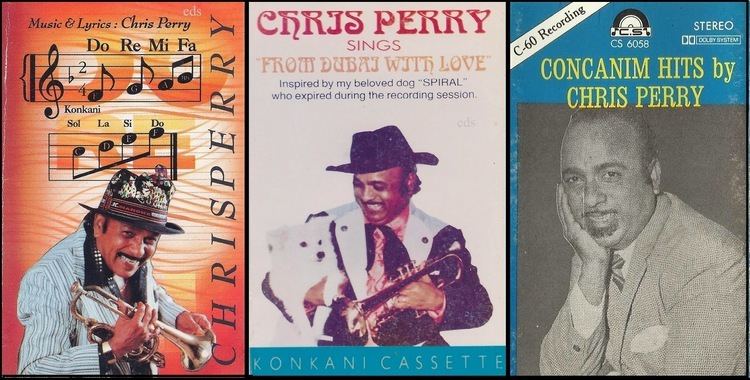
Chris Perry – arranger and the re-inventor of Konkani pop

Chris Perry – image courtesy Alchetron

Chris Perry was born in Borda in 1928 as Kristovam Pereira, the second of eight children born to Agostinho and Espiciosa Pereira.

Goa, the smallest Indian state, located on the Arabian Sea in southwestern India and was a Portuguese territory from 1510 until 1961. While Konkani is the official language, most Goans were taught in Portuguese before 1961. Many Goans are Catholic, speak Portuguese, and hold Portuguese family names. Goa was India’s most Westernized region during Portuguese colonization and 19th-century inflows of British and other Westerners. It is a home of Western music, with Goa being the home to most Indian jazz musicians.

Perry was raised in a musical family and began performing on the tiatr (musical theatre) stage at a young age, playing the role of Bab Pinto. He began to produce his own Tiatr plays and is known for the plays Noxibantlo Nhovro, Padricho Lob, and Vid Mog Kornaranchem in the region.

He became an accomplished musician, especially in the trumpet and the saxophone. He was known for perfect timbre (absolute pitch) and his ability to change between the trumpet and the saxophone mid-song. He was also a prolific singer-songwriter, having written several hits during his era.

Perry infused jazziness in the traditionally Goan music while Anthony Gonsalves, another arranger and violinist, helped introduce Western sounds to Bollywood.

Chris started working in the Bombay movie industry as a violinist during the 1940s, becoming one of Bombay films’ most important arrangers of music. He performed in many Hindi films, notably Kabhi Kabhi and Trishul.

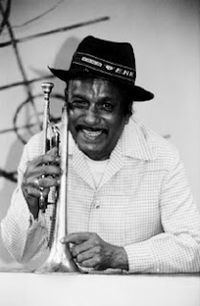
One of the more recognized acts from the 1970s scene was trumpeter Chris Perry and singer Lorna Cordeiro, the resident artists at the Venice club in Central Bombay. Chic Chocolat, the trumpeter, became a fixture in downtown Bombays Taj Mahal hotel, (click on link to listen) working with Chris Perry, the genius who had re-invented Konkani popular music. (click to listen) If you read my article on Chic Chocolate, that is the same Chris Perry I am referring to. Perry moved between Bombay and Kolkata (now Kolkata) in the late 50s and had his own band, The Chris Perry Band.

Chic Chocolate – Taj Mahal Foxtrot

Perry had to engage in an accepted practice of finding gigs, even after making a name for himself. Goan musicians met at Alfreds, a Kolkata restaurant, every morning. Perry, Tony Cyril, Dennis Vazo, Johnny Rodriges, Johnny Baptista, and Mike Machado had tables. Anyone planning a nighttime event would “book” musicians, for example, “one trumpet, and one piano”. . Each musician was paid Rs. 15, and Rs.18 if he wore white jackets and black trousers.

Bombay was a very cosmopolitan city by the late fifties, and people came from around the world. Everything was becoming Westernized, with Western influences flooding, especially fashion and music. The best restaurants served Western food and had dance floors featuring Jazz bands. La Bella, located in the Bombays Fort area, was at the top of the list of such restaurants.

Everybody was there, and every night was packed. Reporters kept away from the doors as alcohol was still tightly banned and obviously nobody wanted the goings-on to be reported in the Press. However, Chris Perry was known to get his feet into Bombay’s doors at La Bella, and since Goa was still under Portuguese rules, he had to get a special visa to perform there. Perry and his band were a regular act in the 1960s at the Venetian, the elaborate disco in Astoria hotel in Bombay. The Astoria was located on Churchgate Street, the city’s musical and entertainment district and Venice were known as the “jazz man’s jazz club,” drawing musicians from across India. In 1958, Dave Brubeck performed there, as did Duke Ellington in 1963.

Perry was considered to be brilliant, a perfectionist, and was obsessed about his musicality. His drummer, Diogo DeSouza, said, “Anyone who joined his band ended up honing their craft The group began touring, stopping in Delhi, Mussoorie, Shimla, and Ooty before settling in Bombay..”

He would carefully write out the arrangement for each player, expecting them to play exactly as he had written. Even if one note was misplayed on any instrument, he could detect it from afar. According to DeSousa, Perry once gave a black eye to one of the band members for not playing a note correctly. Since this happened on the performance day, he brought the musician an ice pack and gave the rest of the band dark glasses. This became a trend setter and since then, the band always wore dark glasses for night performances!

Perry saw 16-year-old singer Lorna Cordeiro performing “Underneath the Mango Tree” at the Bandra fair, Bombay, in 1960. Cordeiro, also from Goa, was brought to Bombay by musician Raymond Albuquerque after winning the Connie Francis Sound-Alike Contest while she was still at school. He offered her a place in his band, as she was outstanding and had received an excellent reaction from the crowd. She agreed, and Perry became her mentor.

Perry worked with her for six months before introducing her to audiences, teaching her to dress, move onstage, and use the mic. She made her debut at The Lido at Calcuttas elegant Firpos restaurant, singing an arrangement of Ella Fitzgerald’s “Cry Me a River.” Cordeiro was signed by His Master’s Voice company (HMV), which initially refused to let him record in Konkani. Perry fought on her behalf, and HMV relented. Cardeiros’s career took off following the album’s release. She became known as just Lorna and became a household name across India.

Perry’s songs were memorable, thumping, romantic, and blended Goan folk and jazz elements. These songs were immediate hits, getting lots of airplay thanks to their romances. Audiences were drawn to Lorna and the apparent chemistry between her and Perry.

Nachom-ia Kumpasar Let’s Dance to the Rhythm), a musical strung together with 20 of her songs composed by her music mentor, Chris Perry, in the Sixties and Seventies show cases their relationship both musically and socially.

Despite Perry being a Catholic man married with three children and the difference in their age, the two began an extremely public, non-marital affair. Offstage, Perry was jealous of Lorna and would hit any man that spoke to her. Their dalliance ended in 1973, with Perry returning to his wife and family.

The rumor was that he forced Cordeiro to sign a contract that she could not perform on stage with any other band. Perry was said to have used physical force to enforce that contract. However, Chris Perry’s son, Glenn Perry, challenged this. Perry claims in his lawsuit that Lorna and Monserrate worked together to bring up several allegations against his late father, including that Chris Perry had made a 20-year deal prohibiting Lorna from singing.

“Lorna was simply the singer that sang Chris Perry’s songs. She did not compose, write lyrics, or perform the music. She was an absolute newcomer to the musical world. Chris Perry molded her to become a great singer through teaching and mentoring her, just as a flower would blossom from a bud.

Glenn claimed her father had chronic Parkinson’s and was not able to speak out during the years leading up to his 2002 death. Glenn said: “I am 100% committed to telling the truth. To fight against that stigma, I am going to do what is necessary to reclaim the good name of my dad,” said Glenn Perry, adding that he has confidence in the legal system and that the truth will eventually prevail.

Despite being a megastar, Cordeiro was forced out of the music business. She never married and became a recluse and an alcoholic. She made a successful comeback in 1995.

A street in Margao was named after legendary singer Chris Perry at Goa’s Heritage Festival as a gesture of respect for his contributions to Konkani music and the film industry. Perry supported other musicians’ careers, with her songs being covered by Mohammed Rafi, Asha Bhonsle, Usha Uthup, Adolph Fernandes, Seby Fernandes, Hema Sardesai, Lulu Fortes, K. Alvares, Ophelia, Mohana, M. Boyer, and H. Britton.

Chris Perry died on 25 January 2002, following complications of Parkinson’s disease.

M.B. Sreenivasan – a music director par excellence

Movie: Paadhai Theriyudhu Paar – Music M B Sreenivasan – Lyrics Jayakanthan – Singers P B Srinivas & S Janaki. Flute – Maali

paadhai theriyudhu paar – i can see the path!

One of P B Srinivas’s and S. Janaki’s best songs, “Maali,” plays the flute (T R Mahalingam). The sound of the flute evokes the call of the cuckoo and the chirping of sparrows. Listening to the song, one feels and sways to the thendral or southern breeze. 

Even after so many years, this song is so hauntingly beautiful. Imagine getting the legend Mali to play the flute for a movie song! Even in that simple phrase, the flute sounds heavenly.

M B Sreenivasan, the legend, who is still not recognized for the depth and breath of his musicality.

Another lovely song in the same movie is “Chinna Chinna Mookuthi” sung by TMS.

“Oru vattom koodi en ormakal meyunna…” is a song that any Malayalee with musical taste will recognize. Many of us are aware that ONV’s poem inspired it. However, few people remember the composer of this piece, M.B. Srinivasan. This is because MBS was a private person who let his work speak for itself and did not interact with the media. 

Dr. K.J. Yesudas

Did you know MBS introduced Yesudas?

MBS made a significant contribution to film music by introducing Yesudas, who became a pillar of Malayalam film music. MBS gave Yesudas his first solo song, “Jaathibhedam Mathadvesham,” in “Kalpadukal” (1961), as well as his first duet with Shanta P Nair a famous artist then, in the same film. , In a function to honor Shanta P. Nair, Yesudas said that on hearing that she was to sing with a newcomer, she said, “Aa kutti paadikote, athine enda,” meaning, let the kid sing, it’s OK. 

MBS collaborated with all the great singers of the time. S Janaki won a national award for her song “Ettumanoorambalathil…” MBS was once again the man who gave P Jayachandran his memorable award-winning song “Ragam Sree Ragam…” He wrote the lyrics for Usha Uthup’s movie hit “Peethambara O Krishna.” 

Birth and childhood 

Manamadurai Balakrishnan Srinivasan was born in 1925 to a wealthy family in Chittoor, Andhra Pradesh. Even though neither of his parents was a professional musician, he was exposed to music at a young age. He attended P.S. High School and Madras Presidency College for his secondary and higher education, respectively. During his college years, he was drawn to Marxist principles and became a full-time member of the Communist Party. He was appointed Secretary General of the All-India Student Federation. He also belonged to the Madras Students Organization (MSO). While in college, he was involved in and led numerous anti-colonial agitations. This led him to establish the Madras Youth Choir, which I will discuss later. At the time, Bharatiyar’s songs instilled patriotic fervor, and the freedom struggle was nearing its conclusion.

Meanwhile, MBS, the nephew of CPI leader M.R. Venkatraman, moved to Delhi to work as a private secretary to CPI leader A.K. Gopalan. He was drawn to the Indian Peoples Theatre Association (IPTA). This association assisted him in becoming acquainted with regional strains of plays and music in various parts of the country. 

Later, he met, fell in love with, and later married Zahida Kitchlew, a Kashmiri Muslim and the daughter of freedom fighter Dr. Saifuddin Kitchlew. Pt. Jawaharlal Nehru married them.  The couple had a son whom the named Kabir.

Film Music 

MBS studied Carnatic, Hindustani, and Western music in the meantime. In 1959, he decided to make a career out of music. 

He worked in the Tamil film industry with director Nimai Ghosh. Both were key figures in the leftist Kumari Films. He only appeared in about 8-9 films in the Tamil film industry. His political beliefs hampered his career in the Tamil industry, so he turned to Malayalam films. 

MBS’s most well-known compositions are in the Malayalam film industry. Adoor Gopalakrishnan, MT Vasudevan Nair, Hariharan, K.G. George, Mohan, Lenin Rajendran, and others came to MBS to set music for their films. The ONV-MBS combination produced some of Malayalam film music’s best songs. “Oru vattam…”, “Nirangal than…”, “Manthram pole…”, “Bharatha muniyoru…”, “Ente kadinjool…”, and so on. MBS and ONV’s communist sympathies, combined with their mutual respect, resulted in rare chemistry that gave birth to unforgettable songs. 

The ability to be versatile and retain identity

The challenge for any music director is having an identity while being versatile. MBS songs are easily identifiable. He was also versatile enough to provide songs in a variety of styles. Semi-classical (“Ragam Sree Raagam..”), Melody (“Thenankeetru Oonjaliley…”, “Saradindu..”), Western/Pop (“Peethambara..”), or Folk (“Neelakkuda choodi..”, “Machane..”). Although he was not Malayalee, he composed the tune only after the lyrics were written. He deeply respected poets and their works, and his music never distorted or overpowered the vocals. His songs were always challenging, so they didn’t become as popular as songs by other music directors. 

Expert in re-recording – background scoring

MBS saw film music as more than just songs. He was an expert at re-recording. He knew exactly where to use and which musical instrument to highlight or underline a scene. He demonstrated how a background score could add meaning to a film through the careful use of tools. He even composed scores for films in which other composers wrote the songs. He demonstrated that silence could be used effectively as music by sparing with BGM. Some of his films had no vocals at all. 

Activism – Madras cine musicians union

He founded the Madras Cine Musicians’ Union and several South Indian Cine Technicians’ Unions. He ensured that musicians were paid on time (spot payment), and their wages were determined based on their skill and experience. He also assisted in regularizing their working hours. While he worked to improve workers’ security and status, he also reminded them of their role in completing the work. He believed in responsible union activity. 

Indian Performing Rights Society

MBS spearheaded the fight to ensure song composers and poets’ performance rights through the Indian Performing Rights Society (IPRS). The result of a European concept is that whenever a song is played on radio and television or in hotel lobbies and public places, the composer and poet receive a royalty payment. This has ensured a reasonably good source of income for people who had many hits in their prime but were no longer active. He served as Chairman of IPRS until his death. 

MBS as an actor

MBS played the lead role of an eccentric professor in John Abraham’s “Agraharathil kazhuthai.” This film became one of the most well-known and perhaps controversial films in Indian cinema history. MBS, being a multi-talented individual, jumped right into the role and excelled. 

Censor board

He worked for the Central Censor Board for a short time. He also served as an adjudicator for numerous national and international music competitions. He was a member of the Sangeet Natak Academy and other cultural organizations. 

Death 

On March 9, 1988, M.B. Srinivasan died of a heart attack in Kedamath, a small village in the Lakshadweep islands. His son Kabir and wife Zaheeda survived him. Kabir, his son, a schizophrenic, passed away on April 4, 2009, and Zaheeda died on October 23, 2002. 

A man on a bicycle help record some all-time popular film songs?

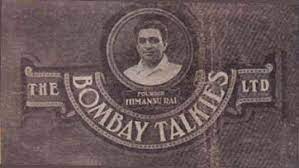
Himanshu Rai’s The Bombay Talkies Ltd logo – Wikipedia
If you prefer the audio version!

If I asked you what the most critical instrument necessary for recording a song was, you would probably say violins. Some would say the tabla, while others might say it is the baton of the conductor and so on. I say it was the bicycle. Want to know why? Read on!

Indian films almost always have songs; some have five or more. Here is how the song is made, from the words of an insider!

A song is born

A prominent arranger Dattaram Wadkar, who is known for his association with Shanker-Jaikishan for over four decades, summed it up like this:

The song is composed on day one. This means the basic tune is composed. It is then handed over to the arranger, who adds all the song’s embellishments and interludes. The musicians are then called in and given their parts, and two or three rehearsals are done. The song is then recorded.

Until recently, recording meant a live performance by the entire ensemble, including the singer. If a mistake happens, then the whole recording must be done again.

If you want to know who Dattaram was, listen to tabla in the songs of Shri 420; Mud mud ke na dekh and Ramayyaa vastaavayyaa and Chori Chori: Aaja sanam madhur chandni mein hum.

Apart from the tabla, Dattaram also played the duff; Dil ka haal sune dilwala and Mera naam raju gharana annam in Shri 420 and Jis Desh Mein Ganga Bahti Hai.

The duff can be heard clearly. Dattaram Wadkar played this

He later became a percussion arranger for Shanker-Jaikishan. His colleague and fellow Goan, Sebastian D’Souza, would arrange the rest of the music on Western instruments, like guitar, saxophone, accordion, etc.

Now, all this is easier said than done. Very few music directors had a permanent orchestra. Often, there would be core musicians and the rest freelancers who would one day be playing for S-J, and on another day, Kalyanji-Anandji and so on. Sometimes, the permanent musician would suggest one of his friends for the job, who would then show up for the rehearsal and the recording.

In some cases, acquaintances alone could not fill all the vacant slots. The word had to be spread far and wide to get the required musicians.

Lata, Asha, Manna Dey & Rafi singing a song. Only two mics and no separate mic for the chorus

The Messengers – the man on a bicycle

This gave rise to a need in the system. Those who could muster up the required musicians for a recording session at short notice. They were called messengers. Later, the messengers came to be known as music coordinators bringing about a modicum of respectability, maybe?

In those early days, telephones were not available to everyone. So the messengers would bicycle to the required musician and tell them that they had to report at this studio and, this time, with this instrument! This was because some of the musicians played multiple instruments. If the musician was unavailable, the messenger would cycle down to the next on the list. To the freelancer, this meant keeping the messenger happy by being very respectful.

Most of the messengers traveled the streets of Bombay close to midnight. So. if you heard a knock at your door in the middle of the night, it was probably the messenger bringing you the good news that you had work tomorrow!

In the orchestra, if you were in the first row, you had to be at the top of your game. Messengers had no say here since the music director would know the front row musicians by their names and specifically ask for them. But if you were in the fourth or fifth row, you had to keep the messenger happy, and some would even offer them a commission, a bribe of sorts!

Messengers were an essential part of the development of the cottage industry that was Old Bollywood; without them, no recordings would have been possible. In time, however, they came to play crucial economic roles in the lives of many musicians, as they were often the deciding factor between employment and unemployment.

Cine Music Association

In theory, the music director must inform the CMA (Cine Music Association) of their requirement. The CMA would then allot the number of musicians required based on equal and fair distribution. This would never happen in real life, so the messengers were all-powerful.

The A-R-P trio

Musicians Alfonso Albuquerque, who played cello, Ram Singh saxophone, and Peter Sequeira on violin and guitar, were known collectively by their initials as “A-R-P.” They were a trio, and often others would refer to them as A-R-P. They were among the first and most influential freelance musicians who also were music coordinators.

A-R-P not only provided their musical talents to composing early film scores but also served as orchestral brokers.

They helped recruit and coordinate other musicians’ efforts to fill out the small orchestras of the time. Of course, for a financial reward.

Ram Singh was succeeded by Manohari Singh much later. There was no alto sax used for a long time until Mahohari Singh took his place.

Some of Manohari Singh’s sax can be heard in this song and in the interludes of Mehabooba Mehabooba in the film Sholay.

The advent of the voice booth

Then another thing happened. The microphone of the singer had to be isolated. Either the technicians were striving for better recordings, or the listening public became more discerning. The long and short of it is that this gave rise to the silence booth, as it was called those days.

During the very early days, the singer would be in the same room as the orchestra and so would be able to sing correctly, maintaining pitch and beat.

This changed with the vocal booth. Many singers felt isolated and also went off scale and tempo. On the one hand, there was a clear vocal recording, but what use if it was off pitch and rhythm.

The song violinist

This gave rise to a song violinist. The song violinist would sit along with the rhythm section of the orchestra and play the song exactly as how the singer was supposed to sing. The song violinist would play into a separate microphone and a mixer which would mix the rhythm section and feed the mix to the singer. This helped to keep the singer in the right tempo and scale. Some of the finest violinists who were song violinists were Harishchandra Narvekar, Gajanan Karnad, and Prabhakar Jog. The absolute pity is that they were never heard in the final recording.

The scenario today

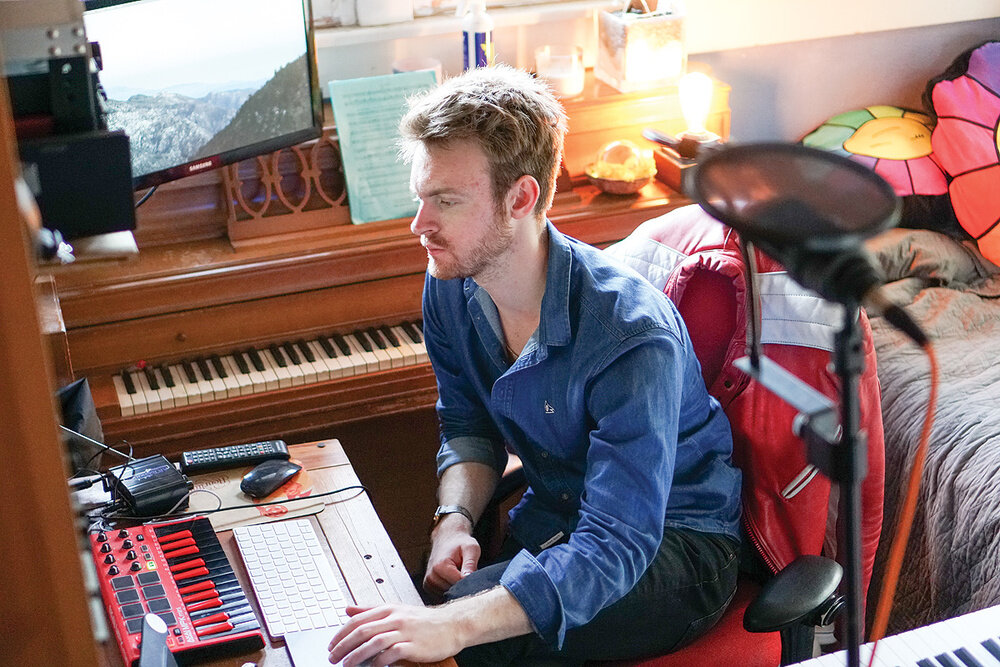
Fast forward to today. Anyone with a reasonably good computer, DAW software, and a good mic, can produce music that can rake in the millions. Bille Eilish, the singer-songwriter who won 4 Grammys in 2020, has this setup.

Image: https://www.forevercurrent.com/blog/2020/2/4/inside-billie-eilish-grammy-winning-home-studio

Finneas O’Connell, Billie’s brother’s modest production setup consisted of Apple Logic Pro X, a Universal Audio Apollo 8 interface, and a pair of Yamaha HS5 nearfields with an H8S subwoofer, all of which were housed in a standard bedroom with a bed against one wall, where Eilish sat to record her vocals.

The total cost of the setup is less than $3,000! Rewards, 4 Grammys!

Sources:

https://mehfilmeinmeri.wordpress.com/2018/03/23/songs-picturised-in-a-recording-studio/

Behind the Curtain – Making Music in Mumbai’s Film Studio – Gregory D. Booth

The one who kept many maestros of Madras in the right key – S. Venkateswara Rao.

black grand piano gray scale photo
Photo by George Becker on Pexels.com
If you prefer the audio version

Digital vs. Acoustic pianos

Most pianos found in homes today are of the digital kind. The reason is that they occupy lesser space and are cheaper than most acoustic pianos. Some have more voices than just the piano tone.

Although some of the more expensive digital pianos are close to acoustic pianos in tone, they are never quite the same.

The essential thing most people are unaware of, there is no need to tune them periodically.

Striking the right keys

Piano tuning is critical. It is not enough to strike the right keys. You could be the best pianist in town, but it will not sound perfect unless the piano is tuned true to scale.

Tuning the piano

All experts agree that a brand new piano needs at least two annual tunings to compensate for humidity changes brought on by the changing seasons. Three or four tunings should be performed within the first year to help the strings stretch. It keeps the piano in tune and keeps the pitch from deteriorating.

Voicing

The timbre of a piano can be tweaked by voicing, which entails changing the hammers’ hardness or softness. Altering a piano’s “voice” is a task best left to a trained piano technician, who can modify the instrument’s tonal character.

Enter the piano tuner of Madras

S. Venkateswara Rao, who has worked as a piano tuner for over half a century, says about birthdays: “I only celebrate music.” He is quick on his feet and loves to brag about himself and the glitzy film industry surrounding him. He can remember specifics like dates and events, but he often forgets the names of the people who come up to greet him. “I never expected this much trouble at my age,” he says with a wry smile.

Video courtesy: Benedict G. https://www.youtube.com/user/benedictgn

Nobody knows how old Venkateswara Rao is. He moves like he is in his twenties. A flood obliterated his birth certificate, so he nor anyone else knows.

Rajahmundry is the place of his birth. When he was five years old, his father passed away; when he was twelve, his mother succumbed to tuberculosis. His upbringing by an uncle who worked as a street theater harmonist kept him connected to the arts community. His apprenticeship with Ratna Varma in Machilipatnam began when he was 14. During that time, he became an expert in constructing and repairing various stringed instruments, including veenas, violins, and harmoniums.

When he was 16, he moved to Madras, India, where trams were still a common sight. Working in various city music stores gave him hands-on experience building and tuning larger, professional instruments.

After four years, Musee Musical offered him a job as a technical assistant, and he accepted, in exchange for Rs. 60 per month, that he could work on pianos. He’s been a freelance tuner there for a while now, and a two-hour shift earns him around Rs. 1,000.

Musee Musical

One of the best piano stores in Madras is Musee Musical. Musee Musical, established in 1842, is a 180-year-old institution. Kishore and Sachin Das are the ones who manage the store. I used to visit the store quite often, not to buy anything since I could ill afford even to buy the cheapest instrument as I was still in school. I remember there used to be a Chinese restaurant nearby, and the delicious smells of Chinese food made me feel hungry.

Pianos by Steinway, Boston, and Yamaha are available for immediate purchase at our store. says Kishore Das, one of the directors of the store, who is also a classical guitarist. “We supply military bands and have serviced some rare instruments, including an 1823-vintage piano at the Air Force Club, New Delhi, a Steinbeck played by MS Subbulakshmi, and a piano played by Tagore.”

The room’s focal point is an elegant grand piano costing roughly Rs 22.28 lakh (approximately $30,000).

Senior to the maestro, Ilayaraja

Even before Ilaiyaraaja had the chance to study with the renowned musician, he had begun training under Master Dhanraj to learn global tuning. “I am senior than Ilaiyaraaja,” he says broadly.

Rao is unique, as he has only heard of three or four other tuners in the city. “You’ve seen movies where Rajnikanth and Sri Devi play the piano, right?” He says, “I’ve tuned those,” with pride and casualness.

He also claims that he has been the on-call piano tuner for every piece written by Ilaiyaraaja.

As soon as Rao started working at Max Mueller Bhavan in 1967, he tuned a piano for the great Handel Manuel. Since then, he’s fine-tuned the radio broadcasts of many famous people, such as musicians Roman Rudnytsky, Billy Taylor, and Chico Freeman, music directors A.R. Rahman, Yuvan Shankar Raja, and Harris Jeyaraj, and singers Unni Krishnan, Srinivas, and Karthik.

He still finds time to tune pianos for various clients across the city, including The Music Academy, Taj hotels, The Leela Palace, Chennai, the show Vijay Super Singers, weddings, receptions, and pretty much any stage with a piano that needs his attention. Every month, he tunes about 15 to 20 pianos.

He has complete authority over the process for the hour and a half it takes him to tune a piano. As he has done since the beginning, he tunes using the same method as Bach. He says, “The method will remain the same until the end of time.” All the other things are constantly evolving.

Mr. Rao is tuning the piano. Thanks to the late actor, Mr. Vivek, whose comedy I have thoroughly enjoyed

It was difficult for him and his five children when his wife of 50 years became ill. He spent money to take care of her diabetes, which she had for a long time. Then, without warning, a heart attack took her life. When asked how he has dealt with her death, he simply responds, “I’m all right. Nothing else exists in my world except the music.”

His seven-year-old grandson misses out on his grandfather’s attention because his life is consumed by his passion for music and work. Having hobbies prevents one from achieving “fine-tuning,” he says bluntly.

When Rao is at work, he doesn’t stop to rest because his satisfaction comes from his work and nothing else. However, he finishes up long before the lights go up on the stage.

While on stage, a guitarist uses only six strings; offstage, he becomes intimately familiar with the piano’s two hundred and twenty. When asked how long he has been tuning for this city, Rao replied, “One town has one man.”

I hope Mr. Venketeswara Rao is well and active. I would appreciate it if anyone could update me on this.

Is the violin a European instrument or an Asian (India)?

Most of us from India might have noticed how we try to credit every good thing, be it in science or the arts, for having its roots in India. I haven’t heard anyone say that English has roots in Sanskrit, at least until now. Having a good dose of patriotism is nice, but sometimes it goes to ridiculous lengths.

Now, let us tackle the issue on hand. Is the violin a European instrument, or did it originate in Asia, especially India? Read on, and it shall be revealed!

The violin is tailor-made for Indian classical music. It is not too loud and very expressive, obviously in the hands of talented musicians. The ornamentations in Carnatic music can easily be mimicked by the violin; the gamakas (oscillations), the grace notes, or kan-swars can be reproduced precisely like its rendered by the human voice. For some reason, the violin is not as popular in Hindustani as in Carnatic music. The harmonium still reigns supreme in Hindustani, an instrument that cannot reproduce meends or gamakas. Some virtuosos try to get around this by playing the notes bridging the meend or a gamak, but at the end of the day, it’s like trying to draw an elephant using straight lines. You can try to compensate for it with shorter straight lines, but it’s still straight and not curved lines!

I come in peace to all ye harmonium players, for I am not a violinist but a non-violen-ist. Get it? In Madras, we would call this a kadi joke!

North Indian classical music has adopted the violin as an accompaniment and a solo instrument. However, its use is still far less common than in its Southern counterpart. The sarangi, with its strikingly vocalistic tone, is still the most popular bowed string instrument in the region.

Violins were first incorporated into Carnatic music at the turn of the 18th and 19th centuries. The violin’s rise to prominence in Carnatic music saw it used as an accompaniment and a solo instrument. Many outstanding violinists dating back to the 19th century have contributed to the refinement of these methods.

At least four musicians are credited for incorporating the violin in Carnatic concerts. One of them is Balaswamy Dikshitar, who belonged to the lineage of Muthuswami Dikshitar, one of the trinities of Carnatic music; the other two are Syama Shastri and Thyagaraja swami. They made the violin famous. After that, it was carried on and improvised by different eminent personalities like Varahappa Iyer, Sri Vadivelu, and Sri Krishna Swamy Bhagavatar.

There is another strain of thought that Balaswamy Dikshitar studied violin with a European violinist in Madras and was inspired by Manali Mudalaichar. Since then, he’s spread the practice of playing the violin in the Carnatic style. His brother and mentor, Sri Muthuswamy Dikshithar, is credited with writing “Nottu Swarams” in the Sankarabharanam Raga for violin practice. Sankarabharanam ragam is all natural notes, like a major scale in Western music.

The ektara, dilruba, and sarangi are all common in Indian music and are bow-played string instruments well-suited for vocal accompaniment. However, the European-style violin found a natural home in the classical music of South India.

The instrument is identical to the ones used by classical Western musicians. Carnatic or South Indian classical music requires a different tuning and playing style, so the violin is adapted accordingly. Although the violin is typically used as an accompaniment to vocal music, it is also played as a solo instrument in Eastern music, albeit with a different grip and technique than in Western classical music.

Violinists from the South Indian subcontinent sit cross-legged on the floor, right foot forward, with the scroll resting on the ankle of the outstretched foot. The violin’s back rests against the player’s left collar bone or shoulder. One of the defining characteristics of South Indian music is the rapid tempo at which musicians play alankarams (ornamentations). This playing position is ideal for Indian music because it allows the hand to move freely all over the fingerboard while keeping the instrument in a steady position to accommodate such rapid tempos.

South Indian Violin as accompaniment
File:Ravikiran 33A.jpg” by Joe Mabel is licensed under CC BY-SA 3.0.

Vadivelu (1810-1845) was the youngest member of the famous Tanjore Quartet.

His contribution to South Indian classical dance is as significant as his innovations in music. He is widely regarded as the musician who made the violin an integral part of Carnatic music, to the point where even former purists accepted it as a fully-fledged Indian classical music instrument. Vadivelu, a composer, vocalist, violinist, and exponent of Bharatanatyam dance, is remembered for his early death at 35. He had studied the violin with a European missionary in Tanjore.

So does the violin have its roots in India, or did the East India Company import it?

According to INTO THE EARLY HISTORY OF THE VIOLIN FAMILY BY CARL ENGEL, published in 1883, the violin originates in (drum roll please) India! And here’s the proof!

From the Internet Archives – The early history of the violin family – Carl Engel – 1883