Elis R. Dungan, the man who introduced MGR to Tamil films

Birth
Elis R. Dungan, or Dungan Ayya, as he was popularly known, was born on May 11, 1909, in Barton, Ohio, U.S.

In the early 1930s, foreigners were addressed as ‘master’ while Dungan was called Dungan Ayya, a more endearing term than ‘master.’ His first forays into photography came about when he bought a box camera to take pictures for his school yearbook. That was his first brush with photography.

Early days
Later, after having saved up enough money working in a gas station, Dungan traveled to Spain and bicycled through most of Spain. He later ended up in Paris, France, where he got a job in the American Library. Duncan’s interest in photography grew during his two years at the Library, and he began doing exhibitions. The library director asked Duncan to take his photography seriously and said he would sponsor him for a university course. That’s how Duncan returned to America. He enrolled at the University of Southern California in cinematography.

Serendipitous meeting
There he met with M. L. Tandon, serendipitously, the son of a wealthy film producer who invited him to visit India. Tandon wanted Dungan to direct Indian movies and raise them to the level of the existing Hollywood productions for viewers in India and the world. It was to be a six-month trial run. Manik Lal Tandon directed the 1935 Tamil film Bhakta Nandanar (transl. Devotee Nandanar) with K. B. Sundarambal, a Carnatic singer and stage artist, and made his film debut. 

This was also Ellis R. Dungan’s first film. There is no known print of the film, making it a lost film.

In a later interview, Duncan remarked that the six-month stint ended as a fifteen-year journey with the Indian movie industry.

Indian cinema in the 1930s
In the 1930s, the Indian film industry was at a nascent stage. Drama troupes were made to stage their plays in a studio. Nothing had to be done. The actors knew their dialogues, and everyone knew their part. A static camera was placed, and the stage was adequately lit up. This meant boring long shots, and most films had a theatrical feel with the actors exaggerating their emotions and delivering their dialogs at the top of their voices.

Changes to Indian Cinema
Dungan changed all that. He said that he had a tough time sobering down the actors of those days and getting them to deliver the dialogs in a normal tone. Most actors in those days were chosen more for their singing talent than their acting prowess.

Dungan struggled to get the actors to emote naturally during the close-up shots.

Dungan was also credited with using mid-range and close-up shots of the scene instead of a long static shot. He introduced a lot of Hollywood technics in his Tamil films, despite technical limitations at that time.

Around the same time, Himanshu Roy’s Bombay Talkies had hired a German crew led by Franz Osteen. Franz worked from 1935 until 1939 and directed the film Achuth Kanya, which starred Devika Rani and Ashok Kumar and was a super hit.

Ellis R. Dungan popularized contemporary makeup, the moving camera, and cabaret dance numbers for Tamil Cinema and moved Tamil cinema away from stage plays’ influence. Dungan, who trained in Hollywood, introduced some crucial techniques to the industry at its infancy in each department, which would have a unique place in its history.

Dungan also introduced the track and trolley to Indian cinema. In fact for a long time, it was called the Dungan track-and-trolley!

Popular films of Ellis Dungan
Dungan mainly worked on religious and historical films during the earliest days of Tamil filmmaking; the movie is talked about because it has daring close-up scenes. It was with Iru Sagodarargal (1936) that Dungan emerged as the leading filmmaker of the newly developing Tamil film industry. The film was shot in Bombay in the Saroj Filmtone studio. It was pivotal to establish a more polished film language for Tamil films, mainly merely photographed dramas and little else. Iru Sagodarargal (1936) is one of Dungan’s best-known films and one of his favorite. In a language and culture that he knew nothing about and was unfamiliar with Tamil. He hired translators, known as rush directors, who were fluent in English and Tamil.

Although born as an Irish American, Dungan made highly appreciated devotional and historical films like;

  1. Sathileelavathi (1936),
  2. Iru Sahotharargal (1936),
  3. Ambikapathi (1937),
  4. Sakunthalai (1940),
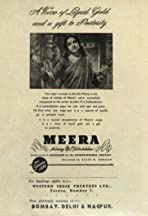
  5. Meera (1945),
  6. Ponmudi (1950) and
  7. Manthirikumari (1950)

The film Ambikapthi, starring the then superstar, M.K. Thiagaraja Bhagavathar, had the famous kissing scene with M.R. Santhalakshmi. It is said many returned to see the kissing scene repeatedly! Many at that time felt that M.K.T. did not know how to act. However, the same film was remade in 1957 with Shivaji Ganesan, one of India’s finest, in the lead. Many felt the earlier Ambikapathi was much better. Dungan’s Ambikapathy was filmed based on a Romeo and Juliet style, including the balcony scene, which resembled a Hollywood production.

Meera, starring M. S. Subbalakshmi Meera is a 1945 Indian Tamil-language musical drama film directed by Ellis R. Dungan and written by Kalki Krishnamurthy. 

The film, based on the life of the 16th century mystic and poet Mirabai, stars M. S. Subbulakshmi as the title character, a zealous devotee of Krishna who considers him to be her husband. 

Despite marrying Rana (Chittoor Nagaiah), she lives her own life, which her husband and family find unacceptable. 

Sadasivam wanted to make a film that would make his singer wife Subbulakshmi’s music accessible to the general public, so he began looking for a good story; Subbulakshmi chose Meera’s story. 

To maintain credibility and historical accuracy, the film was primarily shot on location in North India, including Jaipur, Vrindavan, Udaipur, Chittor, and Dwarka, at Newtone Studio in Madras. 

Meera was released on November 3, 1945, Diwali day, and quickly became a critical and commercial success. 

This prompted the production of a Hindi-dubbed version, with a few scenes reshot, which was released two years later on November 21, and was also a success. 

Despite the fact that the Hindi version made Subbulakshmi a national celebrity, it was her final film as an actress, after which she decided to concentrate solely on her musical career.

Introduction of M.G. Ramachandran
Ellis Roderick Dungan made his directorial debut with Sathi Lilavathi, the first film of the future Tamil Nadu chief minister, M.G. Ramachandran. Dungan had no Indian language skills, an issue that never affected his career as a filmmaker in Indian languages, mainly Tamil.

Dungan directed some renowned Tamil movie actors in his director role, including M. G. Ramachandran in Sathi Lilavathi, T. S. Balaiya, Kali N. Ratnam, and N. S. Krishnan. He was acknowledged for introducing various new techniques in Indian cinema.

Role in the Second World War
During the Second World War, the American Cinematographer made A Short-Return Soldier (1945), a Tamil movie starring T. S. Balaiah, to support the war effort.

From 1941-1945, the United States entered the Second World War. Dungan served as an official photographer for the Madras Government and made wartime newsreels, propaganda films, and a handful of documentaries for The Indian News Parade.

He also filmed the final journey of Mahatma Gandhi.

Return to the USA
Ellis R Dungan returned to the States. Before his final Tamil film, Manthiri Kumari was completed. His wife, Elaine Dungan, who was not an Indophile, didn’t share his passion for making movies and wanted to return to America. So, she gave him an ultimatum, which I am guessing went something like this: either me or the film. So, like any good husband, he dropped his project and returned to the States. T R Sundaram, the studio owner, completed the film. Thus, his last film in Tamil was Manthiri Kumari in 1950. Karunanidhi was the scriptwriter for this film, and much alliteration and social ideology were heavily promoted in the film’s dialogues.

Interestingly, Karunanidhi wanted M.G.R. to be the lead. Still, Dungan felt M.G.R. was not photogenic enough for the role because M.G.R had a cleft in his chin. Ultimately a compromise was reached, and in Mandiri Kumari, M.G.R is seen sporting a small goatee to hide the notch in his chin!

Projects in America
In America, he formed Ellis Dungan Productions, which made documentaries, industrial films, and similar films for almost two decades, starting in 1963.

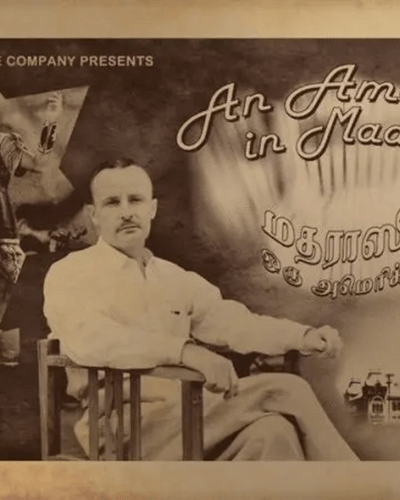
An American in Madras, a documentary film by U. S. based filmmaker Karan Bali, examines Ellis R. Dungan’s contributions to the art of cinematography and his later years as a director of documentary films. The hour-long documentary on Dungan was made in 2013 using information from West Virginia state archives and interviews with people who knew Dungan.

Ellis R. Dungan, the man credited for launching M.G. Ramachandran into Tamil filmmaking with his 1936 movie Sathi Lilavati, passed away in Wheeling, West Virginia, in 1958. He was paid Rs 100 to make his movie Sathi Lilavati.

“Of all the Tamil stage-movie films that I directed in India, my Meera is considered my best film by my peers and the critics in the field,” said Dungan.

I am inclined to agree.

Elis R. Dungan, the man who introduced MGR to Tamil films

Birth
Elis R. Dungan, or Dungan Ayya, as he was popularly known, was born on May 11, 1909, in Barton, Ohio, U.S.

In the early 1930s, foreigners were addressed as ‘master’ while Dungan was called Dungan Ayya, a more endearing term than ‘master.’ His first forays into photography came about when he bought a box camera to take pictures for his school yearbook. That was his first brush with photography.

Early days
Later, after having saved up enough money working in a gas station, Dungan traveled to Spain and bicycled through most of Spain. He later ended up in Paris, France, where he got a job in the American Library. Duncan’s interest in photography grew during his two years at the Library, and he began doing exhibitions. The library director asked Duncan to take his photography seriously and said he would sponsor him for a university course. That’s how Duncan returned to America. He enrolled at the University of Southern California in cinematography.

Serendipitous meeting
There he met with M. L. Tandon, serendipitously, the son of a wealthy film producer who invited him to visit India. Tandon wanted Dungan to direct Indian movies and raise them to the level of the existing Hollywood productions for viewers in India and the world. It was to be a six-month trial run. Manik Lal Tandon directed the 1935 Tamil film Bhakta Nandanar (transl. Devotee Nandanar) with K. B. Sundarambal, a Carnatic singer and stage artist, and made his film debut. 

This was also Ellis R. Dungan’s first film. There is no known print of the film, making it a lost film.

In a later interview, Duncan remarked that the six-month stint ended as a fifteen-year journey with the Indian movie industry.

Indian cinema in the 1930s
In the 1930s, the Indian film industry was at a nascent stage. Drama troupes were made to stage their plays in a studio. Nothing had to be done. The actors knew their dialogues, and everyone knew their part. A static camera was placed, and the stage was adequately lit up. This meant boring long shots, and most films had a theatrical feel with the actors exaggerating their emotions and delivering their dialogs at the top of their voices.

Changes to Indian Cinema
Dungan changed all that. He said that he had a tough time sobering down the actors of those days and getting them to deliver the dialogs in a normal tone. Most actors in those days were chosen more for their singing talent than their acting prowess.

Dungan struggled to get the actors to emote naturally during the close-up shots.

Dungan was also credited with using mid-range and close-up shots of the scene instead of a long static shot. He introduced a lot of Hollywood technics in his Tamil films, despite technical limitations at that time.

Around the same time, Himanshu Roy’s Bombay Talkies had hired a German crew led by Franz Osteen. Franz worked from 1935 until 1939 and directed the film Achuth Kanya, which starred Devika Rani and Ashok Kumar and was a super hit.

Ellis R. Dungan popularized contemporary makeup, the moving camera, and cabaret dance numbers for Tamil Cinema and moved Tamil cinema away from stage plays’ influence. Dungan, who trained in Hollywood, introduced some crucial techniques to the industry at its infancy in each department, which would have a unique place in its history.

Dungan also introduced the track and trolley to Indian cinema. In fact for a long time, it was called the Dungan track-and-trolley!

Popular films of Ellis Dungan
Dungan mainly worked on religious and historical films during the earliest days of Tamil filmmaking; the movie is talked about because it has daring close-up scenes. It was with Iru Sagodarargal (1936) that Dungan emerged as the leading filmmaker of the newly developing Tamil film industry. The film was shot in Bombay in the Saroj Filmtone studio. It was pivotal to establish a more polished film language for Tamil films, mainly merely photographed dramas and little else. Iru Sagodarargal (1936) is one of Dungan’s best-known films and one of his favorite. In a language and culture that he knew nothing about and was unfamiliar with Tamil. He hired translators, known as rush directors, who were fluent in English and Tamil.

Although born as an Irish American, Dungan made highly appreciated devotional and historical films like;

  1. Sathileelavathi (1936),
  2. Iru Sahotharargal (1936),
  3. Ambikapathi (1937),
  4. Sakunthalai (1940),
  5. Meera (1945),
  6. Ponmudi (1950) and
  7. Manthirikumari (1950)

The film Ambikapthi, starring the then superstar, M.K. Thiagaraja Bhagavathar, had the famous kissing scene with M.R. Santhalakshmi. It is said many returned to see the kissing scene repeatedly! Many at that time felt that M.K.T. did not know how to act. However, the same film was remade in 1957 with Shivaji Ganesan, one of India’s finest, in the lead. Many felt the earlier Ambikapathi was much better. Dungan’s Ambikapathy was filmed based on a Romeo and Juliet style, including the balcony scene, which resembled a Hollywood production.

Meera, starring M. S. Subbalakshmi Meera is a 1945 Indian Tamil-language musical drama film directed by Ellis R. Dungan and written by Kalki Krishnamurthy. 

The film, based on the life of the 16th century mystic and poet Mirabai, stars M. S. Subbulakshmi as the title character, a zealous devotee of Krishna who considers him to be her husband. 

Despite marrying Rana (Chittoor Nagaiah), she lives her own life, which her husband and family find unacceptable. 

Sadasivam wanted to make a film that would make his singer wife Subbulakshmi’s music accessible to the general public, so he began looking for a good story; Subbulakshmi chose Meera’s story. 

To maintain credibility and historical accuracy, the film was primarily shot on location in North India, including Jaipur, Vrindavan, Udaipur, Chittor, and Dwarka, at Newtone Studio in Madras. 

Meera was released on November 3, 1945, Diwali day, and quickly became a critical and commercial success. 

This prompted the production of a Hindi-dubbed version, with a few scenes reshot, which was released two years later on November 21, and was also a success. 

Despite the fact that the Hindi version made Subbulakshmi a national celebrity, it was her final film as an actress, after which she decided to concentrate solely on her musical career.

Introduction of M.G. Ramachandran
Ellis Roderick Dungan made his directorial debut with Sathi Lilavathi, the first film of the future Tamil Nadu chief minister, M.G. Ramachandran. Dungan had no Indian language skills, an issue that never affected his career as a filmmaker in Indian languages, mainly Tamil.

Dungan directed some renowned Tamil movie actors in his director role, including M. G. Ramachandran in Sathi Lilavathi, T. S. Balaiya, Kali N. Ratnam, and N. S. Krishnan. He was acknowledged for introducing various new techniques in Indian cinema.

Role in the Second World War
During the Second World War, the American Cinematographer made A Short-Return Soldier (1945), a Tamil movie starring T. S. Balaiah, to support the war effort.

From 1941-1945, the United States entered the Second World War. Dungan served as an official photographer for the Madras Government and made wartime newsreels, propaganda films, and a handful of documentaries for The Indian News Parade.

He also filmed the final journey of Mahatma Gandhi.

Return to the USA
Ellis R Dungan returned to the States. Before his final Tamil film, Manthiri Kumari was completed. His wife, Elaine Dungan, who was not an Indophile, didn’t share his passion for making movies and wanted to return to America. So, she gave him an ultimatum, which I am guessing went something like this: either me or the film. So, like any good husband, he dropped his project and returned to the States. T R Sundaram, the studio owner, completed the film. Thus, his last film in Tamil was Manthiri Kumari in 1950. Karunanidhi was the scriptwriter for this film, and much alliteration and social ideology were heavily promoted in the film’s dialogues.

Interestingly, Karunanidhi wanted M.G.R. to be the lead. Still, Dungan felt M.G.R. was not photogenic enough for the role because M.G.R had a cleft in his chin. Ultimately a compromise was reached, and in Mandiri Kumari, M.G.R is seen sporting a small goatee to hide the notch in his chin!

Projects in America
In America, he formed Ellis Dungan Productions, which made documentaries, industrial films, and similar films for almost two decades, starting in 1963.

An American in Madras, a documentary film by U. S. based filmmaker Karan Bali, examines Ellis R. Dungan’s contributions to the art of cinematography and his later years as a director of documentary films. The hour-long documentary on Dungan was made in 2013 using information from West Virginia state archives and interviews with people who knew Dungan.

Ellis R. Dungan, the man credited for launching M.G. Ramachandran into Tamil filmmaking with his 1936 movie Sathi Lilavati, passed away in Wheeling, West Virginia, in 1958. He was paid Rs 100 to make his movie Sathi Lilavati.

“Of all the Tamil stage-movie films that I directed in India, my Meera is considered my best film by my peers and the critics in the field,” said Dungan.

I am inclined to agree.

M. S. Subbalakshmi – the nightingale

BIRTH

Born on September 16, 1916, in Madurai to Subramania Iyer and Shanmukhavadivu, Madurai Shanmukhavadivu Subbulakshmi, her brother Saktivel, and her sister Vadivambal grew up surrounded by classical music. Her grandmother Akkammal was a violinist, and her mother was a veena artist. M.S., as she became known, was introduced to music at a young age, learning her first lessons from her mother. She made her stage debut when she was only 13 years old.

RELOCATION

She was already a well-known Carnatic vocalist when she relocated to Chennai in 1936. Then, she met T. Sadasivam, a senior executive at Ananda Vikatan, a Tamil weekly. They married in 1940. During her more than 50-year career, M.S. received numerous awards. In 1998, she was awarded India’s highest civilian honor, the Bharat Ratna.

AWARDS

M.S. was the first woman musician to be awarded the Sangita Kalanidhi title by the Music Academy in Chennai in 1968. She returned to music after a brief stint in film. M.S. also received the Padma Bhushan (1954), Padma Vibhushan (1975), Kaalidas Samman (1988), and Ramon Magsaysay Award (1974). She performed at the inaugural India Festival in London in 1982 and in Tokyo, Bangkok, Hong Kong, Manila, Singapore, and Malaysia. She introduced Carnatic music to the West at the Edinburgh Festival in 1963 and the United Nations in 1964. (1966). Many universities awarded her the Doctor of Letters degree, including Sri Venkateswara University (1971), Delhi University (1973), Benaras Hindu University (1980), and the University of Madras (1987). The Viswa-Bharati University, Santiniketan, bestowed her with the Desihothama (doctoral degree).

CHARITY

MS donated the proceeds from his recordings and concerts to various charities. M.S. raised crores of rupees for charity through her shows, with the help of her husband. In 1944, the first charity concert was held for the Kasturba Memorial Fund. The other beneficiaries were

  • The Tirumala Tirupati Devasthanams
  • The Ramakrishna Math
  • The Nanak Foundation
  • The Subramanya Bharati memorial at Ettayapuram
  • The Hindu Temple in Flushing, New York
  • Bharatiya Vidya Bhavan
  • The Kamakshi temple in Kancheepuram
  • Sankara Nethralaya 
  • Cancer Institute
  • Voluntary Health Services
  • The Music Academy

FILM CAREER

Subbulakshmi appeared in four films directed by Ellis Dungan: Sevasadanam, Sakuntalai, Savithri (1941), and Meera (1945), two of which were successful. Sevasadanam, directed by C. Subramaniam and based on Premchand’s novel Bazar-e-Husn, was released in 1938. Meera, which first appeared in Tamil cinema in 1945, established Subbulakshmi as a national icon.

Following the film’s success, Indian classical singer MS Subbulakshmi left the industry to pursue live music full-time.

DEVOTIONAL MUSIC

Subbulakshmi dedicated herself completely to her chosen field, film or music, and her progress was meteoric. Movies did not interest her but her husband persuaded her to do some, keeping the concrete financial objectives, ensuring idealistic, saccharine themes, and emphasizing music. Subbulakshmi had reigned supreme for nearly ten years and five films.

She has sung bhajans in ten languages, each setting high standards for diction, purity and emotional content. Many leaders and political giants of the time, including Mahatma Gandhi, Jawaharlal Nehru, and Rajaji, praised her vocal abilities. M.S. was a devout follower of Kanchi Paramacharya. The Paramacharya wrote the benediction “Maitreem Bhajata,” which M.S. sang at the end of her concerts at the United Nations and Carnegie Hall. She recorded Venkatesa Suprabhatam for HMV, and the royalties go to the Tirupati Tirumala.

Devasthanam’s Veda Patasala (school).  Another of her recordings was Bhaja Govindam, a hymn by Adi Shankaracharya and Vishnu Sahasranamam, which contains 1000 names of Vishnu. I grew up listening to this particular vinyl since my parents would play this record every day, early morning!

THE END

ACCORDING TO HOSPITAL AND FAMILY SOURCES, M S Subbulakshmi died in Chennai on Saturday night, December 11, 2004, due to complications. She was 88 years old.

Sadasivam, her husband, died in 1997.