The Anglo-Indians
When the British took up un-invited residency in India, they not only helped unburden India’s wealth but also sowed their seeds giving rise to a whole new race of people. The Anglo-Indians
They were misfits, the poor lot. Neither were they accepted by the British as one of them nor were they willing to identify themselves as Indian. I had a few Anglo-Indian friends, very hospitable, good people. Their houses had curtains, carpets, and crockery. In contrast, most Indian households had stainless steel utensils and bare floors.
They had their own vocabulary; for example, idlis ( the famous South Indian breakfast dish) used to be called steamed rice cakes. The strangest one for me was ‘ollock’! Azhaku ( a unit of measure in Tamil) became ‘ollock,’ chutney (a spicy ground coconut concoction) was the side to idlis, and dosas became spiced coconut sauce!
Now that I have set the stage, let’s dive straight into the topic of this blog.
Early days
Harry Webb was born on October 14, 1940, at the King George Hospital, Victoria Street. This hospital was in Lucknow, India! And if you thought this was in London, I don’t blame you. Old-timers in the Maqbara housing colony in Hazratganj, Lucknow, remember Harry Webb as a good-natured kid who spent his summer holidays with his grandfather.
Was he Anglo-Indian?
Harry Webb spent the first eight years of his life in India. Some think that Harry was an Anglo-Indian, a tag that he hasn’t been able to shake off primarily because of his swarthy complexion and that his family has ties to India that go back several generations; his ‘dark’ skin tone has led to persistent rumors that he has “Indian blood.” One probable reason is that he likely descended partly from a maternal great-grandmother who was half Spanish and looked decidedly Mediterranean, giving him a dark complexion that he shares with his mother.
His parents and ancestry
Harry Web was born to Indian Railways catering manager Rodger Oscar Webb and his wife, Dorothy Marie Webb. Dorothy’s stepfather held a high position in the railways, and it was here at the railway institute that Harry Web’s parents first met and fell in love. After spending most of her childhood at a boarding school in Sanawar, close to Simla, Cliff’s mother and sister relocated to Asansol to be closer to their grandmother in 1934.
Harry Web’s great-grandfather, Thomas Benjamin Webb, came to British India in the 1870s to work as an engineer for the railways. Many young men from England came to India searching for work when the rail network rapidly expanded across the subcontinent. Thomas Webb’s son Frederick, then 12 years old, joined him in Perambur, Madras, a few years after his father’s posting to South India.
Quit India
Everything was hunky-dory. The Webs were prosperous and, like all Burra sahibs (big boss as the British ‘masters’ were termed), had a fleet of servants waiting on them, hand on foot with an attitude of thy wish is my command. Then came the freedom movement, and the British were considered public enemy number one.
During the ‘Direct Action’ called for by the Muslim League, Harry Web’s mother was the target of street harassment during heightened nationalist tensions. “Go back to your own country, white woman!” they shouted at her. To some of us migrants, this term is very familiar, right? The Webbs were in Calcutta during the terrible riots in 1947. It was disturbing to see so much blood and dead bodies lying around. In any case, they had to get moving.
And move they did. a three-week voyage on the P&O liner, SS Ranchi, took them back to the UK. The Webbs first settled in a home in Carshalton, North Surrey, before moving to Waltham Cross, Hertfordshire, and, finally, to a council house in nearby Cheshunt.
Early days in the UK.
Harry Web attended the Kings Road Junior Mixed Infants School, the Stanley Park Juniors, and the Cheshunt Secondary Modern. After dropping out of school, Harry Web got a job as a file clerk at Atlas Lamps, but he was already deeply interested in music.
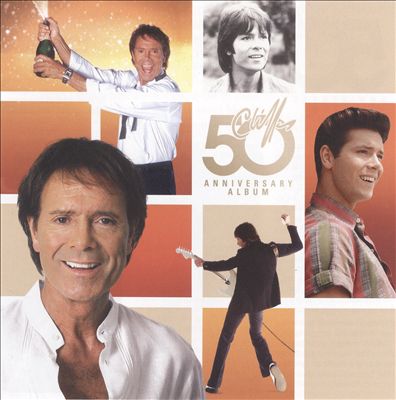
The story gets interesting from here on. Harry Web was around sixteen when his dad bought him a guitar. That single act resulted in him becoming one of Britain’s foremost singers, Cliff Richards!
A Star is born
Why the name Cliff Richards? Using a terrible pun on the word ‘rock,’ businessman Harry Greatorex dubbed him Cliff. Ian Samwell and appended the “Richard” as a tribute to Little Richard. Thus, the persona Cliff Richard was born.
Cliff Richard couldn’t have timed his entry into the music scene better. He burst into the scene when Elvis was fading, and the Beatles had not become famous yet.
Cliff Richard was later knighted. He was awarded the knighthood primarily for charity rather than his influence on mainstream music.
Some of Cliff Richards’s songs that I used to play the guitar and sing were:
Bachelor Boy
Summer Holiday
Young Ones
A Voice in the Wilderness – was my mother’s favorite, incidentally.
We used to tune into Radio Ceylon and listen to these songs on a shortwave radio my dad built. The songs used to ebb and flow in volume, with signal strength, which strangely added to the allure of the songs played.
As I said earlier, Sir Cliff was probably unable to shake off his Indian roots nor the rumor that he was perhaps Anglo-Indian. He once said in an interview that his parents were as British as roast beef.
In another interview, he once said, “I’ve always maintained I’m the most radical rock ‘n’ roll singer Britain has ever seen. I was the only one who didn’t spit or swear or sleep around. I didn’t do drugs. I didn’t get drunk. I didn’t indulge in soulless sex.”
All said and done, he did have his share of scandals, and what if he did seem uncomfortable with his ‘Indianness’? His music was good, and I have some good memories by association.
Boycott Culture
In the days of boycotts, boycotting Bollywood, boycotting this or that artist, and the prevailing cancel culture, are we throwing the baby along with bathwater?
So, separate the artist from the art, and enjoy! End of story.


 Nalla Madras