Kabir: The Weaver of the Infinite, and the Song of the Inner Beloved

“Ghoonghat ke pat khol re, tohe piya milenge…”
“Lift the veil, beloved — and you shall meet your Eternal Lover.”

The audio version of this blog

In a time divided by caste, creed, and the rigid formalities of religion, one voice emerged from the modest lanes of Kashi. It was not the voice of a scholar, nor of a priest, but that of a weaver — Kabir — whose threads joined the sacred and the everyday, the word and the Wordless.

More than 600 years have passed, and yet his voice rings louder than ever, reminding us of a simple, radical truth: the Divine is within you.

The Weaver and the World: Who Was Kabir?

Born in the 15th century — likely to a Muslim family of the Julaha (weaver) caste — Kabir remains an enigma. Legends say he was found as an infant near a pond in Varanasi and raised by a Muslim couple. Others say he was initiated by the Hindu saint Ramananda. Kabir himself defied labels, calling neither mosque nor temple his home. His religion? Love.

He made his living weaving cloth, but his true vocation was to weave unity across the fragmented landscape of Indian society. Through verses that were sharp, wise, and filled with mystical longing, Kabir sang not about a distant God, but about the Beloved who dwells within the breath.

🎧 Featured Song: “Ghoonghat ke Pat Khol Re” – A Cry of Awakening

In this iconic verse, Kabir speaks directly to the seeker. He says:

“The veil is not on your face, but on your mind.
Remove it — and you will see what has always been.”

The word “ghoonghat” refers to the traditional veil worn by women in northern India. But in Kabir’s poetry, it becomes a symbol — of illusion (maya), of ignorance, of the false belief that the Divine is outside us.

🕊️ Kabir’s Core Teachings: Simple, but Not Easy

1. God Has No Religion

Kabir rejected the labels of Hindu and Muslim, choosing instead to follow sahaj path — the path of naturalness and simplicity.

“Allah and Ram are different words,
but the One behind them is the same.”

2. Ritual Without Love Is Empty

He poked fun at rituals if they lacked bhakti — heartfelt devotion.

“You went to the temple, rang the bell.
But did you ring the bell of your own soul?”

3. The Guru Is the Boat Across the Ocean

Kabir revered the Satguru — the true teacher — as one who can destroy illusion and show the path inward.

“The Guru is greater than God,
for he shows you the path to the Divine within.”

4. Live Fully Awake

To Kabir, the real sin was spiritual sleep — not living consciously.

“Kabir soya kya kare, jo jagay so mare.
Jo mare so ubrejay, jaga hua kya dare?”

“Why sleep through life?
The awakened never fear death.”

🌍 Why Kabir Matters Today

  • He offers direct experience over dogma.
  • He affirms that awakening is possible right now.
  • His poetry is alive across traditions: sung by Sufis, Bhaktas, Bauls, and yogis.

Kabir is not a historical figure to be studied — he is a fire to be caught.

❤️ Kabir’s Love: Fierce, Fiery, and Free

Kabir’s relationship with the Divine was intimate, raw, and immediate. He didn’t seek salvation — he sought the Beloved, not in another world, but in every breath.

“Moko kahan dhoonde re bande,
Main to tere paas mein…”

“Where are you searching for Me, dear one?
I am right next to you. In you.”

🪔 Conclusion: Lift the Veil

To read Kabir is to be challenged. To sing Kabir is to be cleansed. To live Kabir is to tear away the veil and meet the Beloved — not in heaven, but in silence, in song, in surrender.

So once more, close your eyes. Listen:

May Kabir’s voice echo within your soul — until the veil lifts, and the One is seen.
Shiva, Shakti, and the Silicon Soul: A Modern Take on Ancient Energies

Modern Take on Ancient Energies

In the cosmic dance of creation, Shiva and Shakti whirl in an eternal embrace, their energies shaping the universe. But what if we told you that this divine duo has a surprisingly modern parallel in the world of technology? Buckle up, dear readers, because we’re about to take a wild ride from the Himalayas to Silicon Valley—where ancient philosophy meets the digital age. Today, we’re exploring the theory that Shiva is potential energy and Shakti is kinetic energy, and whether this idea extends to the relationship between computers and software. Spoiler alert: it’s more connected than you might think.


Shiva: The Stillness of Potential Energy

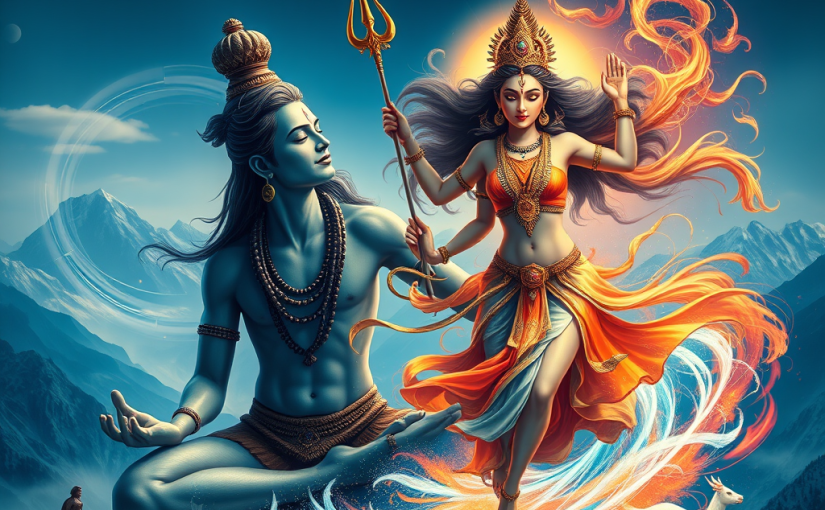
Shiva, the great yogi, sits in deep meditation, embodying stillness and quiet power. He’s like a coiled spring, full of energy just waiting to be unleashed. In physics, potential energy is the stored energy an object holds due to its position or state—like a boulder perched on a cliff, ready to roll. Similarly, Shiva represents the universe’s unmanifested potential, the quiet force behind all that is yet to be.

In Hindu philosophy, Shiva is often described as the static, unchanging consciousness—the silent witness to the world’s unfolding. He’s the ultimate introvert, content to sit in blissful detachment, holding infinite possibilities within. But here’s the catch: without a nudge, that potential remains just that—potential. Enter Shakti.


Shakti: The Dance of Kinetic Energy

Shakti, the divine feminine, is the force that brings Shiva’s stillness to life. She’s movement, action, and transformation—the kinetic energy that turns potential into reality. In physics, kinetic energy is the energy of motion, like that boulder finally tumbling down the hill, unstoppable and full of force. In the same way, Shakti is the dynamic power that creates, sustains, and (when necessary) destroys.

Imagine Shiva without Shakti—he’d probably just sit there, deep in meditation. Shakti is the spark, the activator, the one who says, “Alright, enough meditating—let’s make something happen!” Together, their union is the perfect balance of stillness and motion, potential and action.


Is This Idea Correct?

So, does the idea of Shiva as potential energy and Shakti as kinetic energy hold water? Metaphorically speaking, yes—it’s a brilliant fit. Ancient Hindu texts don’t use the language of physics, but the philosophical essence aligns beautifully. Shiva’s stillness mirrors the latent power of potential energy, while Shakti’s vibrancy captures the essence of kinetic energy in action. It’s not a scientific definition straight out of the Vedas, but rather a poetic interpretation that bridges ancient wisdom with modern concepts. And honestly, it’s too cool an idea not to run with.


Computers and Software: A Technological Parallel?

Now, let’s teleport to the 21st century and test this analogy in the tech world. Picture your computer. The hardware—the motherboard, processor, RAM—is like Shiva. It’s the static platform, the potential waiting to be harnessed. Without software, it’s just a hunk of metal and silicon, much like Shiva in deep meditation, unmoved and unmanifested. It looks impressive, but it doesn’t do much—like a really expensive paperweight.

Software, on the other hand, is Shakti. It’s the code that breathes life into the hardware, making it perform tasks, run applications, and connect us to the digital world. Just as Shakti activates Shiva’s potential, software activates the computer’s capabilities. It’s the kinetic force that turns a dormant machine into a powerhouse of productivity (or, let’s be honest, endless cat videos).

Does this correspondence work? Absolutely. The computer hardware sits there, full of potential, but it’s the software that puts it into motion—creating, calculating, and sometimes crashing (because even Shakti has her chaotic days). In the tech world, we even have our own version of festivals celebrating this union—think software launches and tech expos, where the latest programs and apps are unveiled, bringing new life to our devices. It’s like a digital Maha Shivaratri, minus the incense and chanting (though, hey, maybe that’s next).


A Dash of Quantum Spice

For those who like their philosophy with a side of science, here’s a bonus: some modern thinkers link Shiva and Shakti to quantum physics. Shiva’s dance, the Tandava, is sometimes compared to the unpredictable, wave-like behavior of subatomic particles—pure potential until observed. Shakti, then, could be seen as the force that collapses that potential into reality. It’s a heady mix of mythology and quantum mechanics, but it adds a fascinating layer to the analogy. (Just don’t ask me to explain Schrödinger’s cat in Sanskrit.)


Conclusion: The Dance Continues

Next time you boot up your computer, think of it as a mini-cosmic dance. The hardware, your Shiva, holds the potential, while the software, your Shakti, brings it to life. The idea of Shiva as potential energy and Shakti as kinetic energy isn’t just correct in a metaphorical sense—it’s a lens that reveals harmony between ancient spirituality and modern technology. It’s a reminder that even in our digital age, the timeless wisdom of balance between stillness and action still holds true.

So, what do you think? Does this analogy resonate with you? Or do you have your own spin on how Shiva and Shakti play out in the tech world? Drop your thoughts in the comments below—let’s keep the dance going!

Disclaimer:

This blog post is written with deep respect for the sacred nature of Shiva and Shakti, revered figures in Hindu mythology symbolizing consciousness and energy. There is no intention to trivialize or diminish their profound spiritual significance. The modern language, contemporary references, and choice of words used here are solely intended to make the content relevant and relatable to today’s readers. By connecting timeless wisdom to the present day, we aim to engage and inspire curiosity about these ancient concepts in a way that resonates with modern times.

We hope readers will see this as a respectful effort to bring the essence of Shiva and Shakti into a current context, fostering understanding and appreciation without altering their divine importance.

The Ribhu Gita: The Ultimate Spiritual Shortcut (With a Dash of Humor)

If you’ve ever wondered what the essence of Advaita Vedanta is but don’t have the patience to wade through dense scriptures, then Ribhu Gita is your new best friend. Think of it as the “CliffsNotes” version of enlightenment—direct, no-nonsense, and straight to the point. Even Bhagavan Ramana Maharishi himself held it in the highest regard, specifically recommending Chapter 26 as the essence of Self-Realization.

Now, if Ramana Maharishi tells you something is the most important, you pay attention. So, let’s unpack Chapter 26 of the Ribhu Gita in simple, everyday terms—without getting lost in Sanskrit knots.

Wait… What’s the Ribhu Gita Again?

The Ribhu Gita is part of the larger Shiva Rahasya and is essentially a one-way conversation (the best kind of conversation, some might say) where Sage Ribhu teaches his disciple Nidagha the highest truth: You are already Brahman. You are already free. Now stop complicating things.

That’s it. That’s the whole message. But, of course, humans love overthinking, so Ribhu repeats it in about 2,000 verses just to make sure we get the point.

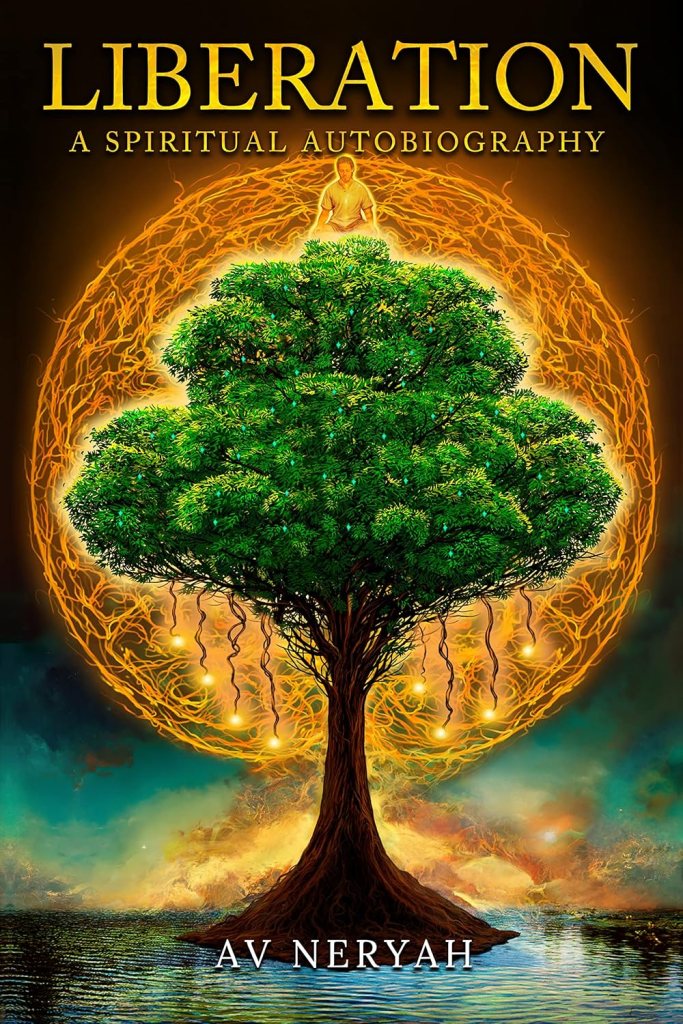
Liberation: A Spiritual Autobiography by Av Neryah is a transformative journey into nondual awakening, blending personal experiences with profound spiritual insights. This compelling memoir serves as both an intimate revelation and a guide for seekers on the path to enlightenment. If you purchase through this link, I earn a small commission at no extra cost to you: Amazon Link.

Chapter 26: The Grand Reveal (Or the Cosmic “Aha!” Moment)

Ramana Maharishi loved Chapter 26 because it’s the ultimate distillation of Advaita Vedanta—it doesn’t bother with rituals, methods, or long philosophical debates. It just drops the truth bomb right in your lap:

✅ You are Brahman.

✅ There is no world, no ego, no suffering—only pure Awareness.

✅ Stop pretending to be anything else.

It’s like when you wake up from a dream where you were being chased by a giant talking banana. The moment you wake up, you instantly know it was all just a dream. You don’t sit around debating whether the banana was real. Similarly, the Ribhu Gita tells you that this waking world is just another illusion—and once you realize that, all your so-called “problems” vanish like morning mist.

Breaking It Down: Ribhu’s Wisdom for the Modern Mind

1. “I am Brahman” – The Ultimate Identity Crisis

Imagine you’re an actor playing a role in a movie. You get so caught up in the character that you forget you’re actually just an actor. Ribhu shakes you awake and says: “Hey, you’re not the role, you’re the pure Awareness behind it all!”

2. “Nothing Ever Happened” – The Cosmic Undo Button

If Brahman is all there is, then whatever we think of as “problems” never really happened in the first place. It’s like getting emotionally involved in a soap opera, only to remember—wait, this is just TV!

3. “Don’t Meditate. Just BE.”

The Ribhu Gita doesn’t ask you to sit in a cave for years chanting mantras (though if you want to, go ahead). Instead, it says, realize you are already That. You don’t become Brahman—you already are. No effort required. It’s like realizing you were wearing your glasses on your head the whole time.

Why This Chapter Matters (And Why You Should Care)

Ramana Maharishi didn’t just love Chapter 26—he recommended chanting it repeatedly until the truth seeps into your bones. Why? Because the human mind is stubborn. It keeps wanting to “do” something to get enlightened. Ribhu says, “Nope, you’re already there. Just realize it!”

So, next time you catch yourself overthinking life, relationships, money, or why WiFi signals are always terrible when you need them most—pause, breathe, and remind yourself:

“I am Brahman. Nothing has ever happened. It’s all good.”

And just like that, the grand cosmic joke is revealed.

Final Thought: If Ribhu Gita were a person, it would be that brutally honest friend who refuses to indulge your drama. Instead of comforting you, they just say, “Dude, wake up. None of this is real.”

And you know what? That’s exactly the kind of tough love we all need.

What do you think? Ready to wake up from the dream? Drop a comment below, unless of course, you’ve already dissolved into pure Awareness. 😆

Sharanagati: Life’s Algorithm, Synchronicity, and Surrender

In case you feel lazy to read, here’s an audio synopsis of this article!

Have you ever wondered if life operates on some hidden algorithm, much like the ones YouTube and Facebook use to serve us cat videos and conspiracy theories? One minute, you’re innocently scrolling, and the next, you’re sucked into a rabbit hole of “10 Ways to Bake Banana Bread.” But what if our body-mind complex works on a similar system, curating our experiences based on our focus? And what if Hindu philosophy has been telling us this for millennia through concepts like sharanagati or surrender?

Trouble Begets Trouble—The Universe’s Auto-Suggestions

There’s an old saying: “Trouble begets trouble.” It’s almost as if the universe runs on the same principle as an algorithm: “If you liked worrying about that minor inconvenience, here are five more crises to spiral into.” Sound familiar? Hindu philosophy would call this the power of the mind’s focus, aptly explained in the Bhagavad Gita (Chapter 6, Verse 5):

“One must elevate, not degrade, oneself by one’s own mind. The mind is the friend of the conditioned soul, and its enemy as well.”

In other words, your mind can be your best friend or that nosy neighbor who keeps bringing up your most embarrassing moments. The choice, apparently, is yours.

The Great Car Color Conundrum

Allow me to confess a minor existential crisis: the time I couldn’t decide between leasing a black or steel-grey car. As if this decision would somehow alter the course of human history, I agonized over it. And then, as if the universe were trolling me, every car I saw on the road was black. It was like a cosmic nudge saying, “Pick black already and move on with your life!”

Psychologists call this the Baader-Meinhof phenomenon, or frequency illusion. Hindu sages, of course, knew this eons ago. They called it smarana—what you hold in your mind manifests in your reality. My fixation on black cars tuned my mental antenna to spot every single one on the road. The universe wasn’t trolling me; it was just playing by the rules of perception. That’s some algorithmic precision!

Parking Spots and Divine Surrender

Now let’s talk about parking. There’s this notoriously crowded street near where I live. Getting a spot there is akin to winning a cosmic lottery. Naturally, I avoided it. But life has a way of forcing us to confront what we despise. Whether it was a dinner invitation or some unavoidable errand, I kept finding myself on that street. At first, I resisted, grumbled, and railed against my bad luck. Then I thought, “Okay, Universe, I give up. You win.”

And just like that, parking spots started appearing out of nowhere. The Gita beautifully captures this shift (Chapter 18, Verse 66):

“Abandon all varieties of duty and simply surrender unto Me. I shall deliver you from all sinful reactions. Do not fear.”

Surrender, or sharanagati, is not about waving a white flag. It’s about aligning with the bigger picture, trusting that the Supreme Algorithm (a.k.a. the Universe, God, or your term of choice) has got this. When I let go of control, the parking gods smiled upon me. Coincidence? Perhaps. But surrendering felt a lot better than fuming.

Synchronicity: Cosmic Humor at Work

Carl Jung called it synchronicity; Hindu philosophy simply calls it lila—the divine play. It’s when events align so perfectly, it feels like a wink from the cosmos. The Isha Upanishad offers profound insight into this interconnectedness:

“The Self is everywhere, within and without. Whoever sees all beings in the Self and the Self in all beings feels no hatred.”

When you recognize the interconnectedness of everything, life stops feeling random and starts feeling orchestrated. Like when you think about an old friend, and they call you out of the blue. Or when you’re searching for answers, and a random podcast or book gives you just the clarity you need. It’s the cosmic algorithm in action, personalized just for you.

The Universe’s Sense of Humor

Let’s not forget that life’s algorithm comes with a built-in sense of humor. It’s like that mischievous friend who knows exactly how to push your buttons but ultimately has your back. You’re trying to plan every detail, and life goes, “How cute. Here’s a completely unexpected curveball.”

Take my parking saga. I spent months stressing over something entirely out of my control, only to realize that surrendering—truly letting go—opened the door to solutions I couldn’t have imagined. The universe, it seems, rewards those who stop micromanaging.

The Vedantic Takeaway

Hindu philosophy isn’t just about renunciation or abstract wisdom; it’s profoundly practical. Whether it’s the Bhagavad Gita urging us to master our minds, the Upanishads reminding us of our interconnectedness, or the concept of sharanagati teaching us the art of surrender, these ideas are as relevant today as ever.

So, do we all have a programmable algorithm within us? Absolutely. Is synchronicity real, or is it just our minds playing tricks? Maybe a bit of both. Is surrender the secret to peace of mind? Definitely worth a try.

In the end, life’s algorithm has a sense of humor. You might as well laugh along with it, trust the process, and enjoy the ride. Who knows? The universe might even throw in a good parking spot as a bonus.

Is your balance out of whack? Hormonal imbalance vs Purushartha imbalance

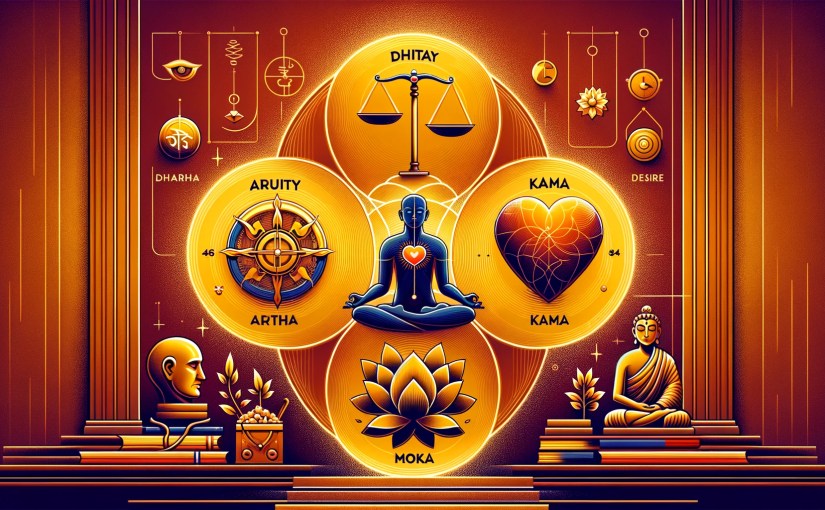
In my previous blog post, I discussed the critical balance among the four Purusharthas: Dharma (duty), Artha (wealth), Kama (desire), and Moksha (liberation). When these elements are not in harmony, the result is akin to experiencing a hormonal imbalance—immediate and often disruptive. Here’s a deeper look, with real-life examples and structured points for clarity:

  • Imbalance and Its Visibility: Just like hormonal imbalances are quickly noticeable, a misalignment among the Purusharthas is evident, though often overlooked. By observing people around us, we can spot numerous instances where this imbalance manifests:
  • A successful businessperson (Artha) neglecting family and ethical practices (Dharma).
  • An individual pursuing personal desires (Kama) at the expense of societal welfare and moral obligations.
  • The Role of Dharma: Our scriptures mention avatars descending to restore balance, highlighting the importance of Dharma. Upholding universal truths and ethical practices is essential in every aspect of life:
  • Ethical business practices leading to profit (Artha) are commendable.
  • Fulfilling desires, whether for material objects like cars or personal relationships, is acceptable when guided by Dharma.
  • Pursuit of Moksha: Realizing the importance of going beyond worldly pleasures and seeking spiritual liberation (Moksha) is a noble pursuit, but it comes with responsibilities:
  • Before seeking Moksha, ensure that your actions driven by Dharma, Artha, and Kama have not adversely affected others. Your legacy should leave them in a position equal to or better than before your quest.
  • Abandoning responsibilities and leaving tasks unfinished is contrary to Dharma and denies others their chance at Moksha.

Understanding these principles clearly requires a calm and focused mind. Observing the world around us through the lens of the Purusharthas can offer insightful perspectives on personal and societal behaviors, guiding us towards a balanced and fulfilling life.