Holy Cow! Why We Curse with the Feminine

Ah, the delicate art of cursing. It’s a universal language, a symphony of syllables that transcends borders and cultures. But just like any art form, cursing has its nuances, its regional variations. And in India, my friend, we’ve elevated it to an almost poetic level.

Now, I’m not saying that we Indians have a monopoly on colorful language. Far from it. My American countrymen, for instance, have a rather impressive repertoire of expletives. Take, for example, the classic “son of a…” well, you know the rest. It’s a timeless classic, a go-to phrase for expressing frustration, anger, or just plain old annoyance. And who can forget the ever-reliable “mother…” another versatile term that can be used in a variety of situations.

But here’s the thing: while Americans tend to focus their cussing on, shall we say, less savory aspects of human anatomy, Indians prefer to keep it in the family. Mothers, sisters, daughters – they’re all fair game in our verbal sparring matches.

Take, for instance, the ubiquitous word that rhymes with a certain English cricketer’s name. It’s a crass term, no doubt, but one that’s hurled with alarming regularity across the length and breadth of our country. From the bustling streets of Delhi to the rarified air of the Bollywood elite, it’s a staple of our everyday vocabulary.

Then there’s the Chennai special, a word that shares an unfortunate phonetic resemblance to a popular fizzy drink. This particular gem is a favorite among the city’s auto-rickshaw drivers, who seem to have an endless supply of creative variations.

And let’s not forget the regional variations. Every corner of India has its own unique set of feminine-focused expletives, each more imaginative than the last. It’s as if we’ve collectively decided that the worst possible insult is to associate a man with a woman, to question his masculinity by linking him to the perceived “weaker” sex.

Now, I know what you’re thinking. “This is all very amusing, but isn’t it a bit sexist?” And you’d be right. It is sexist. It’s also hypocritical, considering that we often celebrate men who are, shall we say, “experienced” with women.

But here’s the thing: I don’t think we’re doing it out of malice. I think it’s more a case of ingrained cultural conditioning. We’ve been brought up in a society where women are often seen as second-class citizens, and our language reflects that.

But that doesn’t mean we can’t change. We can start by being more mindful of the words we use. We can challenge ourselves to find new ways to express ourselves without resorting to sexist language. And we can educate our children about the importance of respecting women.

It’s a long road ahead, but I believe we can get there. After all, we Indians are nothing if not resilient. We’ve overcome countless challenges in the past, and I’m confident that we can overcome this one too.

So let’s raise a glass (of non-fizzy beverage, of course) to a future where our language is as diverse and vibrant as our culture, and where women are celebrated, not denigrated. Cheers to that!

Bacon, Blue Eyes, and a Booming Woofer: My Madras Days

Ah, Madras. Or should I say Chennai, as it’s now known? My dear old stomping ground, a city steeped in history, filter coffee, and the lingering aroma of jasmine. But the Madras of my childhood, in the early 1960s, was a different beast altogether. A quieter beast. A beast without the cacophony of a thousand auto-rickshaws vying for your attention. Imagine, if you will, a Madras with barely any traffic!

Our family chariot, a trusty Hillman Minx with the license plate MDJ 1345 (or something close, memory is a fickle mistress at my age), would glide down Mount Road – now Anna Salai for you young’uns – with an almost regal air. One of our regular haunts was Spencer’s, a shopping mecca in those days. Now, why Spencer’s, you ask? Well, my dear reader, it was one of the few places where you could find that most exotic of meats: bacon!

You see, my father had just returned from completing his Master’s degree in Tennessee, USA. He brought back with him not just a head full of knowledge and a suitcase full of souvenirs, but also a hankering for American breakfast staples. Bacon, that crispy, salty delight, was top of the list. Whether his accent had acquired a twang, I couldn’t tell you. I was but a wee lad of five, more preoccupied with the fascinating world around me than the nuances of my father’s vowels.

Now, my father wasn’t just a bacon enthusiast. He was also a passionate member of the Indo-American Friendship Society. Their meetings were held at the rather grand residence of Mr. and Mrs. Clark. Mr. Clark was, I believe, some sort of diplomat, but to my five-year-old self, he was simply the man with the lovely wife who had the most mesmerizing china blue eyes. I was utterly captivated. Mrs. Clark, bless her cotton socks, would often find me staring intently at her, probably with my mouth agape. I’m sure she found it rather amusing.

Madras back then was a city that moved at a slower pace. No blaring televisions, no internet, no mobile phones. My window to the outside world was a magnificent valve radio, lovingly built by my father. This wasn’t just any radio mind you. This was a behemoth, sitting atop a massive speaker cabinet that housed a tweeter, a mid-range, a woofer, and a hand-built crossover network. The sound it produced was rich, warm, and utterly captivating.

The raw materials for this audio masterpiece were sourced from the legendary Moore Market. Ah, Moore Market! A sprawling labyrinth of stalls selling everything under the sun. Old World War II radio sets, headphones, valves, resistors, capacitors – you name it, they had it. I would often accompany my father on his expeditions to this Aladdin’s cave, my eyes wide with wonder. Sadly, Moore Market met an unfortunate end in a fire, but its memory lives on in the minds of many old-timers.

Life in those days had a certain simplicity, a certain peace. Maybe it was the absence of the constant bombardment of information and stimulation that we experience today. Or maybe it was just the blissful ignorance of childhood, where responsibilities were few and worries even fewer. Whatever the reason, I can’t help but feel a sense of tranquility when I think back to those days.

But were those days truly better than the ones we live in now? It’s a question I often ponder. We have so much more today in terms of technology, convenience, and access to information. Yet, we also seem to be more stressed, more anxious, and more disconnected from each other. Perhaps it’s a classic case of “the grass is always greener on the other side.”

One thing is for sure, my formative years in Madras shaped me in profound ways. The sights, the sounds, the smells – they’re all etched into my memory. And while I’ve lived in many different places since then, Madras will always hold a special place in my heart.

Now, I realize this nostalgic ramble might only resonate with those of a certain vintage. If you remember Mount Road, Spencer’s, and Moore Market, then you’re probably in the same age bracket as me. And if you too have a deep affection for the Madras of yore, I’d love to hear your stories. Did you also have a father who built his own radio? Did you spend your afternoons sipping lime soda at a quaint Irani cafe? Let’s take a trip down memory lane together and celebrate the good old days!

The Absurdities of Life: A Comedic Exploration

Life is the most elaborate practical joke ever pulled, and the punchline? Well, we’re it. Every twist, every turn, every ridiculous desire, and every existential crisis is one big cosmic “gotcha!” And what do we do? We soldier on, pretending it all makes sense. Spoiler alert: it doesn’t.Let’s break down this tragicomedy, one absurdity at a time.


Your Body: The Ultimate Lemon

The human body is a marvel of engineering—if that engineering was done by a drunk intern on their first day. Sure, it works most of the time, but it’s also ridiculously fragile.

  • Stub your toe? Your entire day is ruined.
  • Catch a cold? Your body turns into a snot factory overnight.
  • Eat the wrong thing? Enjoy spending the next 48 hours praying to the porcelain gods.

And then there’s the grand finale—death. It’s inevitable, no matter how much green juice you drink, how many yoga classes you take, or how many supplements you shove down your throat. The irony? Most of us spend our entire lives trying to avoid the one thing that’s guaranteed to happen.


Chasing Carrots: The Never-Ending Cycle of Want

If life were a movie, desires would be the recurring villain—always popping up, always causing chaos. No sooner do you satisfy one craving than another comes stomping in like a toddler demanding attention.

Let’s break it down:

  • Want a promotion? Great! But now you want to quit because your boss is unbearable.
  • Want a new car? Sure, but now you need a better house to park it in.
  • Want to find love? Perfect! But now you’re wondering why they leave the cap off the toothpaste every. single. time.

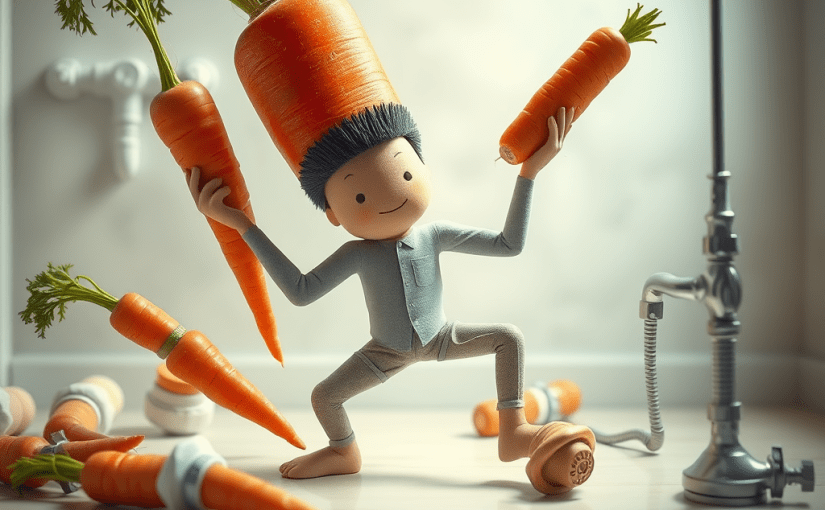
It’s like we’re all hamsters on a wheel, running toward a carrot that keeps moving further away. And when we finally get the carrot? Surprise! There’s another carrot right behind it.


Hormones: Nature’s Comedy Writers

Let’s talk about nature’s cruelest joke: reproduction. Nature took one look at us and said, “Here’s an idea—make them desperate to find a mate.” And then it threw in hormones to make the process even messier.

The absurdity of mating rituals:

  • You dress up, swipe right, and pray the person doesn’t ghost you after you awkwardly overshare about your cat’s dental problems.
  • You go on dates where you pretend to like jazz or sushi or hiking, all to impress someone who might not even like you back.
  • And if it all works out, congratulations! You now have to spend the rest of your life arguing about how to load the dishwasher.

And why do we do this? Because our bodies demand it. They don’t care about love or compatibility—they just want us to pass on our genes. It’s biology, baby. And it’s ridiculous.


Loneliness: The Frenemy That Keeps Us Company

Humans are social creatures, which is just a fancy way of saying we’re terrified of being alone. That fear drives us into relationships—sometimes good, sometimes… well, not so good.


Signs you’re in it for the wrong reasons:

  • You stay because “at least they text me back.”
  • You ignore red flags like they’re decorative banners at a party.
  • You convince yourself that everyone argues about who left the milk out for three days.

But hey, it’s better than being lonely, right? Wrong. Toxic relationships are like drinking expired milk—you know it’s bad for you, but you keep going because you’re too afraid to throw it out. And yet, we stay. Because at the end of the day, loneliness whispers, “At least expired milk is something.”


Validation: The Drug We’re All Addicted To

We all want to be special. We want to be seen, admired, and applauded. But life has other plans.

Here’s how this usually goes:

  • You work hard on a project, pour your heart into it, and present it with pride.
  • The response? “Hmm, it’s okay, I guess.”
  • Or worse, someone says, “You should’ve done it this way instead.”

It’s like baking a beautiful cake and having someone say, “Oh, it’s a little dry.” Thanks, Brenda. I wasn’t trying to win The Great British Bake Off.And yet, we keep chasing validation, like moths to a flame. Because deep down, we all secretly hope someone will look at us and say, “Wow, you’re amazing.” Instead, they usually say, “Could you not?”


From Goo to Grief: The Bookends of Existence

Let’s talk about the two bookends of life: birth and death. Neither one is particularly pleasant.

Birth:

  • You start your life being squeezed out of a human body like a tube of toothpaste.
  • You’re covered in goo, crying uncontrollably, and surrounded by strangers holding scissors.
  • Your first experience in the world is people poking and prodding you while you scream, “What is happening?!”

Death:

  • If you’re lucky, it’s peaceful. If not, well… it’s probably embarrassing. (“He choked on a grape? Seriously?”)
  • And then there’s the aftermath: people crying, awkward eulogies, and someone inevitably saying, “They’re in a better place now,” even though no one really knows.

And sandwiched between these two events is a lifetime of stubbed toes, bad haircuts, and awkward small talk at office parties. Life: the gift that keeps on giving.


Keeping Up With the Cohorts

Humans are competitive by nature. It’s why we invented things like the Olympics, reality TV, and LinkedIn.

The exhausting cycle of one-upmanship:

  • Your coworker buys a new car, so now you feel like your car is trash.
  • Your friend goes to Bali, so now you’re Googling “cheap flights to anywhere exotic.”
  • Your neighbor renovates their kitchen, so now you’re suddenly obsessed with granite countertops.

It’s a never-ending game of “Who’s Winning at Life?” The catch? No one is. Because even if you’re on top today, someone else will outdo you tomorrow. It’s like playing Monopoly but with real money and actual tears.


There Is No Point, and That’s the Point

Life is absurd. It’s messy, chaotic, and often feels like a joke we don’t quite understand. But maybe that’s the point.

Here’s the truth:

  • Life doesn’t make sense, and it probably never will.
  • We’re all just winging it, pretending we have it together, while secretly Googling “how to be a functioning adult.”
  • And that’s okay.

So, laugh at the absurdity. Embrace the chaos. And when life feels like it’s too much, just remember: we’re all in this ridiculous farce together. And honestly? It’s a pretty funny show.

Blast Off to Enlightenment: A Cosmic Journey Within

Ever watched a SpaceX launch and thought, “Man, I wish that was me blasting off?” The rumbling engines, the sheer power, the escape from Earth’s clutches…it’s the ultimate adventure, right? Well, get ready to trade your spacesuit for a meditation cushion, because there’s another journey that’s even more mind-blowing: the journey to enlightenment.

Think of enlightenment as the ultimate “un-tethering” from planet You. No more getting sucked into the black hole of your own drama, no more emotional turbulence, just pure bliss and inner peace. You’re basically a cosmic astronaut, floating in the vast expanse of your own being. Sounds pretty epic, right?

But just like a rocket needs those monstrous boosters to break free from Earth’s gravitational pull, you need some serious fuel to escape the clutches of your ego. And that fuel, my friend, is intention. Think of it as the rocket fuel of your soul.

So, how exactly are blasting off into space and reaching enlightenment similar? Buckle up, because we’re about to go on a wild ride:

1. Fueling Up:

  • Rocket: Tons of liquid hydrogen and oxygen, meticulously calculated and carefully loaded.
  • You: A burning desire to transcend the limitations of your mind. This is where your daily practices come in: meditation, mindfulness, self-reflection, maybe even a yoga class or two. Think of these as your fuel pumps, constantly filling your tank with the energy you need to break free.

2. Guidance System:

  • Rocket: Cutting-edge algorithms, GPS systems, and a team of brilliant engineers at Mission Control ensuring it stays on course.
  • You: A trusted teacher, a spiritual community, or a solid philosophical framework to guide you through the inner workings of your mind. They’re your ground crew, providing support and helping you navigate the complexities of your inner landscape.

3. Stages of the Journey:

  • Rocket: Different stages fire off at specific times, each providing the necessary thrust to reach the next level.
  • You: You’ll also go through different stages of growth and understanding on your path to enlightenment. You might start by becoming more aware of your thoughts and emotions, then work on releasing old patterns and limiting beliefs. Each stage brings you closer to your ultimate goal.

4. Escape Velocity:

  • Rocket: That magic speed needed to overcome Earth’s gravitational pull and soar into the cosmos.
  • You: The point where you’re no longer weighed down by desires, attachments, and the constant churn of negative emotions. You’re free from the drama, free from the suffering, free to simply be.

5. The Destination:

  • Rocket: The International Space Station, the Moon, Mars…the possibilities are endless!
  • You: A state of lasting peace, joy, and a deep connection to something larger than yourself. Some call it oneness, some call it God, some call it universal consciousness. Whatever the label, it’s a state of profound freedom and fulfillment.

6. The View:

  • Rocket: Astronauts get to see Earth in all its glory, a breathtaking perspective shift that changes their understanding of our planet.
  • You: Enlightenment offers a similar shift in perspective. You see the world with fresh eyes, appreciating the interconnectedness of all things and the beauty in every moment.

Now, before you start picturing yourself in a loincloth, meditating on a mountaintop for the next decade, let’s be real. Enlightenment isn’t just for monks in caves or yogis who can twist themselves into pretzels. It’s for anyone who’s ready to ditch the drama, live a more meaningful life, and experience true inner peace.

So, are you ready to blast off on the ultimate inner space adventure? Start fueling your intention, find your guidance system, and prepare for liftoff! The cosmos of your consciousness awaits!

Forex rate or PPP? What’s real?

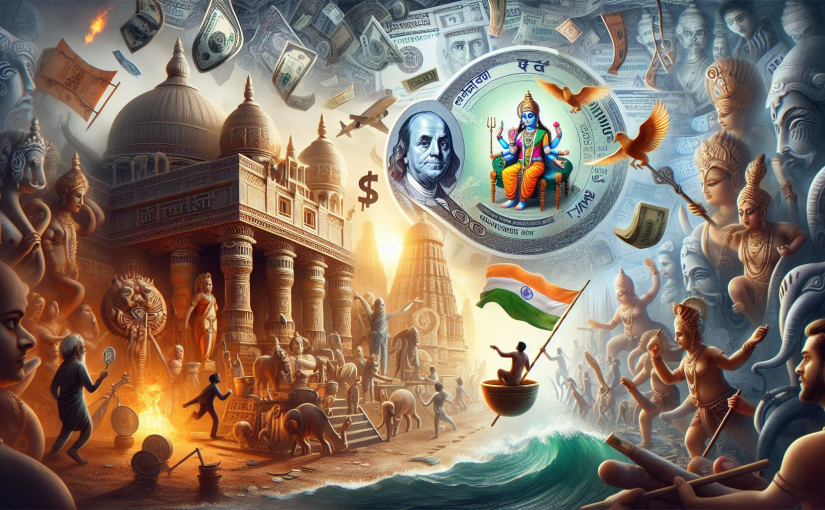
Supposing you were offered a job with an annual salary of $150,000 in the US and another job offering Rs. 60 lakhs in India (approx. $75,000), which would you choose? If your answer goes something like this, “duh, what’s wrong with you? The US job of course, idiot” think again.


Deciphering Currency Value: PPP vs Forex Rates in the Context of INR and USD

Understanding the value of money across borders is pivotal for both economic enthusiasts and professionals. Two key concepts that help in this understanding are Purchasing Power Parity (PPP) and Foreign Exchange (Forex) rates. This blog post explores these concepts through the lens of the Indian Rupee (INR) and the US Dollar (USD), providing practical examples, discussing real-world deviations, examining the impact of interest rates, and the role of central bank interventions.

Purchasing Power Parity (PPP)

  • Definition: PPP compares the relative value of currencies based on the cost of a standard set of goods and services in different countries.
  • Example: If a basket of goods costs ₹5000 in India and $100 in the US, the PPP rate would be 50 INR/USD.

Foreign Exchange (Forex) Rates

  • Definition: Forex rates are the market prices at which currencies are exchanged.
  • Example: If the Forex rate is 75 INR/USD, you need ₹75 to buy $1.

PPP vs Forex Rates

  • Stability: PPP is stable over time, while Forex rates are volatile.
  • Influence: Forex rates are affected by immediate market dynamics; PPP reflects long-term economic trends.
  • Usage: Forex rates are for current transactions; PPP is for macroeconomic analysis.

Practical Examples of PPP

  • Big Mac Index: This index uses the price of a Big Mac to determine currency valuation.
  • GDP Comparison: Adjusting GDP for PPP can significantly alter the perceived size of an economy.
  • Cost of Living: PPP adjusts salaries to reflect the true purchasing power within a country.
  • Arbitrage Opportunities: Price differences revealed by PPP can indicate potential for profit.

Real-World Deviations from PPP

Despite its theoretical appeal, PPP doesn’t always align with actual exchange rates due to factors like trade barriers, transportation costs, and market segmentation. For example, the price of similar goods varies significantly across European cities, indicating deviations from PPP.

The Cost of Bread: A Case Study

  • India: A loaf of fresh white bread (1 lb) costs approximately ₹37.55.
  • USA: The average cost for a loaf of bread is around $2.50.

This comparison illustrates the differences in purchasing power and cost of living between the two countries.

The Impact of Interest Rates on Exchange Rates

Interest rates are a powerful economic tool that can significantly influence currency values and exchange rates. Higher interest rates typically lead to currency appreciation, attracting foreign investment, while lower rates can lead to depreciation.

Real-World Application

  • Scenario 1: If the Reserve Bank of India hikes interest rates while the US Federal Reserve keeps them steady, we might see the INR strengthen against the USD.
  • Scenario 2: Conversely, if the US raises rates and India doesn’t, the USD might appreciate against the INR.

The Impact of Central Bank Interventions on Exchange Rates

Central banks can influence exchange rates through direct intervention by buying or selling currencies, and indirectly through policy announcements. Their actions can have significant, albeit sometimes temporary, effects on currency values.

Real-World Application

  • Turkey and Mexico: Data from Turkey and Mexico show how central bank interventions have attempted to address currency depreciation with varying degrees of success¹.
  • Market Reaction: The market’s reaction to central bank interventions can be unpredictable, and while some interventions successfully stabilize the currency, others may fail to prevent depreciation over the long term¹.

Conclusion

The concepts of PPP and Forex rates are integral to understanding the value of currencies like the INR and USD. While PPP offers a long-term economic perspective, Forex rates provide immediate transactional value. Real-world deviations from PPP highlight the complexities of international economics, and practical examples like the cost of bread bring these concepts to life. Interest rates and central bank interventions add further layers of complexity, influencing exchange rates in significant ways.


Source: Conversation with Bing, 4/3/2024
(1) Central bank interventions in the foreign exchange market | FRED Blog. https://fredblog.stlouisfed.org/2022/01/central-bank-interventions-in-the-foreign-exchange-market/.
(2) Central Bank Intervention in the Foreign Exchange Market – DailyFX. https://www.dailyfx.com/education/forex-fundamental-analysis/central-bank-interventions.html.
(3) Central bank intervention and exchange rate volatility. https://www.sciencedirect.com/science/article/pii/S0261560697980554.
(4) Central bank interventions and implied exchange rate correlations. https://www.researchgate.net/publication/46506876_Central_bank_interventions_and_implied_exchange_rate_correlations.
(5) Impact of foreign exchange interventions on exchange rate expectations. https://www.bis.org/publ/bppdf/bispap73d_rh.pdf.

TMK, DMK, and Nagarathnamma

Introduction

Unless you have been living under a rock or have never heard about Carnatic music, you could not have missed the huge controversy surrounding the current events involving the Music Academy, musician T.M. Krishna, the spate of boycotts, and Chitraveena Ravikiran’s return of the Sangeetha Kalanidhi award. 

Adding the proverbial fuel to the fire is the still echoing uproar surrounding the remarks of a current minister in the DMK about abolishing Sanatana Dharma, which, in his view, is encouraging caste discrimination. The political party DMK, came to power espousing the cause of social justice and equality as espoused by another leader, E.V. Ramaswamy a.k.a Periyar.

A quick flashback

Eons ago, a Devadasi faced a similar cultural boycott. Bangalore Nagarathnamma was the target then. The irony is that the sister duo Ranjani-Gayathri, who were quick off the block in the current controversy, would have never been allowed to perform but for Bangalore Nagarathnamma’s crusade to allow women to perform on stage.

Who was Bangalore Nagarathnamma?

Bangalore Nagarathnamma (1878–1952) is a remarkable figure in the history of Carnatic music. Not only did she make exceptional contributions to preserving the legacy of Saint Tyagaraja, but she also played a pioneering role in challenging and transforming the societal norms of her time. Her life and work initiated several social revolutions within the Carnatic music community and beyond, advocating for inclusivity, equality, and the recognition of talent irrespective of gender or caste. This blog post delves into her contributions and the social revolutions she sparked while addressing the current controversies surrounding contemporary Carnatic musician T.M. Krishna.

Bangalore Nagarathnamma’s Contributions and Social Revolutions

Preservation and Promotion of Tyagaraja’s Legacy

  • Nagarathnamma’s unwavering devotion to Tyagaraja, one of the Trinity of Carnatic music, is well-documented.
  • She was crucial in establishing the Tyagaraja Aradhana, an annual music festival held in Thiruvaiyaru, Tamil Nadu, to celebrate Tyagaraja’s compositions.
  • This festival has become a cornerstone event for Carnatic music enthusiasts worldwide, where artists pay homage to the great composer through soul-stirring renditions.

Establishment of Tyagaraja’s Memorial

  • Recognizing the significance of preserving Tyagaraja’s memory, Nagarathnamma took a bold step.
  • She purchased land around Tyagaraja’s samadhi in Thiruvaiyaru and constructed a temple in his honor.
  • This space became the epicenter for the annual Aradhana festival, ensuring that Tyagaraja’s contributions to Indian classical music were celebrated for generations.
  • Her initial efforts to organize an all-inclusive music festival met with resistance

How her Thygaraja festival was boycotted

The boycott of Bangalore Nagarathnammal’s Tyagaraja Aradhana festival by caste-based musicians primarily stemmed from the orthodox and conservative sections of the Carnatic music community, particularly from higher caste Brahmins. This resistance was deeply rooted in the prevailing caste hierarchies and social norms of early 20th-century India, which often dictated access to cultural and religious practices, including music. Nagarathnammal’s festival, which was groundbreaking in its inclusivity, challenged these entrenched norms by welcoming musicians and attendees regardless of their caste or gender. Here’s a closer look at how the boycott unfolded and its implications:

Mechanisms of the Boycott

  • Caste-Based Exclusivity: The elite musicians and patrons, who were predominantly from the upper-caste Brahmin community, viewed the participation of lower-caste individuals and women, especially those from marginalized communities, in such a sacred event as a violation of their traditionalist views of purity and sanctity.
  • Parallel Festivals: In response to Nagarathnammal’s inclusive festival, these conservative factions organized their versions of the Tyagaraja Aradhana, which adhered strictly to caste-based exclusivity. These parallel festivals aimed to maintain the traditional caste hierarchies within Carnatic music, effectively segregating the music community along caste lines.
  • Social and Religious Justifications: The boycott was often justified through religious and social rhetoric, claiming to protect the sanctity and tradition of Carnatic music and its associated rituals. This stance reflected societal tensions between maintaining caste purity and embracing social reform.

Implications of the Boycott

  • Highlighting Societal Divides: The boycott not only exposed the deep-rooted caste prejudices within the Carnatic music community but also mirrored the larger societal divisions based on caste and gender. It brought to the forefront the need for reform and inclusivity within traditional cultural practices.
  • Solidifying Nagarathnammal’s Resolve: Despite significant opposition and boycott, Nagarathnammal remained undeterred. Her resolve to maintain the inclusivity of the Tyagaraja Aradhana festival only strengthened, solidifying her legacy as a champion of social reform and inclusivity in Carnatic music.
  • Legacy of Inclusivity: Over time, Nagarathnammal’s inclusive approach has been vindicated, with the Tyagaraja Aradhana festival at Thiruvaiyaru symbolizing unity and diversity within the Carnatic music community. Her efforts paved the way for a broader acceptance of inclusivity, influencing subsequent generations to challenge and dismantle caste and gender barriers in the arts.

Bangalore Nagarathnammal’s confrontation with caste-based boycotts of her Tyagaraja Aradhana festival underscored her pioneering role in challenging societal norms and advocating for inclusivity and equality in Carnatic music. Her legacy continues to inspire efforts towards creating a more inclusive and equitable cultural landscape in India.

Advocacy for Women Musicians

  • Nagarathnamma shattered societal barriers by providing platforms for women musicians to perform publicly.
  • Women’s participation in public performances was marginalized during her time, especially for those from specific communities.
  • She challenged prevailing norms, opening doors for future generations of women musicians and advocating for their rightful place on the stage.

Challenging Caste Discrimination

  • Nagarathnamma’s activism extended beyond gender equality.
  • She fearlessly confronted caste discrimination within the Carnatic music community.
  • Her efforts paved the way for a more inclusive and egalitarian musical landscape, where talent triumphed over social hierarchies.

T.M. Krishna and the Ongoing Debate

  • Contemporary Carnatic musician T.M. Krishna shares similarities with Nagarathnamma.
  • Like her, he challenges established norms and advocates for a more inclusive and socially aware Carnatic music scene.
  • Krishna’s performances in non-traditional venues and emphasis on social justice mirror Nagarathnamma’s fight for equality.

Conclusion

Bangalore Nagarathnamma’s life was a symphony of courage, talent, and social reform. Her legacy reminds us that music transcends boundaries and can be a powerful force for change. When all the trolls, for and against die down, maybe the brilliance of a casteless, all inclusive society dawns upon us. Many of the current musicians who are boycotting, are like ostriches; turning a blind eye to the truth of a discrimination that exists, and I would daresay, feel threatened about the danger to their elitist positions in their perceived cultural ladder, probably the same way the current flock of MAGA cultists in the USA.

As we navigate the complexities of tradition and progress, let us draw inspiration from her unwavering spirit—a spirit that resonates through the ages and echoes in the soul-stirring notes of Carnatic music. 🎵🌟


References:

  1. Wikipedia: Bangalore Nagarathnamma
  2. The Hindu: The Activist Behind the Music
  3. Deccan Herald: Bangalore Nagarathnamma’s Reformist Zeal
  4. Dharma Dispatch: Bangalore Nagarathnamma: A Life Dedicated to Tyagaraja.

Is your balance out of whack? Hormonal imbalance vs Purushartha imbalance

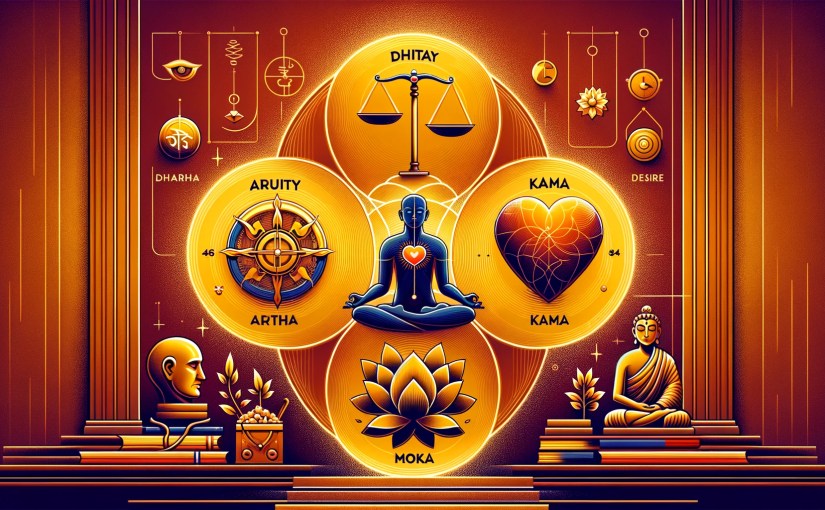
In my previous blog post, I discussed the critical balance among the four Purusharthas: Dharma (duty), Artha (wealth), Kama (desire), and Moksha (liberation). When these elements are not in harmony, the result is akin to experiencing a hormonal imbalance—immediate and often disruptive. Here’s a deeper look, with real-life examples and structured points for clarity:

  • Imbalance and Its Visibility: Just like hormonal imbalances are quickly noticeable, a misalignment among the Purusharthas is evident, though often overlooked. By observing people around us, we can spot numerous instances where this imbalance manifests:
  • A successful businessperson (Artha) neglecting family and ethical practices (Dharma).
  • An individual pursuing personal desires (Kama) at the expense of societal welfare and moral obligations.
  • The Role of Dharma: Our scriptures mention avatars descending to restore balance, highlighting the importance of Dharma. Upholding universal truths and ethical practices is essential in every aspect of life:
  • Ethical business practices leading to profit (Artha) are commendable.
  • Fulfilling desires, whether for material objects like cars or personal relationships, is acceptable when guided by Dharma.
  • Pursuit of Moksha: Realizing the importance of going beyond worldly pleasures and seeking spiritual liberation (Moksha) is a noble pursuit, but it comes with responsibilities:
  • Before seeking Moksha, ensure that your actions driven by Dharma, Artha, and Kama have not adversely affected others. Your legacy should leave them in a position equal to or better than before your quest.
  • Abandoning responsibilities and leaving tasks unfinished is contrary to Dharma and denies others their chance at Moksha.

Understanding these principles clearly requires a calm and focused mind. Observing the world around us through the lens of the Purusharthas can offer insightful perspectives on personal and societal behaviors, guiding us towards a balanced and fulfilling life.

The Ultimate Guide to Life: Navigating the Ashramas and Purusharthas

*with Humor and Wisdom

Some eons back, since time is relative and as you get older, time kinda stretches, I had written about the ashramas or the stages of a human; four and not seven as dished out the bard of Avon. This blog begins where that left off. But lo and behold here comes the googly that would make Anil Kumble proud, a co-relation between ashrama and purushartha.

So, here goes!

The Foreword

Life often feels like a game where the instructions are in another language. Thankfully, the ancient sages of India left us a playbook: the four ashramas (life stages) and the purusharthas (life’s objectives). But, as we all know, applying ancient wisdom to the chaos of the 21st century can be like trying to use a compass in a room full of magnets – it’s an adventure. Let’s dive deeper into these concepts, armed with humor and a quest for understanding, to see how they can illuminate our modern dilemmas.

The Four Stages of Life: A Humorous Deep Dive

The ashramas are like the levels in the game of life, each with its own set of challenges and achievements.

1. Brahmacharya: The Tutorial Level

  • The Setup: You’re a student, absorbing knowledge like a sponge, except when it comes to practical life skills like cooking, for which you’re more like a sieve.
  • The Challenge: Mastering self-discipline and understanding your purpose, all while navigating the hormonal rollercoaster of adolescence.
  • Life Hack: Treat Dharma (duty) as your mission statement. It’s okay if it currently reads, “Survive algebra and learn to make at least one edible meal.”

2. Grihastha: The Main Quest

  • The Setup: You’re in the thick of it now – career, family, a mortgage that makes you question your life choices. It’s the ‘build your dream life’ phase, but with more plot twists than a telenovela.
  • The Challenge: Balancing the pursuit of Artha (wealth) and Kama (pleasure) without losing sight of Dharma. It’s like playing a game where you have to keep all plates spinning, and yes, some are on fire.
  • Life Hack: Remember, multitasking is a myth. Focus on one plate at a time, preferably the one that’s not on fire.

3. Vanaprastha: The Side Quests

  • The Setup: You’ve seen things. You’ve done stuff. Now, you’re supposed to step back and let the younger generation take the wheel, but who says you can’t backseat drive a bit?
  • The Challenge: Finding a balance between sharing your wisdom and realizing that sometimes, silence is golden (and so is letting others make their own mistakes).
  • Life Hack: This is the time for mentoring, volunteering, or taking up hobbies you always put off. Ever wanted to learn the guitar? Now’s the time. Your family will love it (eventually). Note to self: this is such a shameless plug, makes me retch. Since I’m already rivaling a hippo re. thickness of skin, pls click on the link above to know more.

4. Sannyasa: The Endgame

  • The Setup: The final level, where you seek Moksha (liberation) and enlightenment, or at least a day without back pain.
  • The Challenge: Letting go of material desires and ego. It’s about finding peace and understanding in the simplicity and complexity of life.
  • Life Hack: Start small. Meditation can be as simple as focusing on your breath or as complex as your tax returns. The goal is to find your zen, not to win a zen competition.

Applying the Purusharthas: Cheat Codes for Life

The purusharthas are like the objectives in the game of life, guiding your actions and decisions.

Dharma: The Moral Compass

  • The Real Talk: It’s about doing the right thing, even when no one is watching, especially when choosing between the last piece of cake or leaving it for someone else.
  • Pro Tip: Align your actions with your values. It’s like choosing your character’s alignment in a role-playing game, but with more real-world consequences.

Artha: The Resource Management

  • The Real Talk: Money matters, but it’s not the end-all. It’s the means to an end – securing your needs and facilitating your wants without becoming a dragon hoarding gold.
  • Pro Tip: Budget like a pro. Know when to save, when to splurge, and when investing in experiences or things that bring you joy is worth more than the price tag.

Kama: The Quest for Happiness

  • The Real Talk: Pursuing pleasure and happiness is essential, but it’s about the balance. Too much Netflix and chill, and you might find yourself stuck in a rut.
  • Pro Tip: Cultivate hobbies and relationships that enrich your life. It’s the side quests that often bring the most joy and unexpected adventures.

Moksha: The Ultimate Goal

  • The Real Talk: Liberation from the cycle of life and death might seem a bit heavy for a Tuesday afternoon, but it’s about finding peace and contentment in the now.
  • Pro Tip: Practice mindfulness and gratitude. Sometimes, enlightenment is about appreciating the little things, like the smell of coffee in the morning or finding the perfect meme to describe your mood.

Conclusion: Life, the Ultimate Adventure Game

Navigating the ashramas and purusharthas in today’s world is like playing a highly complex game without a cheat sheet. But with a bit of humor, patience, and wisdom, we can all find our path through the chaos. Remember, the goal isn’t to finish the game with the most toys or achievements but to enjoy the journey, learn from the challenges, and maybe, just maybe, leave the game a little better than when we started.

Whether you’re just starting your adventure in the tutorial levels or you’re navigating the endgame, life is a journey best undertaken with a light heart and an open mind. So, equip your metaphorical armor, gather your party, and let’s embark on the quest of a lifetime – with a few laughs along the way.

Why Everest Is Just Another Hill: The Quest for the True Mountain Monarchs

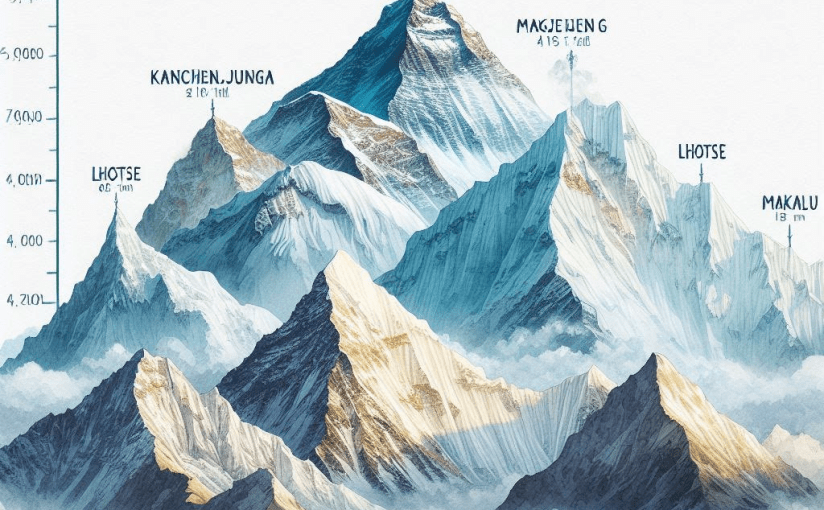
Everest – not the tallest mountain!

Everest, oh Everest! You’ve been hogging the limelight for far too long, basking in the glory of being the “tallest” mountain in the world. But what if I told you that Everest is the high school quarterback of mountains – popular based on old statistics and a lot of hype? Yes, folks, it’s time to debunk the myth and introduce you to the true giants of the mountain world. Why, you ask? Because, dear readers, sea level isn’t the same all around this wonderful globe of ours. So, strap on your virtual hiking boots, and let’s scale the peaks of truth.

The Problem with Sea Level: A Watery Quandary

  • Fluid Foundation: Sea level, as it turns out, is about as stable as your average pudding during an earthquake. Due to gravitational forces, the rotation of the Earth, and the distribution of continents, sea level can vary significantly.
  • Everest’s Elevation Enigma: Measured from sea level, Everest stands tall at 29,029 feet. But since sea level is not uniform, who’s to say Everest is the true champion?

The Real Titans of Topography

Now, let’s take a moment to shine a spotlight on the mountains that have been living in Everest’s shadow, patiently waiting for their moment in the sun.

  1. Chimborazo’s Claim to Fame: This Ecuadorian beauty might not top charts with its height, but due to the equatorial bulge, it’s the farthest point from the Earth’s center. Sorry, Everest, but Chimborazo is sticking its peak out farther into space than you!
  2. Mauna Kea’s Underwater Secret: When measured from its underwater base, Mauna Kea in Hawaii towers at over 33,000 feet, making Everest look like a mere molehill in comparison. Most of its mass is underwater, making it the ultimate “It’s what’s on the inside that counts” story.
  3. Denali’s Dramatic Dominance: In the realm of base-to-peak elevation gain, Alaska’s Denali is the true heavyweight, rising majestically with a vertical relief that puts Everest’s slope to shame. It’s all about the climb, after all.

Why Everest Might Need to Step Down

  • The Gravity of the Situation: Given the gravitational anomalies, if we’re measuring “tallness” based on distance from the Earth’s center, Everest is just not cutting it.
  • The Sea Level Scandal: With sea level playing fast and loose around the globe, Everest’s title is as shaky as a fiddler on a roof in a windstorm.

The Underdogs Are Having Their Day

It’s time to celebrate the unsung heroes of the mountaineering world, those majestic masses of rock and ice that have quietly defied the odds, without the fanfare accorded to Everest. These are the mountains that have been training in the background, ready for their moment in the spotlight.

Conclusion: The Mountainous Truth

So, there you have it, folks. While Everest might have the brand recognition, when you dive into the nitty-gritty of what makes a mountain truly “tall,” it’s clear that there are other contenders for the crown. Let’s give a round of applause for the real MVPs of the mountain world, who’ve been towering quietly, biding their time until science and humor could finally unveil their true stature.

In the end, perhaps it’s not about which mountain is the tallest, but about celebrating the incredible diversity and awe-inspiring beauty of our planet’s topography. So, next time someone brags about climbing Everest, just nod knowingly and whisper, “But have you heard of Chimborazo?”

And remember, in the world of mountains, as in life, it’s all about perspective.

The Power of ‘Basically’ in Indian English

Intro:
Hey folks! Have you ever noticed how some words are like trusty sidekicks in our daily conversations? For us Indian-English speakers, that MVP is none other than “basically.” It’s our conversational Swiss Army knife! But what happens when you pluck this word out of our lexicon? It’s like taking the right hand off a superhero. And before you split hairs about left-handers (I see you, fellow nitpickers!), let’s dive into this linguistic comedy.

The “Basically” Phenomenon:
Picture this: You’re at a family gathering, and Uncle Raj is about to launch into his infamous explanation of why Bollywood is “basically” better than Hollywood. There’s anticipation, popcorn, and then – silence. Why? Because we’ve snatched away “basically” from Uncle Raj’s verbal toolkit. The man is speechless, probably wondering if Hollywood has conspired against him.

At the Office:
Now, let’s teleport to an Indian-American corporate setting. Imagine a meeting without “basically.” Presentations would shrink, confusion would skyrocket, and the meeting that could have been an email? Well, it’s now an email because nobody knows how to start the conversation. “Basically” is not just a word; it’s a launching pad for ideas, a soft intro to politely contradict your boss without getting fired.

The “Basically” Crutch:
We lean on “basically” like it’s a linguistic crutch. It’s our way of simplifying complex ideas, like explaining cricket to our American friends. Without it, we’re like a GPS that says, “You know, go straight, do some turns, and voilà!” Not helpful, GPS, not helpful.

The Cultural Crossroads:
“Basically” is where Indian indirectness meets American straightforwardness. It’s our bridge. We use it to gently usher our American friends into the maze of Indian logic, where every conversation is a journey, not a destination.

Conclusion:
So, what’s the moral of this story? “Basically,” it’s that language is more than words. It’s culture, identity, and sometimes, comedy. And to my fellow Indian-English speakers, if you ever feel unarmed without your favorite word, remember, we’ve got plenty more where that came from. After all, where there’s a will, there’s a “well, basically…”

Outro:
Keep talking, keep laughing, and remember, language is not just about communication, it’s about connection. And at the end of the day, isn’t that what it’s all about? Basically! 😉🌏🇮🇳🇺🇸