Freebies and the Unsung Heroes: When “Thanks” Doesn’t Pay the Bills
Ah, the life of a musician or recording engineer – it’s glamorous, isn’t it? Flashing lights, screaming fans, and… endless requests for free background tracks? Wait, what?
If you’re a musician or a recording engineer, chances are you’ve heard it all too often: “Hey, could you whip up a quick track for me?” or “I need some music for my new YouTube channel. Can you help?” But the kicker? More often than not, all you get in return is a quick “thanks” (if you’re lucky) and a pat on the back.
Now, don’t get me wrong. “Thank you” is a beautiful phrase that warms the heart and soul – but unfortunately, it doesn’t warm the pockets or pay the bills.
Let’s take a moment to compare with other professionals.
Imagine strolling up to a doctor at a social gathering and saying, “Hey, I’ve had this cough for a while. Can you just quickly check it out?” Or cornering an architect at a birthday party with blueprints in hand, hoping for a free consultation. Would they be met with the same expectations of ‘gratis’ expertise?
Let’s be honest, it does happen. Many professionals, regardless of their field, get bombarded with pro-bono requests from friends, family, and the occasional audacious acquaintance. But there’s a peculiar sting that musicians and recording engineers feel, given the perception that their craft is “easy” or “just a hobby.”
But who’s really to blame here?
1. The Perpetrator (a.k.a. The “Friend”)
Let’s face it, most of us are guilty of wanting something for nothing. In a world of instant gratification and streaming services, the value we place on individual expertise can sometimes wane. To the untrained eye (or ear), creating a background track might seem as simple as pushing a few buttons. But as any seasoned musician or engineer knows, it’s hours of work, years of training, and a bottomless well of patience.
2. The Enabler (a.k.a. The “Professional”)
Sometimes, professionals are their own worst enemies. By occasionally offering freebies to win favor or out of sheer kindness, they unwittingly set a precedent. The occasional free consultation or quick background track can quickly snowball into a mountain of expectations.
So, what’s the solution?
For starters, recognizing and respecting the craft is essential. Whether it’s music, medicine, or masonry, every profession requires expertise that deserves acknowledgment. And for professionals, it’s essential to establish boundaries. It’s okay to say no, or to kindly point out that expertise has a price. After all, you wouldn’t just grab a candy bar from a store and walk out with a mere “thank you”, would you?
In the end, let’s remember the timeless wisdom: If you’re good at something, never do it for free. So, to all our unsung heroes, keep strumming, keep mixing, and most importantly, keep valuing your worth!
In Tamil cinema, the name N S Krishnan stands tall as one of the most iconic comedians to have graced the silver screen. With an impeccable sense of comic timing and a natural flair for acting, Krishnan redefined the comedy genre in the early years of the Tamil film industry. In this blog post, we take a closer look at the life, career, and fascinating real-life anecdotes of the legendary N S Krishnan.
Early Life:
Born on November 29, 1908, in the small village of Nagercoil, Tamil Nadu, Nagercoil Sudalaimuthu Krishnan, fondly known as N S Krishnan or NSK, began his career as a stage actor in a drama troupe. He was a man of many talents and worked as a playwright, singer, and dancer before entering the film industry. His passion for the arts and strong work ethic laid the foundation for his successful career in cinema.
Career and Notable Movies:
NSK debuted in the Tamil film industry with the movie “Sathi Leelavathi” (1936), directed by the legendary A.V. Meiyappan. This began a successful partnership with leading lady T. A. Madhuram, who later became his wife. The duo became a hit pair on-screen, working together in over 150 films and inseparable in real life.
Some of NSK’s most notable movies include:
Ambikapathy (1937) – This historical drama based on the Tamil epic poem by the same name featured NSK in a significant role, showcasing his versatility as an actor.
Haridas (1944) – NSK played a memorable role in this blockbuster movie, which ran for a record-breaking 110 weeks in Chennai’s Gaiety Theatre.
Nallathambi (1949) – NSK starred as the protagonist in this film, portraying a humorous and lovable character that won over the audience’s hearts.
Avvaiyar (1953) – NSK’s comic timing and engaging performance in this biographical film about the life of the famous Tamil poet Avvaiyar was highly appreciated.
Real-life Anecdotes:
NSK was an exceptional actor and a man of great wit and wisdom. His wisdom and quick thinking saved him from potential embarrassment on multiple occasions. Here are some fascinating real-life anecdotes that illustrate NSK’s remarkable wit:
During a stage performance, NSK noticed that a small part of the set had caught fire. Instead of panicking, he cleverly incorporated the fire into his act, making the audience laugh and saving the show. He calmly put out the fire while making the audience believe it was all part of the act.
In another instance, NSK was caught without a ticket on a train journey. When the ticket inspector confronted him, NSK humorously replied, “I am an actor who can bring joy to millions. Can’t I travel without a ticket for a few miles?” His wit and charm worked, and the ticket inspector let him go without penalty.
A nice video byV. Sriram about N S Krishnan
Conclusion:
N S Krishnan’s contributions to Tamil cinema remain unparalleled. His natural talent, comic timing, and on-screen chemistry with T. A. Madhuram made him a beloved figure in the industry. He also supported his co-actors and others. He resurrected Thangavelu’s career when Thangavelu was down and out by offering him a role in his movie, Singari.
Unfortunately, he was a co-accused along with another superstar of those time, M K Thiagaraja Bhagavathar and was sentenced to a 30-month jail time. He couldn’t get back to his stature after his release from jail and died a broken man, drained of his finances.
His real-life anecdotes and experiences show us that NSK was not just an actor but a quick-witted and humble human being. As we remember his legacy, it is evident that his work continues to inspire and entertain generations of audiences.
Manorama Aachi, a name that is synonymous with the golden era of Tamil cinema, has been an inseparable part of the industry for over five decades. With a career spanning over 1,000 films, she has left an indelible mark on Indian cinema with her impeccable acting skills and a personality that never fails to amaze her. In this blog, we celebrate the life and accomplishments of this legendary actress and delve into some exciting episodes from her real life.
Early Life and Career:
Manorama, born Gopishantha in 1943, grew up in a small village in Tamil Nadu. Her passion for acting was evident from a young age, and she started her career as a stage artist before venturing into films. She debuted in 1958 with the movie “Malayitta Mangai” and quickly rose to fame with her exceptional acting skills, earning her the nickname “Aachi.”
Aachi soon became a household name in the Tamil film industry, earning critical acclaim and immense popularity for her roles in movies like “Thillana Mohanambal,” “Samsaram Adhu Minsaram,” and “Chinna Gounder.” She was known for her impeccable comic timing and versatility, which allowed her to play a wide range of roles, from comedy to serious drama.
Notable Performances: Over her long and illustrious career, Manorama Aachi delivered countless memorable performances that won the hearts of audiences and critics alike. Some of her most iconic roles include:
Thillana Mohanambal (1968) – As Jil Jil Ramamani, Aachi played a feisty and independent woman who added a touch of humor and drama to this classic film.
Samsaram Adhu Minsaram (1986) – As Godavari, Manorama Aachi portrayed a strong and loving mother who strives to keep her family together despite their differences.
Singaravelan (1992) – Manorama Aachi delivered a hilarious performance as a quick-witted woman who helps the protagonist (played by Kamal Haasan) in his mission.
Avvai Shanmugi (1996) – Aachi’s role as a sharp-tongued mother-in-law in this Kamal Haasan starrer showcased her ability to deliver humor with impeccable timing.
Interesting Episodes from Manorama aachi’s Life:
Turning down a role from MGR: A little-known fact about Aachi’s career is that she once turned down an offer from the legendary M.G. Ramachandran (MGR) for a role in his film “Engal Thangam.” Manorama Aachi was suffering from typhoid then and could not accept the offer. Despite MGR’s insistence, Aachi chose not to compromise her health, and the role eventually went to another actress.
The Guinness World Record: Manorama Aachi holds the Guinness World Record for acting in the most number of films by a female actor. She achieved this feat in 2008 when she completed her 1,000th film, “Thunaivan.” This is a testament to her dedication and passion for her craft.
Personal Life and Philanthropy: Manorama Aachi was known not only for her on-screen performances but also for her generosity and kindness off-screen. She was actively involved in charitable activities, supporting causes close to her heart, such as the welfare of the elderly and the differently-abled. Aachi adopted several orphanages in Tamil Nadu, providing financial support to ensure the children received proper education and upbringing.
Aachi’s Love for Languages: Manorama Aachi was a polyglot, fluent in several languages, including Tamil, Telugu, Malayalam, Kannada, and Hindi. This linguistic prowess allowed her to work in films across different South Indian industries, earning her a pan-Indian fan following. Aachi’s ability to adapt to various dialects and accents made her an invaluable asset in the film industry.
The Bharat Ratna Nomination: Manorama Aachi’s contribution to the Tamil film industry did not go unnoticed. In 2008, she was nominated for the Bharat Ratna, India’s highest civilian award. Though she did not receive the award, the nomination was a significant recognition of her immense contribution to Indian cinema.
Conclusion:
Manorama Aachi’s unparalleled dedication to her craft, versatile acting skills, and inspiring off-screen persona have left an indelible mark on the Tamil film industry. Her legacy inspires new generations of actors and filmmakers, ensuring that her name will forever be etched in the annals of Indian cinema.
Madras wasn’t a hotbed of job opportunities in the late sixties and probably most of the seventies. While I was lucky to find a job in the erstwhile Indian Airlines, many of my college mates were still searching for a job.
I did run into many of my mates, and the conversation would go like this.
” Dey, machhan, how are you? It’s been a while since I saw you last. Where are you working now?”
Reply: ” I am fine, enjoying life!”
That should have given me a clue that the poor lad is unemployed. But the idiot in me keeps plowing on.
Me: ” That’s great, but where do you work?”
Reply: “I work as a manager in a company.”
Me: “That’s great. Which company?”
Most times, the reply would be Mannar and company! Which meant he didn’t have a job! We would burst out laughing.
In those good days, we didn’t have to worry about being politically correct. You just expressed yourself, and that’s it.
The lads of today, who I am sure would be scratching their heads about what all this is about, here’s the explanation.
Mannar & Co.
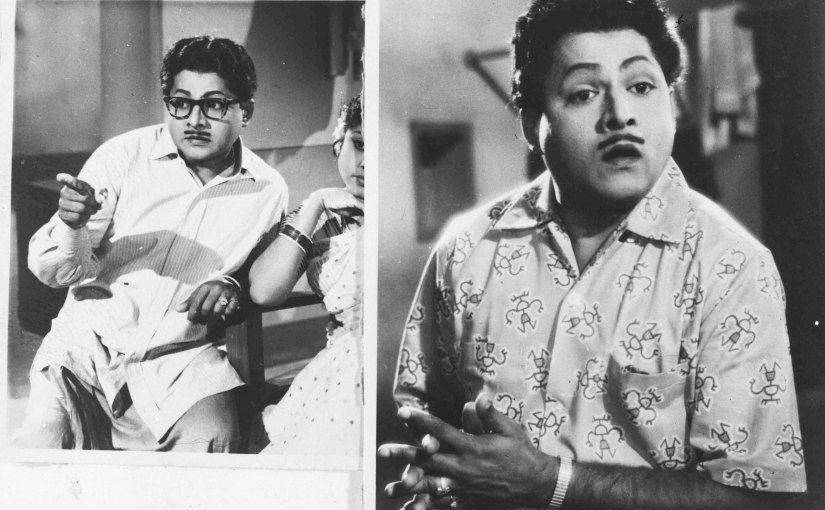
Mannar & Co. is a fictitious firm that the character played by the prolific Thangavelu would answer if he were asked about employment in the film Kalyana Parisu (Tamizh). So, to most of us, who lived during that memory time frame, Mannar & Co. was an honorable way of saying the person is unemployed. It also had shades of deceit, but let’s leave that aside now.
Mannar & Co
So, back to Thangavelu, the actor who should have had much more recognition and fame than he got.
K. A. Thangavelu was an actor who excelled in almost every role he played. While his comedy relied on timing and facial expressions, it did not have the physicality of a Chandrababu or Nagesh. His humor was subtle but expressive enough for anyone to understand. In other words, you didn’t need to include a caption card with the word ‘JOKE’ emblazoned in it with poster colors.
Early days
The man suffered a lot as a child and even in early adulthood. His father was an alcoholic, and his refuge, his mother, died when Thangavelu was about six. His father left Thangavelu in the care of a relative and sailed off to Singapore in search of better days.
The young Thangavelu was a servant. He had to do all the menial jobs, like washing the cattle, cleaning the house, washing vessels, and the like. The only thing that kept him sane was his love for music and dance, which he would break into whenever he felt like it.
This singing and dancing would turn on the wrath of his foster parents, but Thangavelu soldiered on. He eventually joined the Rajambal Company troupe and was taught acting and mentored initially by Yedhartham Ponnuswamy Pillai and later by M. Kandaswamy Mudaliar.
For nine years, he worked in theatre. When Kandaswamy Mudaliar moved over to the cinema, Thangavelu followed him. His first break was a small role in the film Sathi Leelavathi, the 1936 version, which was the remake of the play Pathi Bhakti. Elis R. Dungan directed the film.
Sathi Leelavathi launched the career of M.G.R., T.S.Baliah, and N.S. Krishnan, all of them became very successful actors. However, this didn’t prove a lucky break for Thangavelu, so he quit movies and had to beg at a nearby temple to feed himself. M M Marappa, an actor, spotted him at the temple and brought him back to the theatre. He became a little stable this time, and coincidentally, his errant father returned from Singapore and lived with him.
N.S. Krishnan – the superstar who saved him
N. S. Krishnan, the superstar actor-director, spotted Thangavelu in theater and gave him another lease of life in cinema. He cast him in a comical role in the film Singari. His comedic timing impressed N.S.K. so much that N.S.K reportedly gave Thangavelu an advance of Rs. 5,000. Thangavelu’s relative thought he had stolen the money from N.S.K and promptly headed out to N.S.K’s house to apologize for his ward’s stealing. It was then the relative came to know the actual worth of Thangavelu.
Thangavelu was ever thankful to N.S.K for resurrecting his career and bringing him back to films, dancing, and acting, something he loved doing. Thangavelu wore a locket that had N.S.K’s picture in it as a tribute to the man who picked him from the dumps and gave him stature.
No role fazed Thangavelu. At one time, he was pitted against P. Bhanumathi, the reigning superstar, in the movie Rambayin Kadalan. He could hold his own and not let Bhanumathi overshadow him despite her more considerable stature (and I don’t mean being obese) and star billing.
Circling back to my opening paragraph about the film Kalyana Parisu, Thangavelu married the lady that played his wife in the movie, M. Saroja, who was his second wife and several years his junior in age. They lived a happy life.
His autumn years
During his autumn years, he got a few acting jobs, which he could have had more if he had reduced his fee. He refused to do this, and so too his adamancy to act in only Tamizh films. He won the Tamil Nadu government’s Kalaimamani in 1968 and Kalaivanar award in 1989.
He shed his mortal coil in his house in Chennai in September 1994. His wife Saroja lived on until April 2012.
There is a scene in the movie where the character played by Nagesh is getting his first break as an actor. He has paired apparently with the most popular lady star of that time, played so well by our beloved Achi Manorama.
The director, played by S.V. Ranga Rao, is hilarious! Caught in the crossfire between this first-time greenhorn actor played by Nagesh and this fussy, demanding diva played by Manorama, S.V.R. so convincingly plays the role of a harried director that he stands out as an unforgettable character in the entire movie! At least for me!
Who was S.V. Ranga Rao
To the young ones of today, here is a synopsis of the legendary actor, S. V. Ranga Rao, or S.V.R. as he was popularly known.
Samarla Venkata Ranga Rao (July 3, 1918 – July 18, 1974) was a South Indian actor, film director, and producer. He is an internationally recognized actor and was awarded the title “Vishwanata Chakravarthi.” He was also the first Indian actor to win an international award. He is considered an all-rounder actor who could carry any role given to him. With the famous mannerism of “orey dongrey” from Jagath Jettilu, he is still a household name in Andhra Pradesh and Telangana.
Rao was born to Lakshmi Narasayamma and Koteshwara Rao Naidu, a customs inspector from Nuzvidu, Krishna district, Andhra Pradesh. His mother, Lakshmi Narasayamma, was a fervent devotee of Lord Venkateshwara, who named the boy after him.
At the early age of 12, the boy showed a tremendous interest in acting on stage. Two goals were still clearly set in his mind: pursuing a master’s degree in literature and taking an active role in theatre and cinema.
His first foray into the film world
S.V.R. got an invitation from one of his relatives, B.V. Ramanandam, to play the hero in his film “Varoodhini .” It was an excellent beginning for the young man. However, the movie “Varoodhini” bombed at the box office. Producers hesitated to give him any roles after that. S.V.R. was disillusioned with the filmdom and left the Madras Presidency (as was the term used for a collection of Southern Indian States then) and reached Jamshedpur, where he took up a job as a budget assistant with Tata Steel. However, his love for acting never really went away. He married Leelavathi in December 1947 and settled down to a domesticated life.
Then came an opportunity to play the villain in the film, “Palletoori Pilla,” produced by B.A. Subba Rao came his way. His father passed when he was about to board the train to Chennai, so he had to stay back and finish all the rituals a son was expected to do. After performing the final rites, S.V.R. reached Chennai, but it was too late. Another actor had already replaced him.
His first real break
Lucky for him, he got a break with Vijaya Pictures, who offered him the most memorable role of a “Nepali Mantrikudu” in the “Pathala Bhairavi.” He also played the same role in the Tamil version. Immediately, he shot into the limelight. Pathala Bhairavi was followed by another hit, “Pellichesi Choodu” (1952). At this point, he had established himself in the industry. The iconic status of a superstar took time to come to him. He struggled a lot and, from that struggle, rose the great actor of all time. Maya Bazaar and Nartanasala are among his famous movies.
The roles he played
He acted almost every character in history. He showed a kind of recklessness and disregard in his dialogue delivery. This controlled nonchalance was something that appealed to me very much!
S.V.R. was the first Indian to get an international award at the Djakarta International Film Festival for his role of Keechaka in Nartanasala. His dialogue delivery was unmatched. Those days, no one in the industry could deliver dialogues, even in Sanskrit, with so much ease and aplomb, complete with the required histrionics. Even N.T.R., who was great at dialogues in Telugu, used to stammer in front of S.V.R. This was the rumor those days!
His compatriot Gummadi once exclaimed, “Fortunate are we to have S.V.R. born in India, but S.V.R. is unfortunate to have born here, for if he were born in the West, he would have been one of the top 5 actors of all time in the world.”
S.V.R.’s relatives and family circles ridiculed him, saying that he was a fool to go after chances in cinemas by shunning government jobs.
Some trivia
L.V. Prasad gave S.V.R. lots of moral support and encouragement.
“Maya Bazaar” automatically brings about the picture of S.V.R. as Ghatothgacha
His role as “Nepali Mantrik” in “Pathala Bhairavi” will continue to be remembered by millions of people.
As Keechaka in “Narthanasala,” S.V.R. proved himself to be the ultimate when it came to acting the mythological films.
He was a passionate game hunter, sporting an excellent firearm that a friend in the British Indian army gave him. One day, he was hunting a deer, and the deer stopped running and looked straight into the eyes of S.V.R. as if questioning him, “What will you get if you kill me?” S.V.R. never hunted after that.
S.V.R. and Gummadi went to International Film Festival in Spain for the film Raju Peda, where they met Sir Richard Attenborough. S.V.R. played Peda (poor man), and Sir Attenborough commented that S.V.R. should have played the role of the Raju (king).
His transition to immortality
He died on July 18, 1974, after suffering from severe heart failure. But he continues to live in the hearts and minds of the Telugu and Tamil people.
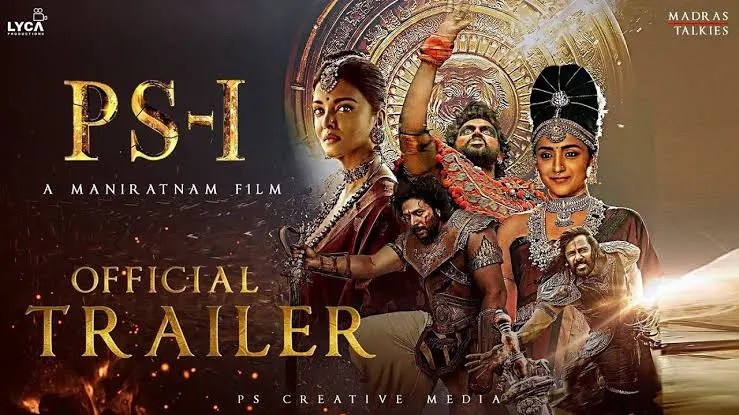
The production cost of PS1 (Ponniyin Selvan – part 1) was around US$ 60 million – source, the vast internet.
The director of this movie, Mani Ratnam, was not likely constrained by budgets. I suppose he could hire the best top-tier talent available. Not just actors but the best technicians as well. The sets are lavish, bordering on garishness, and the entire production smacks of a fairy-tale setting. Which probably was the central idea of this film.
To each his own, I guess. I prefer realism in my movies.
And there are movies made with shoestring budgets.
The tale of another production
This production dragged on for years due to the lack of funding, which caused frequent setbacks. The director could not raise any money from film producers, so he couldn’t hire the best available talent. Most crew members lacked experience and worked on an unpaid basis. Ravi Shankar, not yet the legendary sitar player, composed the score.
Battling all these constraints, the final product, however, manages to convey a very pure, personal story partly because of everyone involved’s relative innocence. It was later called “one of the greatest pictures ever made” by Philip French, a film critic for The Observer.
The film was Pather Panchali (Song of the Open Road), in which a family in a small village in the Indian state of Bengal endures abject poverty.
The director?
Satyajit Ray.
Pather Panchali – 1955
His birth
Satyajit Ray was born May 2, 1921, in Calcutta [now Kolkata], India, and died April 23, 1992, in Calcutta
His early days
Ray’s father passed away when he was young, so he was raised by his mother. Both his grandfather and father were authors and artists. He attended a public school where he learned Bengali. He then transferred to Presidency College, the best university in Calcutta, where he was instructed in English. As a result, he could graduate from high school in 1940, having achieved native proficiency in both languages.
At Santiniketan
In 1940, his mother encouraged him to enroll in art classes at Rabindranath Tagore’s Santiniketan University, located north of Calcutta. At Santiniketan, Ray, whose previous life experiences had been limited to the urban and Western spheres, was exposed to Indian and other Eastern art and developed a deeper appreciation for both Eastern and Western culture.
His first job
Back in Calcutta in 1943, Ray worked as a commercial illustrator for a publishing house. He also worked as an art director for a British-owned advertising agency, eventually rising to prominence as a typographer and book-jacket designer.
Inspiration
Pather Panchali, a novel by Bibhuti Bhushan Banarjee, was one of the books he illustrated in 1944. This book first sparked his interest in the novel’s potential as a film.
Ray’s lifelong love of movies led him to try his hand at screenwriting and, in 1947, to help establish the Calcutta Film Society. In 1949, while French director Jean Renoir was in Bengal to film The River, he inspired Ray to pursue a career in film.
The bleak story, low production style, and shooting with non-professional actors, Vittorio De Sica’s The Bicycle Thief (1948) inspired Ray to film Pather Panchali.
Ray’s primary creative influence was Rabindranath Tagore, whose works inspired some of Ray’s finest films. Ray’s most accomplished film is probably Charulata(1964; The Lonely Wife), a tragic love triangle set in a privileged, Westernized Bengali family in 1879. Ghare Baire (1984; The Home and the World) is a sad study of Bengal’s first revolutionary movement. Set in 1907-08 during the period of British rule, Teen Kanya (1961); “Three Daughters,” English-language title, is a varied trilogy of short films about women.
Some international accolades
Martin Scorsese described his work, and I paraphrase, ‘treasures of cinema that should be watched by “everyone with interest in films.”
The Japanese master Akira Kurosawa went further: “Not to have seen his movies means existing in the world without seeing the sun or the moon.”
His movies are still relevant to this day and are still being screened at festivals. Ray retrospectives are still being screened across the world.
A fair conclusion?
Will a Bahubali or a PS1 survive the passage of time? With folded hands and bended knees (gross exaggeration), my answer is no.
And I say this with all the humility that I can muster.
Ray’s techniques that appeal to me
Real life characters that you can relate to
His frame has no unnecessary clutter and is steady
No exaggerated moves or histrionics by any of his cast
Screenplay based on good, grounded stories
The ability to capture the essence of the story and present it in the right perspective
His ability to leave the viewer with a creative space within his movies
Silence when required, music only when required
NO SONG AND DANCE SEQUENCES
Two of my favorite Ray films
It isn’t easy to pick my favorites, like asking a parent who is their favorite child.
Jalsaghar My first Ray film was Jalsaghar (The Music Room), one of Ray’s finest films. The protagonist of Jalsaghar is Biswambhar, a feudal lord. He self-destructs himself by staging musical performances spending his limited money, to best the oafish young son of a moneylender.
The film investigates the idea that the period just before a system fails is prime time for creative peak performance. Biswambhar is stuck in his ways and will eventually be undone by his stubbornness. Jalsaghar was adapted from a short story by Bengali author Tarasankar Bandyopadhyay.
Although Jalsaghar was met with lukewarm reviews upon its initial release in India, it won the Presidential Award for best film in India. It was instrumental in establishing Ray’s reputation as a director beyond India. As time has passed, it has been widely hailed as one of the greatest movies ever made and is now considered a cinematic classic.
Angantuk The movie shows a Calcutta resident Anila Bose receives a letter from someone posing as her missing uncle, Manmohan Mitra. The latter decides to return to India to spend time with his only living relative, Anila, after living abroad for 35 years. While Anila anticipates it with excitement, Sudhindra, Anila’s husband, has doubts. Their son, Satyaki, quickly becomes friends with him after introducing himself as an anthropologist who has visited every continent.
When Anila mentions her grandfather’s will, Sudhindra immediately suspects that he has come to collect his share of the inheritance. While their son is convinced that he is who he says he is, Anila begins to have doubts about his identity.
The film’s central conflict revolves around the family’s efforts to learn the man’s true identity. Sudhindra puts the guest through a battery of tests, including a review of his identification documents. However, the visitor’s mind-reading skills cause embarrassment for both Sudhindra and his friend Rakshit. In a last-ditch effort to get to the bottom of things, Sudhindra has a lawyer friend interrogate the visitor. The lawyer makes no headway, and the lawyer’s temper flares up, and he tells the visitor to “either come clean or just clear out.”
The guest leaves the following morning. The family begins searching for him and tries to win him back, and now they know he has visited the executor of the will.
Later they find out that Manmohan has left them his inheritance after he moves to Australia.
Utpal Dutt plays the part of Manmohan Mitra brilliantly, and so too do the rest of the cast.
The Ray movies that I have experienced are: Pather Panchali (Song of the Little Road) (1955) 115min B/W Aparajito (The Unvanquished) (1956) 113 min B/W Parash Pathar (The Philosopher’s Stone) (1957) 111 min B/W Jalsaghar (The Music Room) (1958) 100 min B/W Apur Sansar (The World of Apu) (1959) 106 min B/W Devi (The Goddess) (1960), 93 min B/W Mahanagar (The Big City) (1963) 131 min B/W Charulata (The Lonely Wife) (1964) 117 min B/W Kapurush-O-Mahapurush (The Crowd and the Holy Man) (1965) (Two-part film – The Crowd and The Holy Man, running at 74 min and 65 min respectively, B/W) Nayak (The Hero) (1966) 120 min B/W Joi Baba Felunath (The Elephant God) (1978) 112 min Colour Ganashatru (Enemy of the People) (1989) 100 min Colour Agantuk (The Stranger) (1991) 120 min color
For me, the benchmark of any movie I watch is a Ray movie, and only a few measure up to his creations.
The end
Kolkata, came to a complete halt after Ray’s death in 1992. At 6 feet and 3 inches tall, his man was justly hailed as one of the city’s most towering creatives. But he was more than just a Bengali director or even an Indian director; he was one of the most influential people in the postwar cinema.
He still towers over any present, past, or, I daresay, maybe even future filmmakers. (gross exaggeration, one last time)
His swag was unique, and fans were utterly smitten. This guy could be slummier than the lowest slum dweller. Yet, he knew how to present himself with panache, dressing in well-tailored clothes and smoking 555s (an elite brand of cigarettes those days) in the style of a Westerner. He lived the life of a prince in his heydays, but in the end, he was broke and died a pauper.
In 1958, he married Sheila, an Anglo-Indian and the granddaughter of Coimbatore-based filmmaker Swamikannu Vincent. Their wedding was attended by many well-known people in the film industry and politics, such as chief minister Kamaraj. The first few days of their marriage had been smooth sailing.
His first heartbreak
Little did he know that his wife was cheating on him. One day, Sheila came clean about her secret love affair. He was devastated and bewildered by this news but took it squarely on the chin. He begged her to stay with him.
Several days later, she made a suicide attempt that he prevented. It was then that the couple decided to formally separate. In a few days, Sheila left for London, and he gave her all the support she needed despite her having jilted him.
A few days later, she wed a doctor in London with his blessings in a letter. The husband sacrifices his dignity and love for his ex-wife’s happiness. This is the stuff movies are made of.
His birth
He was born to JP Rodrigues & Roslyn, a couple from Tuticorin, in 1927. Christened Joseph Panimayadasan Rodriguez, he changed his name.
This was the name by which he became famous.
This is the story of Chandrababu, Babu, to his close friends.
Chandrababu was born to a wealthy and prominent Christian Paravar family. His father was a freedom fighter and the publisher of a newspaper called Sudhandhira Veeran. The British government seized the paper and the family’s other assets in 1929 when he was arrested for participating in the satyagraha movement and deported to Sri Lanka. His father took a job at a Tamil newspaper in Colombo, Sri Lanka, and the whole family moved there. Rodrigues later returned to Chennai in 1943 and worked as a journalist for the Tamil newspaper, Dinamani. The family made Triplicane their home.
Before his family relocated to Chennai, Chandrababu attended schools at St. Joseph’s College, Grandpass, Colombo, and Aquinas College. While in Colombo, Chandrababu got Westernized as Colombo was steeped in Western culture in those days. It is said that this was where Chandrababu got his panache and Western ways.
His first low point in life
Chandrababu gave off an impression of being utterly heartless by not attempting to earn and support his family. He also was perceived as an individual with a lack of self-control and decency because of his ways. This made him stand out as an oddity in a group of upstanding citizens. This was the low point in Chandrababu’s life. He often slept hungry, but figured out a way to get a hearty meal before long. He would stroll along the Marina and into Santhome, where he knew he could hang out with people his age. One was Vedachalam, or Veda, as he is more commonly known in Tamil cinema.
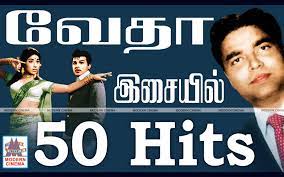
Veda was a prolific music director who frequently got his ‘inspiration’ from Hindi and English music, inspiration being a decent replacement for the verb copy.
Tabla Ramu, or Ramu, was another of his friends in the film-music industry. They used to hang out with Veda and had a good time listening to movies and music and daydreaming. They would feed Chandrababu, take care of him, and just have him sing and dance with gay abandon. This was in the 1950s before the slums had taken over Santhome beach.
Despite his family’s disapproval, Chandrababu strongly desired to pursue a career in acting. Only his friend Ganapathy inspired him to develop his acting abilities. Chandrababu was so good at it that he was asked to sing and dance at social gatherings, even as a kid.
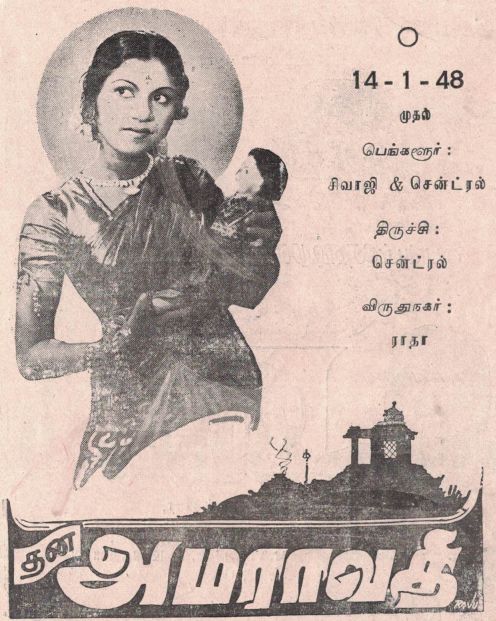
Chandrababu met actors Sriram and B. R. Panthulu in his early years and later T. R. Mahalingam through them. His first role was in the supporting cast of the 1947 film Dhana Amaravathi, but he had trouble finding work after that.
Wikimedia Commons
The suicide attempt
In 1952, out of desperation, he ate copper sulfate crystals in an unsuccessful suicide attempt. His suicide note read that he had been depressed over being unable to meet S. S. Vasan. He also wanted his body to be turned over to B. S. Ramaiah, the director of his solo film. This attempt was in the cafeteria of Gemini Studios. Luckily for him and the industry, he was rushed to the hospital in time and recovered. One of those who rushed him to the hospital was Pudukottai Ganesan, the casting assistant at Gemini Studios. Pudukkotai Ganesan became the famous actor Gemini Ganesan in later years.
Suicide is illegal, so the police had to detain him. When the judge heard the reason for his attempted suicide, the judge asked him to demonstrate his acting skills during the trial. The judge was so impressed by Chandrababu’s performance of a Shakespearean monologue he decided to spare him jail time. After hearing about this incident, director Vasan cast Chandrababu in a small role in his 1952 film Moondru Pillaigal. The actor so impressed the director that he predicted that Chandrababu would become a famous actor. In the same year, Chandrababu acted in Chinna Durai and Mohana Sundaram.
Yodlee Yodlee
Chandrababu was inspired to yodel by western musicians like Gene Autry and Hank Williams, whose music he adored. Supposedly, he was the only South Indian singer-actor who could yodel. The song Poda Raja Podi Nadaydaa was the first time yodeling had been heard in a South Indian film. This song was in the movie Chinna Durai, which T. R. Mahalingam produced and directed.
Chandrababu’s yodeling skills!
Chandrababu received Rs 200 for his work in the movie Mohana Sundaram. He soon became the top comic by playing comedy routines in films with leading actors; Pudhaiyal with Sivaji Ganesan, Nadodi Mannan with MGR, and Mamanmagal with Gemini Ganesan. Who would have expected that he would earn over Rs.100,000 (roughly $10,000) per year at the height of his career? He made history as the highest-paid South Indian comedian, almost on par with the top-billed actors of the time, MGR and Shivaji Ganesan.
Connecting with his fanbase
It was said that Chandrababu would drive to the slums in his Fiat car to chat with the dwellers. It was simply his way of being cordial and being in touch with reality. Chandrababu also did this to show that he, like them, is human. He was known for his speeding. Incidentally, he was one of the film industry’s two fastest and most daring drivers. The other was Gemini Ganesan.
Chandrababu acted in seventy-six movies and showed great versatility, with many actors comparing his singing, dancing, and acting style to that of Danny Kaye and Bob Hope. His ascent in the film industry was achieved with his sheer versatility.
Chandrababu tried constructing a luxurious mansion where he could drive his car up to his bedroom on the first floor, possibly to browbeat the film industry. He had been insulted enough in his lowly years. He would also insist that the producers carry his cigarette tin. R.S. Manohar, a longtime friend and film villain would beg him not to force producers to do this.
Nothing was off-limits
Chandrababu was a straight shooter. He did not conform to the fake humility of the Tamil film industry, where there were no equals. Either you were an ‘anne’ (big brother) or a ‘tambi’ (younger brother). You don’t need a MENSA score of 140 to understand that this was a polished way of showing class distinction. But for Chandrababu, there was no kowtowing this philosophy. If you were an idiot, he called you that to your face.
After the Indo-Pakistani war ended in 1965, a similar but even more shocking incident occurred in New Delhi. Many actors and actresses from South Indian films made the trip to New Delhi to perform for the servicemen and women who had served their country. Top actor Sivaji Ganesan shared the stage with Gemini Ganesh, Savithri, Jayalalitha, Padmini, Devika, P. Suseela, Kannadasan, Al. Srinivasan, M. S. Viswanathan, P.B. Sreenivos, and dozens more. As a result of an invitation from Dr. S. Radhakrishnan, the Madras team was able to spend the evening at the Rashtrapathi Bhavan.
The President requested a musical performance from MSV. Chandrababu sang, “Pirakkum podhum azhuginraai…” MSV accompanied him on the harmonium. The song and the comedian’s performance brought the President to tears, and he showered praise on the singer and the lyricist, Kannadasan. Chandrababu suddenly jumped up from the floor and onto the President’s lap, pinching his cheeks and exclaiming, “Kanna, nee periya rasiganda!” in Tamil (meaning: you are a great fan,my dear). The philosopher seemed unperturbed by the situation, laughing the whole time. So that was Chandrababu for you.
One of the greatest ‘heroes’ of that time, M.G. Ramachandran, or MGR as known, commanded such an extreme following and fawning in the industry; he was simply Mr. MGR to him. In private, the rumor was that for Chandrababu, the initials MGR stood for ‘Mighty Graceless Rapscallion.’ Regardless, Chandrababu still cast MGR in a film he directed. He arranged with a financier to direct his first film Maadi Veettu Ezhai with M. G. Ramachandran as the hero. As a result of Ramachandran’s lack of cooperation, he was ultimately unsuccessful in this endeavor. The film project was also dropped. Scriptwriter Aroordhas chronicled the reasons for Ramachandran’s non-cooperation in his 2002 memoirs. It is because Chandrababu became abusive towards Ramachandran’s elder sibling M. G. Chakrapani.
There was also the renowned lyricist Kannadasan who got on to his wrong side. Even though he wrote Kavalai Illaadha Manindhan with Chandrababu as the protagonist, he never overcame the difficulties of that decision.
The downward spiral of doom
By now, Chandrababu was caught on a downward spiral with alcohol and prescription medication. Despite his destructive lifestyle, MGR offered him a helping hand by offering him a role in his production, Adimai Penn, released in 1969.
Chandrababu’s role as a rickshaw puller in Sabhash Meena was not recognized, although he outshone Sivaji Ganesan, the then top-notch talent in histrionics then, simply because he had made enemies in high places. This naivete led to his ultimate downfall. It was too late for Chandrababu to change his fortunes in the 1950s.
Chandrababu’s final shot was to act and direct a film, Thattungal Thirakkappadum, in 1966. The film was highly acclaimed for its cinematography but was not a box-office success.
Chandrababu spent his last days penniless. During his final years, he stayed in the house of his good friend M. S. Viswanathan until his death on 8 March 1974. Sivaji Ganesan arranged all his last rites and was buried in Quibble Island, Chennai.
Birth Elis R. Dungan, or Dungan Ayya, as he was popularly known, was born on May 11, 1909, in Barton, Ohio, U.S.
In the early 1930s, foreigners were addressed as ‘master’ while Dungan was called Dungan Ayya, a more endearing term than ‘master.’ His first forays into photography came about when he bought a box camera to take pictures for his school yearbook. That was his first brush with photography.
Early days Later, after having saved up enough money working in a gas station, Dungan traveled to Spain and bicycled through most of Spain. He later ended up in Paris, France, where he got a job in the American Library. Duncan’s interest in photography grew during his two years at the Library, and he began doing exhibitions. The library director asked Duncan to take his photography seriously and said he would sponsor him for a university course. That’s how Duncan returned to America. He enrolled at the University of Southern California in cinematography.
Serendipitous meeting There he met with M. L. Tandon, serendipitously, the son of a wealthy film producer who invited him to visit India. Tandon wanted Dungan to direct Indian movies and raise them to the level of the existing Hollywood productions for viewers in India and the world. It was to be a six-month trial run. Manik Lal Tandon directed the 1935 Tamil film Bhakta Nandanar (transl. Devotee Nandanar) with K. B. Sundarambal, a Carnatic singer and stage artist, and made his film debut.
This was also Ellis R. Dungan’s first film. There is no known print of the film, making it a lost film.
In a later interview, Duncan remarked that the six-month stint ended as a fifteen-year journey with the Indian movie industry.
Indian cinema in the 1930s In the 1930s, the Indian film industry was at a nascent stage. Drama troupes were made to stage their plays in a studio. Nothing had to be done. The actors knew their dialogues, and everyone knew their part. A static camera was placed, and the stage was adequately lit up. This meant boring long shots, and most films had a theatrical feel with the actors exaggerating their emotions and delivering their dialogs at the top of their voices.
Changes to Indian Cinema Dungan changed all that. He said that he had a tough time sobering down the actors of those days and getting them to deliver the dialogs in a normal tone. Most actors in those days were chosen more for their singing talent than their acting prowess.
Dungan struggled to get the actors to emote naturally during the close-up shots.
Dungan was also credited with using mid-range and close-up shots of the scene instead of a long static shot. He introduced a lot of Hollywood technics in his Tamil films, despite technical limitations at that time.
Around the same time, Himanshu Roy’s Bombay Talkies had hired a German crew led by Franz Osteen. Franz worked from 1935 until 1939 and directed the film Achuth Kanya, which starred Devika Rani and Ashok Kumar and was a super hit.
Ellis R. Dungan popularized contemporary makeup, the moving camera, and cabaret dance numbers for Tamil Cinema and moved Tamil cinema away from stage plays’ influence. Dungan, who trained in Hollywood, introduced some crucial techniques to the industry at its infancy in each department, which would have a unique place in its history.
Dungan also introduced the track and trolley to Indian cinema. In fact for a long time, it was called the Dungan track-and-trolley!
Popular films of Ellis Dungan Dungan mainly worked on religious and historical films during the earliest days of Tamil filmmaking; the movie is talked about because it has daring close-up scenes. It was with Iru Sagodarargal (1936) that Dungan emerged as the leading filmmaker of the newly developing Tamil film industry. The film was shot in Bombay in the Saroj Filmtone studio. It was pivotal to establish a more polished film language for Tamil films, mainly merely photographed dramas and little else. Iru Sagodarargal (1936) is one of Dungan’s best-known films and one of his favorite. In a language and culture that he knew nothing about and was unfamiliar with Tamil. He hired translators, known as rush directors, who were fluent in English and Tamil.
Although born as an Irish American, Dungan made highly appreciated devotional and historical films like;
Sathileelavathi (1936),
Iru Sahotharargal (1936),
Ambikapathi (1937),
Sakunthalai (1940),
Meera (1945),
Ponmudi (1950) and
Manthirikumari (1950)
The film Ambikapthi, starring the then superstar, M.K. Thiagaraja Bhagavathar, had the famous kissing scene with M.R. Santhalakshmi. It is said many returned to see the kissing scene repeatedly! Many at that time felt that M.K.T. did not know how to act. However, the same film was remade in 1957 with Shivaji Ganesan, one of India’s finest, in the lead. Many felt the earlier Ambikapathi was much better. Dungan’s Ambikapathy was filmed based on a Romeo and Juliet style, including the balcony scene, which resembled a Hollywood production.
Meera, starring M. S. SubbalakshmiMeera is a 1945 Indian Tamil-language musical drama film directed by Ellis R. Dungan and written by Kalki Krishnamurthy.
The film, based on the life of the 16th century mystic and poet Mirabai, stars M. S. Subbulakshmi as the title character, a zealous devotee of Krishna who considers him to be her husband.
Despite marrying Rana (Chittoor Nagaiah), she lives her own life, which her husband and family find unacceptable.
Sadasivam wanted to make a film that would make his singer wife Subbulakshmi’s music accessible to the general public, so he began looking for a good story; Subbulakshmi chose Meera’s story.
To maintain credibility and historical accuracy, the film was primarily shot on location in North India, including Jaipur, Vrindavan, Udaipur, Chittor, and Dwarka, at Newtone Studio in Madras.
Meera was released on November 3, 1945, Diwali day, and quickly became a critical and commercial success.
This prompted the production of a Hindi-dubbed version, with a few scenes reshot, which was released two years later on November 21, and was also a success.
Despite the fact that the Hindi version made Subbulakshmi a national celebrity, it was her final film as an actress, after which she decided to concentrate solely on her musical career.
Introduction of M.G. Ramachandran Ellis Roderick Dungan made his directorial debut with Sathi Lilavathi, the first film of the future Tamil Nadu chief minister, M.G. Ramachandran. Dungan had no Indian language skills, an issue that never affected his career as a filmmaker in Indian languages, mainly Tamil.
Dungan directed some renowned Tamil movie actors in his director role, including M. G. Ramachandran in Sathi Lilavathi, T. S. Balaiya, Kali N. Ratnam, and N. S. Krishnan. He was acknowledged for introducing various new techniques in Indian cinema.
Role in the Second World War During the Second World War, the American Cinematographer made A Short-Return Soldier (1945), a Tamil movie starring T. S. Balaiah, to support the war effort.
From 1941-1945, the United States entered the Second World War. Dungan served as an official photographer for the Madras Government and made wartime newsreels, propaganda films, and a handful of documentaries for The Indian News Parade.
He also filmed the final journey of Mahatma Gandhi.
Return to the USA Ellis R Dungan returned to the States. Before his final Tamil film, Manthiri Kumari was completed. His wife, Elaine Dungan, who was not an Indophile, didn’t share his passion for making movies and wanted to return to America. So, she gave him an ultimatum, which I am guessing went something like this: either me or the film. So, like any good husband, he dropped his project and returned to the States. T R Sundaram, the studio owner, completed the film. Thus, his last film in Tamil was Manthiri Kumari in 1950. Karunanidhi was the scriptwriter for this film, and much alliteration and social ideology were heavily promoted in the film’s dialogues.
Interestingly, Karunanidhi wanted M.G.R. to be the lead. Still, Dungan felt M.G.R. was not photogenic enough for the role because M.G.R had a cleft in his chin. Ultimately a compromise was reached, and in Mandiri Kumari, M.G.R is seen sporting a small goatee to hide the notch in his chin!
Projects in America In America, he formed Ellis Dungan Productions, which made documentaries, industrial films, and similar films for almost two decades, starting in 1963.
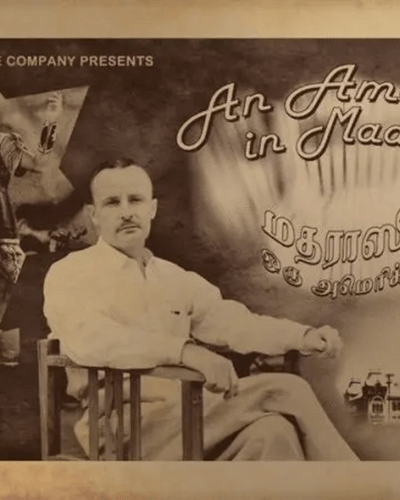
An American in Madras, a documentary film by U. S. based filmmaker Karan Bali, examines Ellis R. Dungan’s contributions to the art of cinematography and his later years as a director of documentary films. The hour-long documentary on Dungan was made in 2013 using information from West Virginia state archives and interviews with people who knew Dungan.
Ellis R. Dungan, the man credited for launching M.G. Ramachandran into Tamil filmmaking with his 1936 movie Sathi Lilavati, passed away in Wheeling, West Virginia, in 1958. He was paid Rs 100 to make his movie Sathi Lilavati.
“Of all the Tamil stage-movie films that I directed in India, my Meera is considered my best film by my peers and the critics in the field,” said Dungan.
It was probably in 1992 when my musician friend Mark Sarma walked into my house with a cassette around 7.30 pm. Sarma, Shekar, and I were often jammin’ in either Shekar’s house or mine. Shekar is still a whiz kid on the keyboards and can persistently drive you to perfect your art! Sarma is more of a laid-back and easygoing instinctive guitarist and singer. I loved their company while it lasted; until I moved out of the country, ending our jammin’ sessions.
Boy, did I or did I enjoy those days? Anyway, back to our topic.
“Machaan*, listen to this new music director. He’s really good”. So, I played the cassette, and I was blown away. The composition and the sound were simply fantastic. It immediately perked you up in a good way. As far as I know, the reggae beat the song was based on was never used in an Indian film song.
The music and the sound were so refreshingly good that we kept listening to the same song repeatedly, one of the reasons being that the cassette had just this one song, a pre-release version. The song was Chinna Chinna Aasai, the Hindi equivalent, released later on, being Dil hai Chota, and the film was Roja. How Mark was able to lay his hands on it prematurely, I don’t know.
The recording and subsequent mix of most Indian film songs in the pre-1990s were pathetic. When the bass notes came on, there was a palpable drop in the volume of the other instruments. The singer’s voice compressed and squished.
This sound was different, more in line with a Led Zep’s or a Beatles’ album.
Playing Sherlock Holmes
We started enquiring who was the composer and a possible sound engineer involved in this beautiful sound. The memory is a bit hazy, but I think someone told us it was the same guy who composed the Leo coffee ad, with beautiful bass lines that stood out loud and clear. Same too with the refreshing composition and sound of Regal Sottu Neelam Doi. I then discovered that the Asian Paints jingle has the “Ella lo ela ela lo,” which figures in the Roja song!
So, the composer was the now internationally mega-famous A. R. Rehman. We then wanted to know the sound engineer behind these jingles and the Roja song, and we discovered that a guy called H. Sridhar was the raison d’être!
Now, that name rang a bell. I recall a H. Sridhar, who used to play bass for the Vivekanda College band. The band consisted of Sridhar, along with W. Vijaykumar, the lead guitarist who had a Fender Strat those days, a singer, and a drummer. I used to drool looking at his guitar; mine was ‘a made in Pallavaram* Givson’ – supposed to be a copy of the Gibson. Later in life, when I laid my hands on a real Gibson, words failed me to describe the difference adequately!
Surprisingly, our band, The Gurus, used to come up tops in most competitions despite Ahuja amps and lousy full-range speakers. Many bands had great gear, but ours was the pits. The Ahujas seemed built to pass on a nice dose of ‘electric shock’ to the guitarists and the microphones. Most of us knew how to get around this; attaching a wire from the guitar’s bridge to the 1/4″ jack or the metal portion of the cable. The singers would never make lip contact with the RCA mics. At one time, Viji, a singer in our band, got carried away and made contact with the mic with her lips. The high decibel yelp she let out is unforgettable. The audience, thinking it was part of the hype, thundered in response with huge applause.
Things changed later when we started to rent out the necessary gear from Johnny D’Mello, who I think rented out stuff more to encourage bands than as a source of revenue. You could rent an entire drum set for Rs. 10 a day!
I remember Sridhar setting up the P.A. system for his band. Before picking up his bass guitar, he seemed very particular about the cabling, amps, and stuff.
After the college scene, I used to meet him at StereoVision, an audio store on Mount Road in Madras, now called Anna Salai and Chennai.
I lost touch when I moved from Madras to Cochin, and when I moved back after probably nearly a decade, Sridhar was already a well-known sound engineer. While W. Vijaykumar and I reconnected in Cochin and Madras, somehow, I lost touch with Sridhar.
Another friend of mine, Pradeep Govind, who is a multifaceted personality, is currently the Regional Business Head & Projects Director of Muscat Media Group, publisher of Times of Oman. He was also the Branch Head of Sony Music Entertainment, India.
He is an international award-winning author and a singer-composer who worked with Sridhar. A die-hard Elvis fan, he has composed and sung many songs. One of the songs, C’mon Baby, had Sridhar as the recording engineer. I asked him how it was to work with Sridhar, and he said this to say,
“Sridhar has some very unconventional recording methods. He has very unconventional timings too! We recorded this song between 11 pm to 5 am!”
Pradeep also wrote the lyrics for the song Stranded on the streets for the film Nala Damayanti (2003). This song was sung by the famous actor Kamal Haasan.
What makes Sridhar’s mix different
From my perspective, Sridhar’s mix allowed each frequency to live in its own space. Nestled comfortably in their own spaces, each instrument shone and was at its Sunday best. The strings and the winds had their own allocated space; the bass lived in the lower end, and the singer existed somewhere between.
All this was by the clever use of equalization and judicious use of reverb and pan that placed each instrument, left or right and how near or far, on a virtual soundstage. I know this is a gross oversimplification of the process, but I think this is a fair generalization, an abridged version. Reverb is probably the most misused effect. I have done a lot of stage shows as a sound engineer, and this is what I have observed.
There are three types of singers;
Absolute newbies, so don’t know what to ask. You can see them shaking with fear.
The in-betweeners. They have sung at many karaoke parties and have had their egos massaged. They usually carry a bottle of water and take sips from it periodically. Some carry their own mics too. These are the ones who would come up to the sound engineer and want lots of reverb. These are the most dangerous lot; tough to manage.
The third lot are seasoned singers who are pros to semi-pros and go with whatever the sound engineer’s settings at most times.
I remember a famous sound engineer once remarked, ‘if you can hear the effect, you’ve set it too high!’
For starters, you had to be blessed with a good ear, and being a musician-sound engineer, that Sridhar was, is an invaluable combination. In fact, before his avatar as the country’s leading sound engineer, Sridhar played as a sessions musician for the great Ilayaraja. As an artist and a recording engineer, I know how invaluable it is for a recording engineer to be a musician. The connection with the artist is much better.
Sridhar’s ears were always ‘on’! Once while watching Lagaan in a theatre in Chennai, he had the theatre stop the film. He complained that the sub-woofers were wired out of phase, and it was completely ruining his mix.
What he hated
Sridhar reportedly hated dynamic compression. It is reported that he was asked why film music levels were so high, and his reply was that film music was basically for the TV and FM channels and not mixed to be played back on a Krell or Johnson system.
Although the soundscape extends from 20Hz to 20,000Hz, many cannot hear the whole spectrum. I doubt that anyone can. However, these sub and super frequencies affect the listener.
Check your sense of hearing frequencies with this recording! I got this on YouTube and don’t know whom to thank. Headphones might help.
Test your listening frequency!
The Grammy Award
His goal was to win a Grammy, which he did, unfortunately, posthumously. This is not known to many. Three sound engineers were awarded the Grammy for Best Compilation Soundtrack Album – H. Sridhar, P.A. Deepak, and Vivianne Chaix.
A.R. Rahman noted that “Sridhar’s professional goal was to get a Grammy. I am happy that God has answered his wish but sad that it came after his demise.”
And the best part is, he never formally learned Sound Engineering!
So much for academic qualifications!
*a typical slang used in Madras. It means brother-in-law, but when used as slang means, dear friend.
Mayavaram Krishnasamy Thiagaraja was born on March 1, 1910, to Krishnamurthi Achari and Manikatthammal. His place of birth was close to Mayiladuthurai Town in Mayavaram, Tamil Nadu. The family occupation was making gold ornaments; the Visvabrahmin goldsmiths.
Krishnaswamy Thiagaraja later became a famous South Indian actor in Tamil films. He adopted the stage name Thiagaraja Bhagavathar, also known as M.K.T. He also worked as a producer and Carnatic music singer. M.K.Thiagaraja Bhagavathar is also widely considered the first Tamil cinema superstar.
The first superstar of Tamil films
Critics and movie historians have acknowledged Bhagavathar as the first Tamil cinema superstar. Together with Chinnappa, another famous actor, set the double-star culture that still rules the Tamil industry. MKT achieved demigod status in Tamil Nadu. From 1934 to 1959, Bhagavathar appeared in 14 films, 6 of which were box-office hits.
Between 1934 and 1944, Bhagavathar made nine films, all hits. The movies were Pavalakodi,Sarangadara (1935), Sathyaseelan (1936), Chintamani, and Ambikapathi, Thiruneelakantar, Ashok Kumar (1941), Sivakavi (1942) and Haridas.
In 1937, Bhagavathar was cast as Bilvamangal in the Chintamani, directed by Y. V. Rao. The film was the second consecutive success for Bhagavathar in 1937, breaking records established by Chintamani. Bhagavathar’s next film was his production, Sathyaseelan (1938), which performed laudably. Bhagavathar’s second movie, Naveena Sarangadhara (1936), was directed by the film’s director again, K. Subramaniam, and was based on the play Sarangadhara.
In 1937, Bhagavathar was offered the lead role in Ambikapathy, made by American film director Ellis R. Dungan. The master filmmaker, K Subramaniam, saw a Hindu mythological drama. The play was Pavalakkodi (Coral vine), where Bhagavathar played the role of Arjuna. Thoroughly impressed by the performance, the genius moviemaker planned a movie in which Bhagavathar would star. Thoroughly impressed with the performance, businessman Lakshmana Chettiar decided to produce a film based on the same story, with Bhagavathar playing the lead role.
One of the immortal melodies of Tamil Cinema, which is classical Carnatic based, Elam inba mayam, was sung by M.L. Vasanthakumari-P. Leela as a duet, in Manamagal (1951), produced and directed by the iconic personality and comedic supremo, N. S. Krishnan.
Haridas – the film that held a record
Madurai-based distributor Royal Talkies released the movie Haridas starring the first Tamil film superstar, M.K. Thyagaraja Bhagavathar, in Tamil Cinema. The movie was released on October 16, Diwali day, 1944. Haridas created the record for the longest consecutive run in a single theater in Broadway theatres for 784 days. This record was, however, broken by Chandramukhi (2005), starring another very popular actor Rajanikanth.
M.K.T. was very popular, but his fame ended when he was arrested in 1944 for murdering Lakshmikanthan.
First signs of trouble with the press
C. N. Lakshmikanthan was a well-known Madras Presidency film journalist. His foray into journalism began in 1943 when he launched Cinema Thoothu. This film weekly magazine was highly successful due to the extensive gossip columns. Many actors and actresses responded by shelling out big bucks to “buy” his silence. As a result, Lakshmikanthan established a prosperous career.
Lakshmikanthan attempted to run the magazine with forged documents but was forced to close shop after a few months. Things came to a halt when film actors M. K. Thyagaraja Bhagavathar and N. S. Krishnan, as well as film director Sreeramulu Naidu, submitted a memorandum to Madras Governor Arthur Oswald James Hope, requesting that the magazine’s license be revoked. Governer Hope complied, and the magazine’s license was revoked.
Unfazed, Lakshmikanthan launched a new magazine, Hindu Nesan, in which he continued his scandalous stories about Bhagavathar, Krishnan, and a few other top actors, actresses, and film people of the time. The strategy paid off handsomely, and Lakshmikanthan purchased his printing press.
Life after jail time
Although M.K.T. went on to appear in Tamil films upon release from jail, none of them did very well. Before he was arrested, he had signed on to do another 12 films but lost interest, and the few films he did post-release were unsuccessful. In 1934, the film Pavalakkodi was made by Krishnasamy, Thyagaraja Bhagavathar, which began as a successful stage play performed by an ensemble that toured Tamil Nadu, Sri Lanka, Malaysia, and Singapore, where the play was staged hundreds of times.
He is considered one of the most successful Tamil movie actors ever.
The entry of the atheist movement in the industry
It is believed that M.K.Thyagaraja Bhagavathar’s absence from the film industry allowed Dravidian atheist movements to enter and make their mark on the Tamil film industry.
His end
On November 1, 1959, the superstar M.K.T. died in Madras.
His mortal remains were brought to his Tiruchi home and buried at the Sangliyandapuram community cemetery.










 Nalla Madras