Legs – the long and the short of it

“Legs for Days (or at Least Until They Reach the Ground)”

You know, there’s a fine line between genius and insanity, and I may have pirouetted on that line a few winters ago. I thought, “Olympic snow sledders make it look so easy, sliding down icy tunnels at breakneck speeds. How hard can it be?” So, I decided to give it a try. Just one tiny issue: I forgot the sled. And as my quads met the icy earth with a thud, I had an epiphany. Not about snow sledding, mind you, but about legs. Yes, legs.

Most of us don’t give our legs the appreciation they deserve. Unless you’re a model strutting down the runway with legs that seem to stretch on for miles, or the renowned swimmer Micheal Phelps, whose legs look positively stunted next to his ripped torso, you probably don’t think much of these appendages that keep you standing.

Our legs are, curiously, almost as long as our trunk. But why? Why would nature gift us with such lengthy limbs to carry around our torsos and heads? Was there a hiccup in the grand scheme of things? Did Mother Nature think, “Let’s give them stilts and see what happens”? Did evolution have a brain fart?

I’ve often marveled at how humans decided to evolve to be bipedal. Why didn’t we get six legs like an insect or no legs like a snake? But more so, why did we get such LONG legs? I mean, the longer the leg, the farther the fall when you’re imitating Olympic snow sledders, right?

Now, snarky people have been questioning this leg conundrum for quite some time. One such fellow had the audacity to ask none other than Abraham Lincoln about the ideal length for a man’s legs. Honest Abe, always quick with his wit, replied, “Long enough to reach the ground.”

I imagine that reporter was left looking more dumbfounded than a cat watching a laser pointer. There’s a reason he never asked another question after that – some burns just don’t heal.

In conclusion, while I might not understand the science behind our peculiar leg length, I have come to appreciate these two appendages even more after my ill-fated snow sledding attempt. They might not always save you from making a fool out of yourself, but at least they’re always there, reaching the ground just as Abe said they should.

And as for me? Next winter, I’ll stick to snow angels. Much safer. And requires far less leg coordination.

Freebies and the Unsung Heroes: When “Thanks” Doesn’t Pay the Bills

Freebies and the Unsung Heroes: When “Thanks” Doesn’t Pay the Bills

Ah, the life of a musician or recording engineer – it’s glamorous, isn’t it? Flashing lights, screaming fans, and… endless requests for free background tracks? Wait, what?

If you’re a musician or a recording engineer, chances are you’ve heard it all too often: “Hey, could you whip up a quick track for me?” or “I need some music for my new YouTube channel. Can you help?” But the kicker? More often than not, all you get in return is a quick “thanks” (if you’re lucky) and a pat on the back.

Now, don’t get me wrong. “Thank you” is a beautiful phrase that warms the heart and soul – but unfortunately, it doesn’t warm the pockets or pay the bills.

Let’s take a moment to compare with other professionals.

Imagine strolling up to a doctor at a social gathering and saying, “Hey, I’ve had this cough for a while. Can you just quickly check it out?” Or cornering an architect at a birthday party with blueprints in hand, hoping for a free consultation. Would they be met with the same expectations of ‘gratis’ expertise?

Let’s be honest, it does happen. Many professionals, regardless of their field, get bombarded with pro-bono requests from friends, family, and the occasional audacious acquaintance. But there’s a peculiar sting that musicians and recording engineers feel, given the perception that their craft is “easy” or “just a hobby.”

But who’s really to blame here?

1. The Perpetrator (a.k.a. The “Friend”)

Let’s face it, most of us are guilty of wanting something for nothing. In a world of instant gratification and streaming services, the value we place on individual expertise can sometimes wane. To the untrained eye (or ear), creating a background track might seem as simple as pushing a few buttons. But as any seasoned musician or engineer knows, it’s hours of work, years of training, and a bottomless well of patience.

2. The Enabler (a.k.a. The “Professional”)

Sometimes, professionals are their own worst enemies. By occasionally offering freebies to win favor or out of sheer kindness, they unwittingly set a precedent. The occasional free consultation or quick background track can quickly snowball into a mountain of expectations.

So, what’s the solution?

For starters, recognizing and respecting the craft is essential. Whether it’s music, medicine, or masonry, every profession requires expertise that deserves acknowledgment. And for professionals, it’s essential to establish boundaries. It’s okay to say no, or to kindly point out that expertise has a price. After all, you wouldn’t just grab a candy bar from a store and walk out with a mere “thank you”, would you?

In the end, let’s remember the timeless wisdom: If you’re good at something, never do it for free. So, to all our unsung heroes, keep strumming, keep mixing, and most importantly, keep valuing your worth!

Are our Gods actually aliens?

The Divine Structures: Temple Vimanas, Church Steeples and the Alien Hypothesis

David Charles Grusch

David Charles Grusch, a former intelligence official turned whistleblower, has provided a fresh perspective to this conversation. Grusch served as a decorated combat officer in Afghanistan and is a veteran of the National Geospatial-Intelligence Agency (NGA) and the National Reconnaissance Office (NRO). He represented the reconnaissance office to the Unidentified Aerial Phenomena Task Force from 2019-2021 and was the NGA’s co-lead for UAP analysis and its representative to the task force from late 2021 to July 2022.

Grusch has provided Congress and the Intelligence Community Inspector General with extensive classified information about deeply covert programs. These programs allegedly possess retrieved intact and partially intact craft of non-human origin. Grusch claims that this information has been illegally withheld from Congress and has filed a complaint alleging illegal retaliation for his confidential disclosures.

His testimonies, backed by corroborating information from other active and retired intelligence officials, add a layer of intrigue to the conversation on ancient astronaut theories and potential extraterrestrial influences on human civilization and religious traditions. These insights suggest that we might indeed have had visitors from the stars in the past.

Our world is filled with wondrous structures, whose histories reach far back into the annals of time. Among these architectural wonders, two types of buildings – Hindu temples and Christian churches – have drawn fascination and intrigue for centuries. This blog explores:

  • The resemblance between the ‘vimana’ of Hindu temples and the steeples of Christian churches to the structure of modern spacecraft
  • The speculation that these structures could represent extraterrestrial spacecraft
  • The possibility that the deities worshipped in these religious traditions might indeed be aliens who visited Earth

The Vimana and The Steeple: A Structural Analysis

The vimana and the steeple – structures of Hindu temples and Christian churches, respectively – bear a surprising resemblance to the streamlined structure of modern spacecraft. Both aim skywards, pointing towards the celestial realm, the final frontier for humanity.

Vimana: Spaceships of the Gods?

The Sanskrit word ‘vimana’ intriguingly denotes both:

  • The towering structure of a temple
  • Mythical flying palaces or chariots of the gods, as described in ancient Indian scriptures

Detailed descriptions of vimanas, with their light and noise, moving at great speeds, and capable of traversing dimensions, bear striking similarity to modern accounts of UFO sightings.

Pushpaka Vimana: The Celestial Chariot of the Gods

The Pushpaka Vimana, a prominent example from ancient Indian literature, is described as a divine flying palace or chariot, capable of traveling vast distances. It is often depicted as:

  • Large and luxurious, capable of accommodating an army
  • Able to move at the speed of thought
  • Capable of altering its size according to its master’s wish
  • Able to navigate in any direction

These descriptions have been interpreted by proponents of the ancient astronaut theory as potentially pointing towards extraterrestrial influence.

Rituals and Resemblance to Spaceship Landings

Certain rituals performed in Hindu temples, such as the lighting of camphor, could mirror the conditions of a spacecraft’s landing or take-off:

  • The priest stands on the doorway of the vimana during the ritual
  • There is a crescendo of activity – loud chanting, ringing of bells, bright flames, and dense smoke
  • The atmosphere created by these rituals is similar to the anticipation felt during the moments preceding a spacecraft’s launch

Hindu Deities: Divine Beings or Astronauts?

The depictions of Hindu deities, often shown with elaborate crowns, shields, and other unique objects, have led some to speculate a possible connection to extraterrestrial beings:

  • Crowns are sometimes interpreted as potential helmets, akin to those worn by modern astronauts
  • Divine weapons, or ‘astras,’ are sometimes seen as potentially advanced technological devices
  • Vahanas, or divine mounts/vehicles, are sometimes interpreted as potential representations of advanced vehicles or spacecraft

Manna from Heaven: Divine Intervention or Extraterrestrial Aid?

The biblical account of manna from heaven, described in the book of Exodus, has also been examined through the lens of the ancient astronaut theory. Some speculate that manna could be the product of an advanced technology, possibly of extraterrestrial origin:

  • Manna is described as white, flaky, and tasting like honey
  • It appeared six mornings a week and doubled in quantity on the eve of the Sabbath
  • Similar to the pilgrims being sustained by the indigenous peoples’ knowledge of the land, could the Israelites have been sustained by extraterrestrial beings with advanced technology?

Interpretations by Erich von Däniken

Erich von Däniken, a Swiss author known for his controversial theories about extraterrestrial influences on early human civilization, has proposed some intriguing interpretations:

  • The vimana of Hindu lore could be interpreted as advanced flying machines or spacecraft
  • Certain biblical stories and phenomena could be read as encounters with extraterrestrial beings

Gods or Extraterrestrial Beings?

The “ancient astronaut” hypothesis speculates that many divine beings were, in fact, extraterrestrial life forms. For example:

  • In Hindu mythology, gods like Vishnu and Indra are often associated with vimanas, their celestial chariots
  • In Christian tradition, events such as the Ascension of Christ have been interpreted as encounters with extraterrestrial technology or beings

In Conclusion: What is your take?

Whether our religious structures symbolize our ancestors’ understanding of the divine, or represent a more concrete interaction with advanced, extraterrestrial technology, remains a question for thought-provoking debate. Regardless, the vimanas of Hindu temples and the steeples of Christian churches continue to inspire us with their beauty and symbolism. They stand as testaments to human ingenuity and our quest to understand the unknown. Our rituals, like the lighting of camphor, contribute to our rich religious and cultural heritage, even as they open up new avenues of interpretation and exploration.

From the description of the Pushpaka Vimana in ancient texts to the stories of manna in the desert, these narratives continue to inspire wonder and provoke thought, enriching our understanding of our past and, potentially, our future.

The Medical Maestros vs. The Query Avalanche

I am part of a karaoke group, and even saying this makes me retch, but what to do? It’s raining outside.

If you know, you know, and for those who don’t, this is a dialog of a famous yesteryear Tamizh movie where a couple is making out in a car in the middle of a downpour when a kill-joy, moral policeman, knocks on the car window.

Our protagonist, not to be outdone, says, ” It’s raining outside; what to do?”

In Tamizh, of course.

Man is a social animal, and woman is even more so; I have no choice but to be part of this group for some friendship and camaraderie.

So sticking to the same note*, this group has some very eminent physicians who have so many tales about their patients; of course, no names or other identifying markers except that the patients are post-graduates of What’s App and/or Google University.

So here’s a third-person scenario that comes to mind as portrayed by my physician friends. I have broken this down into four case studies covering most of our poor doctors’ situations.

Setting the scene

Donned in pristine white coats, as white as the flawless idly, these medical magicians tirelessly combat a sea of diseases with the precision of a Bharatanatyam adavu.

But lo and behold, an adversary more potent than the most virulent of pathogens rises. It is neither a microscopic marauder nor a physical impairment but a ceaseless cyclone of questions whipped up by the patient fraternity, a riddle as perplexing as cracking the code of a Jallikattu bull’s maneuvers.

Have you ever perceived the transformation of your usually unflappable physician, calm as the tranquil waters of Marina Beach, into a bewildered, nerve-taut, an almost explosive image at the prospect of an inquiry? Let’s unravel this mystery, as twisty and tangy as a plateful of tangy Puliyodharai.

The Google Graduate or Paati’s Kashyam

Case Study 1: The Google Graduate vs. The Paati’s Kashayam

In the patient populace, Dr. Google and our dear Paati’s Kashayam are revered as much as the sacred Thirukkural. The mention of a Google-based diagnosis or a traditional home remedy can send a doctor’s blood pressure skyrocketing faster than a Vallam Kali boat during Onam. It is no wonder the physician’s fuse shortens when patients equate the cryptic insights from the ‘Natures Cures’ blog to the doctor’s informed diagnosis.

The quizzer

Case Study 2: The Prashnamani

Next, we encounter patients resembling the relentless Sage Naradhamuni, turning each consultation into a philosophical debate. “Why this manjal colored marundhu, doctor? Why not the pachai one? What is in this marundhu? Does it contain the divine Thulasi?” Such relentless interrogations leave our physician as annoyed as a Chennai bus conductor during peak hours.

Self-diagnoser vs. the sensationalist

Case Study 3: The Puthir Solver

Some patients envision their diagnosis as a suspenseful ‘who-dunnit’ worthy of a Mysskin film plot. “Doctor, my maaman’s maamiyar’s brother had a similar kashaayam in 1982. Could it be the paniharam? Or maybe it’s the Marina Beach sundal I consumed?” By the time the mystery is solved, it’s not just the doctor’s patience running thin but also the Marina sands.

Case Study 4: The Self-diagnosing Siddhar

Finally, we encounter the patient who has mastered the art of self-diagnosis, reducing the doctor to a mere spectator in their medical drama. “Doctor, I need this marundhu,” they assert, leaving the doctor as dazed as a non-Tamil speaker trying to decipher the rapid-fire lyrics of a Tamil gaana song.

Next time the doctor’s face turns as red as a ripe Sevvazhai at the relentless onslaught of questions, bear in mind their struggle is not just against diseases but also this veritable tsunami of interrogations. Give them a break from the queries once in a while. Sometimes, the best medicine is a moment of silence, as peaceful as a moonlit night by the serene Kanyakumari coast.

*what a bad pun, but I couldn’t help it

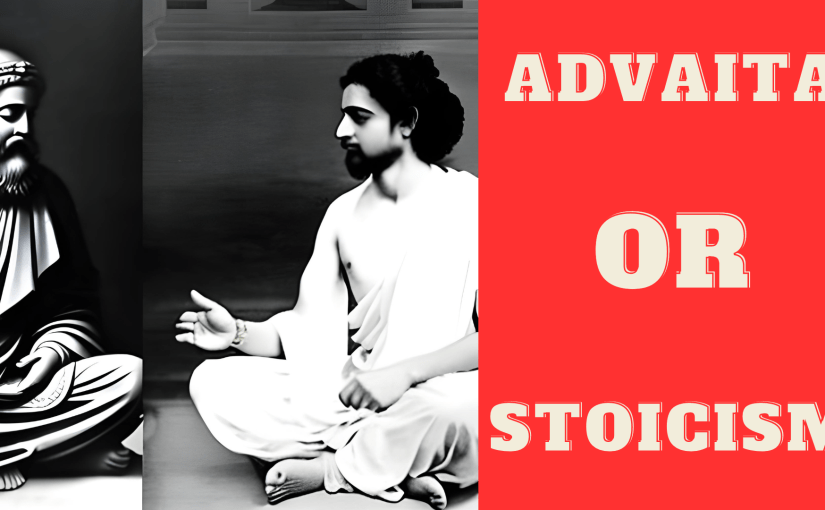
Similarities and Differences between Advaita and Stoicism

In my teenage years, my favorite author was P.G. Wodehouse. Although the settings and trapping of the English peerage were alien, the comical humor had me in stitches! My favorite character was the ever-resourceful Jeeves, the gentleman’s gentleman, as he would call himself.

I had always associated Jeeves as a stoic. A stoic person does not go over the top with happiness or curl up into a fetal position when confronted with tragedy. Even keel at all times.

But wrong I was. Stoicism is more complex; believe me, you. Actually, I hate this usage of ‘believe me you.’ It was a favorite usage of an ex-boss of mine while I was in the airline industry. At least that was my definition before I took a deep read into stoicism.

While reading about stoicism, one of the cardinal rules that struck out was that you control the process but you do not control the outcome. But this was exactly what Lord Krishna implied in the Bhagavat Gita, amongst many others. So I decided to take a dive at advaita and stoicism, and here is what I came up with.

Introduction:


Advaita and Stoicism, two philosophical schools of thought from ancient India and Greece, respectively, have fascinated seekers of wisdom throughout history. Despite their distinct origins, these philosophies share common threads and offer profound insights into the nature of existence, the human experience, and the pursuit of inner peace. In this blog, we will explore the similarities and differences between Advaita and Stoicism, shedding light on their shared principles and unique approaches to life.

The Nature of Reality


Advaita: Originating from the Upanishads and expounded by scholars like Adi Shankara, Advaita philosophy emphasizes non-duality. It asserts that the ultimate reality, referred to as Brahman, is an undivided and universal consciousness. The illusory nature of individual identities (Atman) is revealed, leading to the realization of oneness.

Stoicism: Stoicism, epitomized by thinkers like Epictetus, Seneca, and Marcus Aurelius, perceives reality as governed by a rational and divine order. It teaches that individuals should align with this natural order, recognizing their limited control over external circumstances while cultivating mastery over their inner thoughts and actions.

Similarity

Advaita and Stoicism converge in recognizing a higher reality and the need to transcend limited perspectives. Both philosophies urge individuals to embrace a broader understanding of existence, fostering harmony and unity with the world.

Detachment and Equanimity


Advaita: Advaita teachings advocate detachment from worldly attachments and the transient nature of material existence. By realizing the impermanence of external phenomena, individuals are encouraged to seek lasting happiness within, liberated from the fluctuations of desires and external circumstances.


Stoicism: Stoic philosophy promotes a similar concept of detachment, emphasizing the development of inner resilience and emotional self-control. Stoics believe that accepting the transitory nature of external events can cultivate a state of equanimity and tranquility, irrespective of external circumstances.

Both Advaita and Stoicism highlight the significance of inner detachment, allowing individuals to remain unperturbed by the unpredictable fluctuations of life. Through cultivating non-attachment, both philosophies offer pathways to stability, peace, and freedom from suffering.

Self-Reflection and Self-Mastery


Advaita: Advaita philosophy encourages self-inquiry and introspection to realize one’s true nature and the nature of the universe. Through practices such as meditation and self-reflection, individuals can transcend the limitations of the ego and directly experience their intrinsic connection with the universal consciousness.

Stoicism: Stoicism places a strong emphasis on self-reflection and the examination of one’s thoughts and actions. Observing and understanding our emotions, judgments, and beliefs, we develop self-awareness and cultivate virtues such as wisdom, courage, and temperance.

Difference


While both philosophies endorse self-reflection, Advaita emphasizes the direct experiential realization of the ultimate reality through practices like meditation. Stoicism, on the other hand, focuses more on rational reflection and the cultivation of virtues as a means to navigate life’s challenges.

Conclusion


Advaita and Stoicism, originating from different times and cultures, offer profound insights into the human condition and the quest for inner peace. Both philosophies emphasize transcending limited perspectives, cultivating detachment, and developing self-awareness. Advaita emphasizes the realization of non-duality and the oneness of existence, while Stoicism focuses on aligning oneself with the rational order of the universe. Exploring the similarities and differences between these philosophies can broaden our understanding of human nature and provide valuable tools for personal growth and fulfillment.

I find it easier to implement Stoicism in my daily life rather than advaita philosophy.

How about you?

The silent scream

The aroma of Freshly Cut Grass: A Tale of Green Signals and Hidden Pheromones

It is the beginning of summer.  The birds are out early since they have been taught that the early bird gets the worm. 

In the school of worms, they forgot to teach the worm not to get up early and wiggle about.

Depending on which life form you associate yourself with, choose when you get out of bed.  That’s the moral of the story.

But I digress.  Where was I?  Ah, yes.  Let’s try this again.  

It’s summer, yay!

Summertime – I am straddling my ride-on lawn mower, a hat in place, dressed regally in a tank top and shorts.  I spend a good three hours intricately creating patterns on the lawn.  Believe me; it’s so well done that a passing helicopter might mistake it for crop circles.  Here’s the second moral of the story.  If anyone starts a statement with a ‘believe me,’ you can be sure that whatever is said afterward is a pure concoction.

To summarize, I am on the porch sipping my iced lemonade, enjoying the evocative smell of freshly cut grass, when my daughter, a total nerd, complete with horn-rimmed eyeglasses, is doing a postdoctoral fellowship in prestigious university remarks.

“Enjoying the smell, acha?” For those of you scratching your heads about what ‘acha’ is, it’s the Malayalam word for father.  When I relocated to the USA, my children were all kids.  My wife and I knew that there was no way we could keep their Malayalam intact, but we put our foot down about how they address us – Mother, amma; Father, acha.

I nodded in agreement; I was enjoying the smell of cut grass.

And then, she ruined it for me.  “Do you know that the smell you love is the olfactory equivalent of the grass screaming in pain and warning all other vegetation nearby that a monster is on the loose, annihilating our existence? 

I did not need a Ph.D. to realize that by ‘monster,’ she meant me.

She then went on a rant.  This is a summary of what she spewed forth.

The reason behind the smell of freshly-cut grass

This ubiquitous scent is much more than a delightful summer fragrance. It’s a complex chemical signal and a cry for help involving fascinating biochemical mechanisms and even elements of pheromones.

To understand why freshly cut grass has a unique smell, we first must delve into plant physiology. When a lawnmower’s blades slice through your lawn, they rupture the grass cells, releasing a medley of volatile organic compounds (VOCs). These VOCs evaporate quickly, generating the characteristic aroma we associate with freshly cut grass. The most crucial of these VOCs are a class of chemicals called green leaf volatiles (GLVs), predominantly composed of six-carbon alcohols and aldehydes such as hexenal, hexanol, and hexanol. 

GLVs are not exclusive to grass and are released by most green plants when their tissues are damaged. They serve several purposes, with the most significant being a distress signal. When a plant is under attack, be it from a lawnmower or a grazing animal, GLVs are rapidly produced and emitted. It’s as if the plant is crying out in pain, albeit in a chemical language that humans perceive as a delightful aroma.

But how do these distress signals function, and are any pheromones involved in this intriguing process?

The story of grass’s aromatic distress calls gets even more fascinating when we bring in the players responding to these signals — other plants, insects, and even mammals. That’s where we enter the realm of pheromones, those chemical substances produced and released into the environment by an organism, affecting the behavior or physiology of others of its species.

Among the respondents to the GLVs distress signals are neighboring plants, which interpret these volatile compounds as a warning of impending danger. They react by bolstering their defenses, producing compounds that make them less palatable or harder to digest. In other words, the aroma of freshly cut grass is a biochemical SOS that initiates a cascade of defensive measures in the plant community.

The realm of insects offers another exciting aspect of this pheromone story. Certain beneficial insects are attracted to these GLVs, particularly parasitoid wasps. These insects have a life cycle that involves laying their eggs inside other insects. Upon hatching, the young wasps devour their hosts from the inside. How does this relate to the aroma of cut grass? Many insects, like parasitoid wasps, target pests that feed on plants. When these pests start feeding, and the plant releases GLVs, it’s like ringing the dinner bell for the wasps. Thus, GLVs serve as an indirect defense mechanism, drawing in allies in the fight against plant-eating pests.

Lastly, the aroma of freshly cut grass also affects mammals, especially humans. Many people find this smell pleasing, describing it as fresh, calming, and comforting. Though it’s not typically categorized as a pheromone, its impact on human behavior bears some similarities, evoking strong emotional responses and nostalgia for many.

In conclusion

In conclusion, the scent of freshly cut grass is a complex interplay of biochemical signals and responses involving elements of pheromones. Far from being an incidental byproduct of lawn mowing, this aroma is a vital part of the plant’s defense strategy and a dynamic form of communication within the ecosystem. So, the next time you savor that fresh, green smell, remember—you’re catching a whiff of nature’s distress call and the hidden world of plant communication.

What I did to be guilt-free

I decided to sell the lawn mower.  Now I employ Jose to mow my lawn.  

Unlocking the Divine Power: The God Frequency of 963 Hz

Introduction

The world is abuzz with “The God Frequency,” a term coined to describe a specific sound frequency, 963 Hz, believed to possess extraordinary healing and transformative powers. This elusive frequency is said to resonate with the natural frequency of the universe, opening a gateway to spiritual growth, healing, and self-realization. So let’s delve into the mystical world of sound frequencies and discover the magic of 963 Hz.

The Power of Sound Frequencies

Sound frequencies have long been known to have healing and spiritual growth. The ancient Indian tradition of yoga, for example, has used sound frequencies, or “mantras,” for thousands of years to promote meditation and mental focus. Similarly, the ancient Egyptians, Greeks, and Chinese used sound therapy to treat various ailments and enhance spiritual development.

Modern science has also recognized the potential of sound frequencies in promoting wellness. For example, studies have shown that specific frequencies can help alleviate stress, enhance concentration, and even promote the production of certain hormones. The God Frequency of 963 Hz is a unique frequency that has captured the attention of spiritual seekers and healers alike.

The God Frequency of 963 Hz

The 963 Hz frequency is often called the “God Frequency” because it is believed to resonate with the natural frequency of the universe. This frequency is said to have powerful healing properties, promote spiritual growth, and facilitate deep meditation. But what makes the God Frequency genuinely unique? Let’s explore some examples of how this mysterious frequency can transform your life.

  1. Deep Healing and Regeneration

When exposed to the 963 Hz frequency, the body and mind are said to enter a state of deep relaxation, allowing the healing process to commence. This frequency helps repair damaged tissues, reduce inflammation, and stimulate the production of endorphins, promoting a sense of well-being and happiness. Many healers and practitioners use the God Frequency to assist in physical and emotional healing.

  1. Spiritual Growth and Enlightenment

The God Frequency is said to help individuals connect with their higher selves and open themselves to spiritual experiences. In addition, this frequency aids in releasing energy blockages and balancing chakras, allowing for a free flow of energy throughout the body. As a result, individuals may experience increased intuition, heightened creativity, and profound spiritual insights.

  1. Enhanced Meditation and Mental Clarity

Meditating with the 963 Hz frequency can lead to more profound relaxation and mental clarity. As the mind becomes more focused and calm, it becomes easier to access the subconscious mind and explore one’s inner world. In addition, many individuals who use the God Frequency during meditation report increased feelings of peace, love, and oneness with the universe.

  1. Manifesting Desires

The 963 Hz frequency is also said to be a powerful tool for manifesting desires and aligning oneself with the natural abundance of the universe. Individuals can raise their vibrational frequency by meditating with this frequency and attracting more positive experiences.

Some composers who have used this frequency

While the God Frequency of 933 Hz concept is relatively new and not widely adopted in mainstream music, several composers and artists have started exploring this unique frequency to create transformative and healing music. Some of these composers and artists include:

  1. Michael Tyrrell: Michael Tyrrell founded Wholetones, a healing frequency music project. He is a musician, author, and speaker exploring the power of music frequencies, including the 933 Hz frequency, for healing and personal transformation.
  2. John Stuart Reid: John Stuart Reid is an English acoustics engineer and inventor of the CymaScope, a device that makes sound visible. He has composed music in various healing frequencies, including the 933 Hz, to create soundscapes to promote well-being and spiritual growth.
  3. Gary Malkin: Gary Malkin is an Emmy award-winning composer, public speaker, and music and health innovator. He has created compositions in various healing frequencies, including the 933 Hz frequency, to help individuals achieve a state of deep relaxation and inner peace.
  4. Ananda Bosman: Ananda Bosman is a visionary musician and researcher who has explored the power of sound frequencies for spiritual and healing purposes. He has composed music using the 933 Hz and other specific frequencies to facilitate spiritual awakening and transformation.

These composers and artists have recognized the potential of the 933 Hz God Frequency and are incorporating it into their music to create a powerful and transformative listening experience. As awareness of this frequency grows, more composers will likely begin experimenting with the God Frequency, creating a new healing and spiritually focused music genre.

Conclusion

The God Frequency of 963 Hz holds the potential to unlock the divine power within each of us, transforming our lives through healing, spiritual growth, and self-realization. Whether you are a seasoned spiritual seeker or just beginning your journey, incorporating the 963 Hz frequency into your meditation and healing practices may be the key to unlocking a world of profound wisdom and limitless possibilities.

G. D. Naidu – The Pioneering Inventor from Coimbatore

Introduction

In the annals of Indian inventors, there lies a hidden gem whose remarkable contributions to engineering and invention deserve more recognition: Gopalswamy Doraiswamy Naidu, or G. D. Naidu. Born in Coimbatore, G. D. Naidu was influenced by the Stanes Group of Institutions, among other mentors and visionaries, who guided him throughout his career. In this blog, we take a closer look at the life, achievements, and people who shaped G. D. Naidu’s illustrious journey, from his humble beginnings as a server in a hotel to becoming a successful inventor and entrepreneur.

Early Life and Background

G. D. Naidu was born in Coimbatore on March 23, 1893, and displayed an extraordinary aptitude for machines and mechanics from an early age. Although he faced numerous challenges, including financial constraints and limited access to formal education, his passion for learning and inventing remained undeterred.

Driven by his love for machines, Naidu obtained work as a server in a hotel in Coimbatore to save money to buy a motorcycle. After purchasing the vehicle, he spent time dismantling and reassembling it, eventually becoming a mechanic. This hands-on experience with machinery laid the foundation for his future career.


The motorcycle G. D. Naidu bought from a British Revenue officer to understand how it worked


In 1920, Naidu began his transport business by purchasing an automobile coach, driving it between Pollachi and Palani. His venture, Universal Motor Service (UMS), quickly grew and, in a few years, owned the country’s most efficient fleet of public transport vehicles.

Influence of Stanes and Other Visionaries

The Stanes Group of Institutions, founded by Sir Robert Stanes in 1862, played a significant role in shaping Coimbatore’s growth as an industrial hub. These institutions provided hands-on training and education in various technical fields, and the Stanes Motor School, in particular, captivated young Naidu.

Apart from the Stanes Group, several visionaries and mentors influenced G. D. Naidu’s journey. One such influential figure was Diwan Bahadur R. K. Shanmugam Chettiar, a successful businessman and philanthropist who recognized Naidu’s potential and provided financial assistance to pursue his passion.

Later, Naidu traveled to Germany, where he met German inventor and industrialist Richard Küchen. Küchen’s work on safety razors and other cutting tools inspired Naidu to develop his own Rasant Razor, which would gain international attention.

Inventions and Innovations

G. D. Naidu’s inventive spirit led him to create over 100 patents in various fields. Some of his most notable inventions include:

  1. The Rasant Razor (1930): The safety razor with replaceable blades, which garnered international acclaim and helped Naidu establish a long-lasting business relationship with Richard Küchen.
  2. India’s First Electric Motor (1937): This indigenous electric motor was used in domestic appliances, fans, and other machines, paving the way for Indian self-reliance in electrical engineering.
  3. The Universal Grinding Machine (1954): Naidu’s versatile grinding machine could grind complex shapes and profiles with precision, making it a valuable asset in the manufacturing sector.
  4. Contributions to the Indian Film Industry: Naidu’s passion for cinematography led him to design a portable film projector called the “Filmadora” and a movie camera named “Naiduscope.” His work in this field was instrumental in shaping India’s burgeoning film industry.
  5. Naidu’s Self-starting Two-stroke Engine: This innovative engine provided a cost-effective and fuel-efficient solution for two-wheelers and three-wheelers, revolutionizing the Indian automobile industry.

Philanthropy and Legacy

G. D. Naidu was not only an inventor but also a dedicated philanthropist. In 1945, he established the G. D. Naidu Charities to support educational and healthcare initiatives in Coimbatore. The G. D. Naidu Industrial Exhibition, held annually, showcases the inventions and innovations of young engineers and entrepreneurs.

Conclusion

The story of G. D. Naidu’s life and achievements is a testament to the power of passion, perseverance, and the impact of influential mentors.

The easy button

So, we were all in the sunroom, slouching in our respective, well-upholstered, deep sofas. By all, I mean the family; me, the missus, and three of our off-spring.

It’s at times like this ‘ recreational argumentativeness’ takes over and possesses us. Once such sprang forth when one of us casually remarked as to how these weight loss shots er….shots for A1C regulation for Type 2 diabetes were for lazy people.

“Nothing like exercise and a controlled diet,” said the daughter.

“That’s an over-simplification,” said I, the slouch that I was. “Obesity and diabetes can happen to very fit and active people too”

While two of the off-springs were in the health industry, I was what you would call a Google medicine man. But that didn’t stop me from taking them on!

“In any case, laziness is not a bad thing, so much of good has come about due to laziness”

“Prove it,” said she, not to give in easily

And so, here goes the sermon. For those of you who don’t want a lengthy spiel, there is a concise list after this verbiage.

The story of how laziness caused inventions

Some of the most significant inventions have been born out of laziness. People have always been looking for ways to make their lives easier and more comfortable, and this desire for convenience has often led to remarkable discoveries.

The wheel is one of the earliest examples of an invention born out of laziness. The wheel was first used by early humans around 3500 BC and was a game-changer for transportation. Prior to the invention of the wheel, people would have to carry heavy loads by hand, which was both time-consuming and physically demanding. The invention of the wheel allowed people to move heavier loads with less effort, making it possible to build larger structures and expand trade networks.

Another example of an invention born out of laziness is the remote control. Invented by Eugene Polley in 1955, the remote control was initially created to make it easier for people to change channels on their TV without having to get up from their chairs. While it may seem like a simple invention, the remote control has become an essential part of our daily lives, allowing us to control everything from our TVs to our air conditioning units with the touch of a button.

In more recent times, robotic vacuum cleaners like the Roomba have become increasingly popular. The Roomba was invented by iRobot in 2002 and was designed to help people avoid having to vacuum their homes manually. With its autonomous navigation system, the Roomba can clean floors without any human intervention, making it a favorite among busy homeowners.

Similarly, automatic pet feeders have become a popular choice for pet owners who are too lazy to feed their pets regularly. These feeders dispense food at preset times, ensuring that pets are fed even if their owners are away from home.

In conclusion, many of the inventions that we use today were born out of laziness. While some may view laziness as a negative trait, it has led to some remarkable discoveries that have made our lives easier and more comfortable. From the wheel to the Roomba, these inventions have had a profound impact on society, and it will be interesting to see what other innovations come about in the future due to our desire for convenience.

List of inventions born from laziness

  1. Remote control: Invented by Eugene Polley in 1955 because he was too lazy to get up from his chair to change the channel on his TV.
  2. Roomba: A robotic vacuum cleaner that was created by iRobot in 2002. It was invented to help people avoid having to vacuum their homes manually.
  3. Self-stirring mug: For those who don’t like stirring their coffee, this invention is perfect. The mug has a built-in motor that spins a small plastic disk at the bottom, stirring the drink.
  4. Lazy glasses: These glasses use prisms to change the angle of vision, allowing the wearer to read or watch TV without having to tilt their head.
  5. Automatic pet feeder: Invented for pet owners who are too lazy to feed their pets regularly, the automatic pet feeder dispenses food at preset times.
  6. Electric can opener: The first electric can opener was invented in the 1930s to make opening cans easier and less labor-intensive.
  7. Microwave oven: Invented by Percy Spencer in 1945, the microwave oven was initially developed to heat food quickly and conveniently, allowing people to avoid spending time cooking.
  8. Segway: Designed by Dean Kamen in 2001, the Segway was intended to be a more efficient and effortless way of getting around than walking.
  9. Power windows: Power windows were introduced in cars in the 1940s to allow drivers to roll their windows up and down without having to use a hand crank.
  10. Video conferencing: While video conferencing has become essential during the pandemic, it was initially developed as a way for businesses to avoid travel costs and the hassle of in-person meetings.

No prizes for guessing who or what created this sermon or list. AI did it! Artificial Intelligence and not Air India bhaiya! The crown invention stemmed from sheer laziness!

What has the heart to do with love?

Consider this:

A boy has been pining for a girl in his class.  Unfortunately, he doesn’t have the nerve to profess his love to her.  Several times, he approaches the girl, but his knees quake, and his mouth dries up.  All he can manage is a ‘hi,’ and that in a raspy voice. The school term is over, and she doesn’t show up the following year.

The boy is utterly heartbroken.

The wife is pregnant with their second child.  The husband strays and has an affair with another woman.  The wife is devasted, and she ends up having an abortion. 

The wife is utterly heartbroken.

So, what is the recurring theme here? Heartbreak. 

Heart and emotions

Now arises the question, why does everyone refer to the heart when there is a strong emotional loss or, for that matter, a great joy?  I grieve with all my heart, a heartful thanks for what you did for me; it’s with a heavy heart that I have to tell you this and so on.

The logical man stands up and says that all this is horse poop.  A brain is necessary to feel emotion.  A heart is a muscle mass responding to periodic electrical impulses that make it beat.   And many nodding heads give more credence to the statement.  Much sentimental baloney, right?

The ‘little brain’

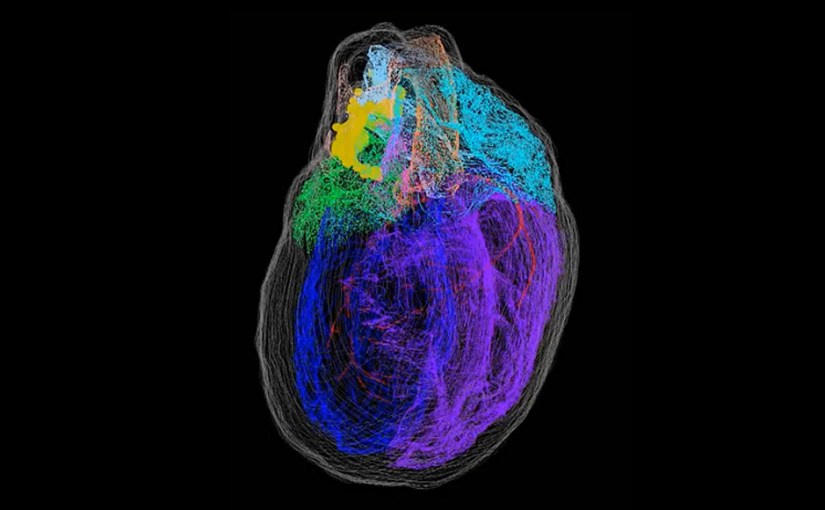
And lo and behold, recent findings by Dr. Armour in 1991 discovered that the heart has its “little brain” or “intrinsic cardiac nervous system.” This “heart brain” is composed of approximately 40,000 neurons that are alike in the brain, meaning that the heart has its own nervous system.

Reference: https://pubmed.ncbi.nlm.nih.gov/31728781/

This is an extract of the article referred to.

Quote: Scientists have reported that pain is always created by the brain. This may not be entirely true. Pain is not only a sensory experience but also can be associated with emotional, cognitive, and social components. The heart is considered the source of emotions, desire, and wisdom. Therefore, the aim of this article was to review the available evidence about the role of the heart in pain modulation. End quote

At his point, the logical man has an egg on his face, a gooey duck egg at that.

Not only does the heart have its own brain, but it also acts independently. 

Personality changes after a heart transplant?

Not to be outdone, the logical man pipes up again.  “So, what happens when a heart is transplanted?” “Does the recipient exhibit the traits and desires of the owner?”

There is the case of Claire Sylvia, a professional dancer, who was the recipient of the heart of an eighteen-year-old boy who died in a motorcycle accident. After the transplant, Claire craved Kentucky Fried Chicken and beer.  The hallmarks of an eighteen-year-old.  The family didn’t pay much attention to this until when Claire started walking, she had the purposeful stride of a man.  That led to an investigation as to who the donor was. It usually is not easy to find the donor, but with the right amount of persuasive pressure, the secrecy was lifted, and the truth unfolded.

Reference: https://www.psychologytoday.com/us/blog/explorations-the-mind/202110/heart-transplants-personality-transplants

A layman’s point of view

Me no physician, but this leads me to think that if the heart feels and stores memories and emotions, there is a need to cure the ache in the heart and not just in the logical brain. 

  • Put another way, is the pain or the emotion in the heart, the subconsciousness that has been bandied about for so long?
  • Since the emotive heart is probably not in sync with the brain in the head most of the time, is there a way to sync the two?
  • Does music help?
  • If the brain and the heart are not in sync, do we live life in conflict always?
  • Would syncing be the way to attain a superconscious state?

I tried asking these questions to the logical man.  He just gave me a blank stare and walked away.

Sigh!