How Madras A and Madras B went on AIR

The Madras Station of All India Radio

My love affair with the radio

As the youngest child growing up alone, the next sibling being ten years older and living abroad, the radio was my constant companion. The radio was my first music guru, and you will be surprised, it still is my favorite media device.

Cyclones were constant visitors to the east coast of India. The coast of Madras would get a direct blow sometimes, but most time, we would escape the direct effects as the ‘eye’ had a mind of its own. Andhra Pradesh, the unified version, would get the most out of it. Again, I’m vacillating here. The topic is All India Radio. I was beginning to say that weather bulletins would often be issued over the radio during the cyclone threat. So between bulletins, Madras A would intersperse the bulletins with fantastic programming. So, I would get up red-eyed, glued to the radio all night. Hey, those are some great opening lines for a song!

Early days

It is believed that in 1920, the first regular broadcasting station in the world went on air in Pittsburgh, United States. On February 23, 1920, the Marconi Company transmitted a program from Chelmsford, England. The BBC began broadcasting regularly in November 1922, with John Reith at the helm.

The genesis of the Madras AIR

In Chennai, The Madras Presidency Radio Club was formed less than two years later, on May 16, 1924, by a group of dedicated amateurs led by C.V. Krishnaswamy Chetty. It broadcasted nightly music and talk show that lasted for two and a half hours (and a morning transmission on Sundays and holidays). Beginning on July 31, 1924, it transmitted daily with a 40-watt transmitter. A 200-watt one eventually took its place. The club met in Holloway’s Garden, Egmore.

When financial difficulties forced its closure in October 1927, it donated its transmitter to the Madras Corporation, which began broadcasting regularly from Ripon Building on April 1, 1930.

The Marina, Robinson Park, People’s Park, and the High Court Beach each had six loudspeakers tuned to the sunset broadcasts. Fourteen Corporation schools also received small indoor receiving sets.

The official launch of AIR

This continued until All India Radio’s official launch on June 16, 1938, when the station was taken over by AIR. Lord Erskine was the Governor of Madras Province when he inaugurated the AIR station on Marshall’s Road in Egmore. An inaugural naadaswaram concert was performed by the great Tiruvengadu Subramania Pillai. On that same day, Smt. D.K. Pattamal, the doyen of Carnatic music, performed too. On the second day, Vidwan S. Rajam performed with Madras A. Kannan on mridangam and Govindasami Naicker on the violin.

On AIR’s 50th anniversary, S. Rajam performed a concert accompanied by the same musicians and, per the wishes of AIR, he sang the same songs he had sung fifty years ago at the inauguration!

AIR was lucky to have Victor Paranjoti as its first director when it opened its Madras station. Legendary Indian Conductor Victor Paranjothi was the first Indian accompanist of the MMA’s choir. He knew a lot about Western music. He included Western music—performed mainly by Anglo-Indians—in the show. Back then, Handel Manuel hadn’t yet joined AIR.

Paranjoti cared deeply about music and about keeping standards high. In the past, he would travel to listeners’ homes to collect first-hand comments. Mylapore beach, T’Nagar Park, and the Marina across from the Fort were once bustling with listeners tuning in to AIR broadcasts at kiosks. Overall, the high standards of broadcasting can be totally attributed to Paranjoti.

As early as the 1940s, AIR had its in-house auditioning system. Music supervisors were hired to assist the station directors in auditions, rehearsals, and training of artists. Vidwan S. Rajam was the music supervisor for AIR Madras from 1944 until his retirement in 1977.

The move to AIR’s present location

On July 11, 1954, AIR relocated to its brand-new building on South Beach Road (now Kamarajar Salai) in the San Thomé neighborhood. The new studios’ first broadcast began at 6:55 a.m. with T.N. Rajaratnam Pillai playing a brief alapana (exposition) in the Todi raagam.

In 1961, at AIR’s silver jubilee celebration, Krishnaswamy Chetty, one of the founders of the Madras Presidency Radio Club, was honored for his groundbreaking contributions to broadcasting in Madras with a commemoration award.

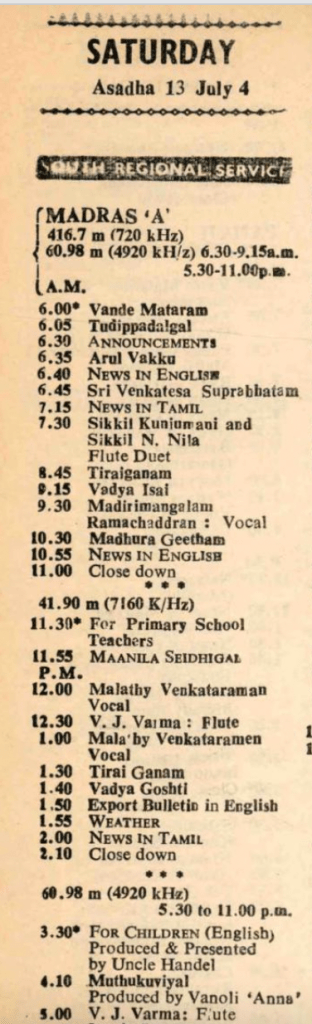
The programming of All India Radio, Madras A, July 4, 1970. Look out for Uncle Handel and Vaanoli Anna (Radio Brother) in my subsequent blogs.

The language controversy

The Trichy and Madras broadcasting station used to announce themselves as Vaanoli Nilayam (Tamizh for a radio station). On April 25, 1942, the D.G. of AIR ordered all stations to stop translating ‘All India Radio’ into any of the Indian languages. No one knows what prompted that order from the Ministry. In 1946, G.T. Sastri, the director of Trichy’s radio station, wrote to the Director General, asking for permission to refer to his facility as ‘Vanoli Nilayam,’ and that’s where the discussion ended. However, In December 1957, the D.G. communicated the Ministry’s decision to change all Hindi and other Indian language announcements to “Akashvani,” while keeping “All India Radio” for use in English.

The director of the Trichy station reported to the D.G. that the order had been carried out. Still, he also mentioned that there had been violent protests and even hunger strikes in Madras Province against using Akashvani. The director of the Trichy station was informed that the name Akashvani was in the Kannada language and not in Hindi; the original name of the Mysore station was Akashvani. However, the agitators were not appeased.

Govind Vallabh Pant, the then Minister of Home Affairs for India, discussed the issue with K. Kamaraj, chief minister of the Indian state of Tamil Nadu. The Ministry of Communication eventually confirmed that the term ‘Vaanoli” could be used interchangeably with “radio” without any qualms.

In May 1982, the Hindi Advisory Committee of the Ministry of Information and Broadcasting brought up the contentious issue again by suggesting that All India Radio change its name to Akashvani for all its programming, including its Hindi and English offerings. The Minister of Information and Broadcasting, Vasant Sathe, unaware of the tumultuous past, agreed with the suggestion. Chief Minister M.G. Ramachandran raised the issue with Prime Minister Indira Gandhi, who was abroad at the time because he expected serious trouble in Tamil Nadu. And she immediately called Sathe to cancel his directives and return things to the way they were.

Sources:

Phillips – the guitarist who played for M.S. Viswanathan, K.V. Mahadevan, Hemanth Kumar, Madan Mohan, Ravi, and others

Imagine picking up the guitar at twelve and teaching yourself how to play without assistance from a teacher or an online source; the internet was virtually unknown then. Even with all the modern aids and teachers who are available, many students find it difficult and drop out before realizing their dream.

This musical prodigy, Phillips, was introduced to the guitar by his older brothers, who then served in the Indian Army. Hearing the guitar playing of Italian POWs at the Civil Internment camp in Deolali, 160 kilometers northeast of Bombay, inspired the brothers to learn the instrument themselves. They returned to base after their furlough but left behind their instrument for Phillips to noodle around. And boy, did he?

Would you believe it if I told you that Rita Hayworth was responsible for Phillips taking up playing the guitar?

So, Phillips was utterly captivated by the guitar after watching Blood and Sand, a lavish 1941 technicolor film starring Rita Hayworth as a seductive guitar-strumming siren. In the movie, she brings about the downfall of a matador with her sultry looks and the guitar strains. Phillips was so enamored that he dropped out of school and taught himself to play the guitar.

Now, that’s a true musician right there. While Rita Hayward would have naturally snared all the attention for many, Phillips was enamored by the guitar.

After two years of self-training on a hollow acoustic guitar, Philips headed to Gemini Studios, where he started playing in the movies. S. Rajeswara Rao, a film music director, was so impressed by his abilities that he adopted him. Rajeswara Rao was unmoved by the staunch opposition he faced for bringing in a young guitarist. Rao paved the way for Philips’s long and fruitful career as a guitarist and later as a composer.

In the film Apoorva Sagodarargal (1949) by M.K. Radha, Philips made his debut as a guitarist. The film’s music was composed by his mentor Rajeswara Rao and two others.

K.V. Mahadevan, the duo of Viswanathan – Ramamurthy, Sathyam, and V. Kumar quickly extended offers to work with Philips. He was allowed to play guitar solos while the rest of the band waited for their cues at an early age due to his obvious talent in the field.

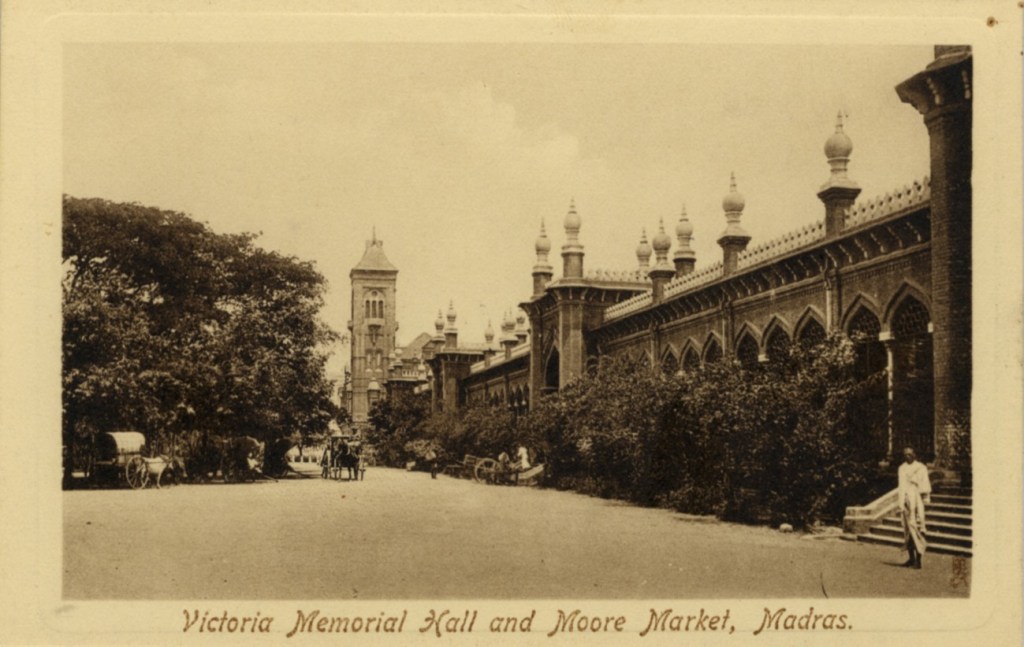
For the first few years of his career, he primarily utilized a hollow body acoustic guitar to produce his remarkable works of art. However, Phillips used to listen to several American and British bands on the radio. The guitars of these bands sounded so good that he wanted to improve the sound of his guitar. So, he went to Moore Market in Madras, a majestic red-colored building next to the Madras Central station, searching for parts to build his own electric guitar. Moore Market had many shops selling used electronic equipment spares. A sort of a permanent flea market. The Moore Market burnt down one midnight, and everything literally all the merchandise of the 800 odd small-time merchants went up in smoke. I remember buying a WW2 headphone from there for about Rs. 2, intact with the standard khaki cable and all, but we are shifting tracks here. This is about Phillips and not me or Moore Market!

So, Phillips finds the necessary spares and makes himself an electric guitar. In an interview, he said that the first sounds that came out from the speakers gave him a thrill of excitement. “By moving the plectrum around the strings, I was able to create new tones with the instrument,” he remarked.

Philips composed the scores for about ten films shown at Salem Modern Theatres before moving back to Madras and taking solo gigs for the city’s music directors. His best friend in M.S. Viswanathan’s band was the phenomenal drummer Noel Grant. Noel improvised over Philips’s suggested rhythm patterns, creating the timeless tunes we know and love today. 

Music directors in Bombay, like Hemanth Kumar, Madan Mohan, Chithra Gupta, and Ravi, encouraged Philips to relocate to Mumbai. After hearing him play for Miss Mary (1957), Hemant Kumar insisted on holding on to Phillips as his permanent musical companion. Phillips wanted to remain in the south of India.

It’s worth noting that Philips was an early proponent of the musician’s union, which enacted stringent regulations like immediate payment upon the completion of a recording and mandatory time off for holidays and Sundays. Philips fondly remembers the hard work and professionalism of the MSV musicians he’s worked with in the past, including Noel Grant (drums), Mangalamurthy (accordion), Nanjappa (flute), Fobes (violin), Henry Daniel, and Joseph Krishna.

You can hear all of these talented performers on the track Avalukenna in the movie Server Sundaram. You can hear how beautifully Phillip’s guitar stands up to the soaring brass section without losing intensity!

Phillips and MSV’s core musicians playing.

In his prime, MSV was a strict disciplinarian who would stop at nothing to achieve his goals. One recording session began at 7 a.m. and continued until 7 a.m. the following day. Philips begged MSV to release him, but MSV would not let him go. Finally, when it was time to leave, Philips had to make a beeline to the church for his wedding. I am not sure if MSV knew that he was getting married!

Phillips played the guitar piece, the opening, and the interludes in the song Varavu Etanna, in Bama Vijayam, a movie directed by K. Balachander. The strumming is so spot on. Today’s producers rely on quantization or other such technics, but in an analog recording of those days, you had to get it right, or else you had to play it all over again.  These ‘bits,’ as they are called, literally set the tone of the song and are as immortal as the guitar pieces in, say, a song like Hotel California by the Eagles.

His end came about on Friday, January 21st, at the age of 88, bringing an end to the era of Tamil film songs that began in the early 1960s. 

There was a focus on the orchestral depth of songs to complement their mood, melody, and meaning during this renaissance. Phillips and other instrumentalists contributed significantly to creating some of the songs from Tamil films that are now considered classics.

Phillips ayya, (reverent sir in Tamizh), you will always live eternally in the music you created.

Harry Web, who came became famous for ‘Bachelor Boy!’

The Anglo-Indians

When the British took up un-invited residency in India, they not only helped unburden India’s wealth but also sowed their seeds giving rise to a whole new race of people. The Anglo-Indians

They were misfits, the poor lot. Neither were they accepted by the British as one of them nor were they willing to identify themselves as Indian. I had a few Anglo-Indian friends, very hospitable, good people. Their houses had curtains, carpets, and crockery. In contrast, most Indian households had stainless steel utensils and bare floors.

They had their own vocabulary; for example, idlis ( the famous South Indian breakfast dish) used to be called steamed rice cakes. The strangest one for me was ‘ollock’! Azhaku ( a unit of measure in Tamil) became ‘ollock,’ chutney (a spicy ground coconut concoction) was the side to idlis, and dosas became spiced coconut sauce!

Now that I have set the stage, let’s dive straight into the topic of this blog.

Early days

Harry Webb was born on October 14, 1940, at the King George Hospital, Victoria Street. This hospital was in Lucknow, India! And if you thought this was in London, I don’t blame you. Old-timers in the Maqbara housing colony in Hazratganj, Lucknow, remember Harry Webb as a good-natured kid who spent his summer holidays with his grandfather.

Was he Anglo-Indian?

Harry Webb spent the first eight years of his life in India. Some think that Harry was an Anglo-Indian, a tag that he hasn’t been able to shake off primarily because of his swarthy complexion and that his family has ties to India that go back several generations; his ‘dark’ skin tone has led to persistent rumors that he has “Indian blood.” One probable reason is that he likely descended partly from a maternal great-grandmother who was half Spanish and looked decidedly Mediterranean, giving him a dark complexion that he shares with his mother.

His parents and ancestry

Harry Web was born to Indian Railways catering manager Rodger Oscar Webb and his wife, Dorothy Marie Webb. Dorothy’s stepfather held a high position in the railways, and it was here at the railway institute that Harry Web’s parents first met and fell in love. After spending most of her childhood at a boarding school in Sanawar, close to Simla, Cliff’s mother and sister relocated to Asansol to be closer to their grandmother in 1934.

Harry Web’s great-grandfather, Thomas Benjamin Webb, came to British India in the 1870s to work as an engineer for the railways. Many young men from England came to India searching for work when the rail network rapidly expanded across the subcontinent. Thomas Webb’s son Frederick, then 12 years old, joined him in Perambur, Madras, a few years after his father’s posting to South India.

Quit India

Everything was hunky-dory. The Webs were prosperous and, like all Burra sahibs (big boss as the British ‘masters’ were termed), had a fleet of servants waiting on them, hand on foot with an attitude of thy wish is my command. Then came the freedom movement, and the British were considered public enemy number one.

During the ‘Direct Action’ called for by the Muslim League, Harry Web’s mother was the target of street harassment during heightened nationalist tensions. “Go back to your own country, white woman!” they shouted at her. To some of us migrants, this term is very familiar, right? The Webbs were in Calcutta during the terrible riots in 1947. It was disturbing to see so much blood and dead bodies lying around. In any case, they had to get moving.

And move they did. a three-week voyage on the P&O liner, SS Ranchi, took them back to the UK. The Webbs first settled in a home in Carshalton, North Surrey, before moving to Waltham Cross, Hertfordshire, and, finally, to a council house in nearby Cheshunt.


Early days in the UK.

Harry Web attended the Kings Road Junior Mixed Infants School, the Stanley Park Juniors, and the Cheshunt Secondary Modern. After dropping out of school, Harry Web got a job as a file clerk at Atlas Lamps, but he was already deeply interested in music.

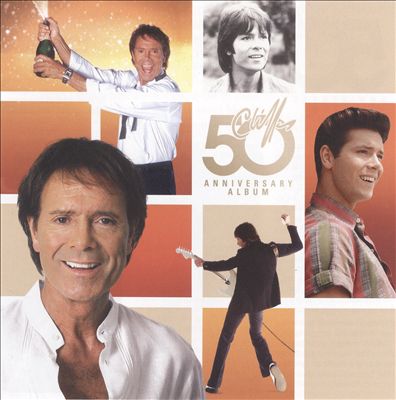
The story gets interesting from here on. Harry Web was around sixteen when his dad bought him a guitar. That single act resulted in him becoming one of Britain’s foremost singers, Cliff Richards!

A Star is born

Why the name Cliff Richards? Using a terrible pun on the word ‘rock,’ businessman Harry Greatorex dubbed him Cliff. Ian Samwell and appended the “Richard” as a tribute to Little Richard. Thus, the persona Cliff Richard was born.

Cliff Richard couldn’t have timed his entry into the music scene better. He burst into the scene when Elvis was fading, and the Beatles had not become famous yet.

Cliff Richard was later knighted. He was awarded the knighthood primarily for charity rather than his influence on mainstream music.

Some of Cliff Richards’s songs that I used to play the guitar and sing were:
Bachelor Boy
Summer Holiday
Young Ones
A Voice in the Wilderness
– was my mother’s favorite, incidentally.

We used to tune into Radio Ceylon and listen to these songs on a shortwave radio my dad built. The songs used to ebb and flow in volume, with signal strength, which strangely added to the allure of the songs played.

As I said earlier, Sir Cliff was probably unable to shake off his Indian roots nor the rumor that he was perhaps Anglo-Indian. He once said in an interview that his parents were as British as roast beef.

In another interview, he once said, “I’ve always maintained I’m the most radical rock ‘n’ roll singer Britain has ever seen. I was the only one who didn’t spit or swear or sleep around. I didn’t do drugs. I didn’t get drunk. I didn’t indulge in soulless sex.”

All said and done, he did have his share of scandals, and what if he did seem uncomfortable with his ‘Indianness’? His music was good, and I have some good memories by association.

Boycott Culture

In the days of boycotts, boycotting Bollywood, boycotting this or that artist, and the prevailing cancel culture, are we throwing the baby along with bathwater?

So, separate the artist from the art, and enjoy! End of story.

Ranganayaki Ammal – the woman who broke the gender barrier to become a percussionist par excellence!

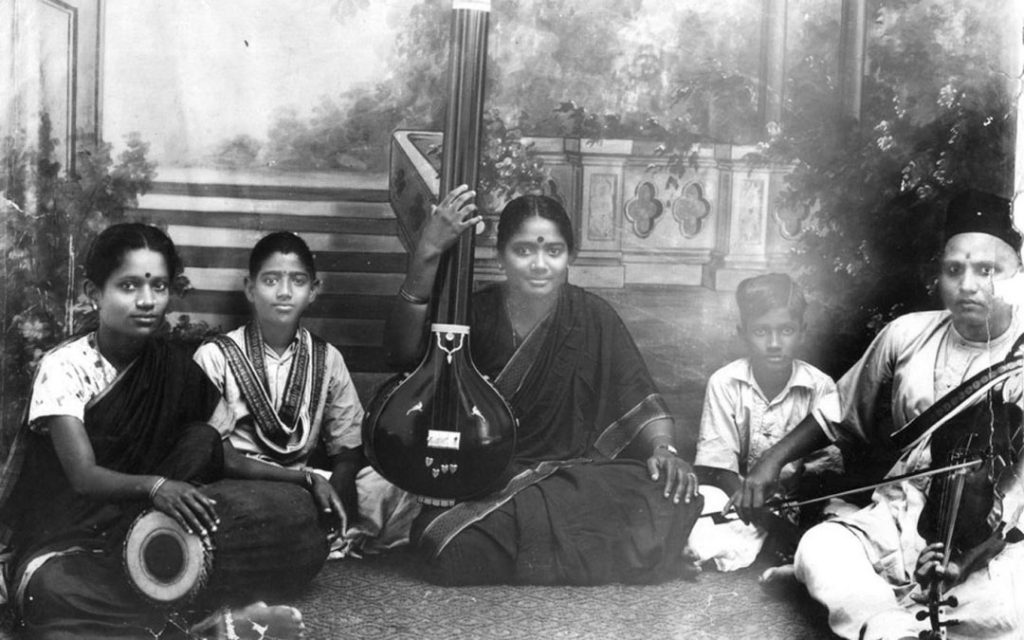
Photo courtesy: Pon Dhanasekharan. Ranganayaki Ammal on the left

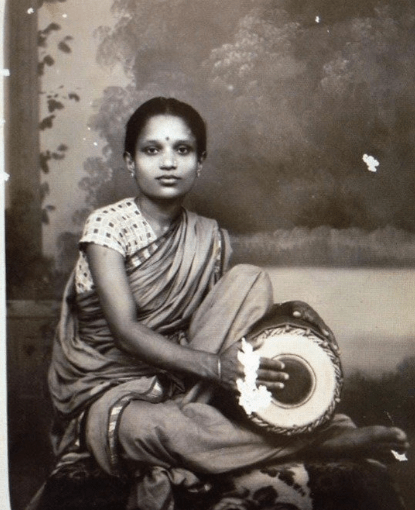
Playing the mridangam remains largely a male vocation, but Thirukokarnam T S Ranganayaki Ammal gained fame as an acclaimed mridangam artiste even as early as the 1940s. 

Some facts

  • Thirukokarnam Ranganayaki Ammal was the second of seven children, born on May 28, 1910. 
  • Her father, Thirukokarnam Sivaraman, was a well-known nattuvangam and Avadhana Pallavi performer. (Click on the link to learn what Avadhana Pallavi is)
  • When Ranganayaki wanted to learn how to play the mridangam, he sought out the legendary Pudukottai Dakshinamurthi Pillai. 
  • Her Bharatanatyam training was also extensive. 
  • She shared the stage with famous performers from the 1940s 
  • She began her teaching career in 1966 at India’s Padmavati College and taught at Madurai’s Sadguru Sangita Samajam.
  • Ranganayaki Ammal’s brother, Ulaganathan Pillai, was a violinist
  • Pioneering physician and social worker Dr. Muthu Lakshmi Reddy was a close relative
  • Her elder sister Siva Brinda Devi became the first-ever female Adheenam – head of a Saivite mutt

Even as the controversy over the entry of women of all ages into the Sabarimala temple is raging, it may be worth recalling that some 35 years ago, a woman became an Adheenam – the head of a Saivite mutt – in Tamil Nadu. No eyebrows were raised, and no questions were asked. 

In 1926, at 17, she accompanied Lakshmana Pillai at the music conference conducted as part of the All-India Congress session in Madras, now Chennai. She played for the Ustad Abdul Karim Khan concert that followed Lakshmana Pillai’s performance.

When M S Subbalakshmi performed on the stage, replacing her mother Madurai Shanmugavadivu at the Mysore palace for the first time, Ranganayaki accompanied her on the mridangam. Ranganayaki has played with stalwarts, including Ariyakudi Ramanuja Iyengar, T R Mahalingam, Mysore Chowdiah, and Veena Dhanammal.

It is well known that many senior and accomplished mridangam players refuse to play for women artists.  Although the reasons are not precisely expressed, some women artists guess it is because the mridangam has to be tuned to a higher pitch to align to the higher scale of the female singer. So, to align the mridangam to the higher pitch, the skin of the mridangam must be tightened, causing a lesser ‘give,’ which, in turn, makes it harder to play.   There is also a very misogynistic rumor that women generally had a poor sense of rhythm.  It is said that Palghat Mani Iyer, the legendary mridangam player, was averse to accompanying women musicians, but he made an exception for D. K. Pattamal, a famous singer. 

Here was Ranganayaki Ammal, a virtuoso, disproving this awful misogynic generalization. Weaving complex rhythm patterns during the Tani avartanams (solo performance during a concert) and highly complex jathis (beat patterns) and theermanams (usually an ending pattern played three times over), she used to leave her audience spellbound.

Guru Ranganayaki Ammal,  at an early age, performed in concerts across India, Singapore, and Malaysia. 

Ranganayaki Ammal began her teaching career in 1966 at Sri Padmavathy College in Tirupati. She worked as a part-time mridangam teacher at Sri Sadhguru Sangita Sabha in Madurai after a seven-year stint there. She participated in the artist selection process while working in Trichy for All India Radio.

She accompanied many leading artists during her time, including Veena Dhanammal, Ariyakudi Ramanuja Iyengar, the Brinda-Mukta duo, and the genius Flute Mali (Mahalingam).  Accompanying a mercurial genius like Mali was no walk in the park.  He was a temperamental genius whom nobody could predict what he would do next in a concert.

M Karunanidhi, the then-chief minister of Tamil Nadu, bestowed the Kalaimamani, a prestigious State award, on her in 1971-72.

“T.S. Ranganayaki Ammal award,” named after her, is a prestigious honor given to mridangam artists. 

Ranganayaki Ammal also taught Bharatanatyam to many of her students, including Soudamini Rao.  Guru Soudamini Rao, now 88, remembers her guru Ranganayaki Ammal fondly. 

Ranganayaki Ammal was highly attached to her mridangam and rarely let anyone else come close to it. Usha Vijayakumar, an exponent of Gottuvadyam and a Bharatanatyam student at Padmavati College, recalls how Ranganayaki Ammal, despite her diminutive stature, commanded the stage. She could effortlessly recite elaborate laya calculations. She preferred an academic career to be a performer. She instructed students in not only mridangam but also Bharatanatyam. Some of her students, like Caroline, came from other countries to participate in the arangetram she orchestrated.

Ranganayaki Ammal passed away on August 15, 1998.

According to mridangam artist Charu Hariharan, the current gender gap makes it difficult for a female musician to thrive in this stifling environment. Hariharan believes women must carve a place for themselves in an unfair and competitive art world. It may be mentioned here that Thirukokarnam Ranganayaki Ammal, seventeen years old at the time, was the first woman to make a name for herself in the predominantly male domain of Carnatic Percussion.

All glories to her!

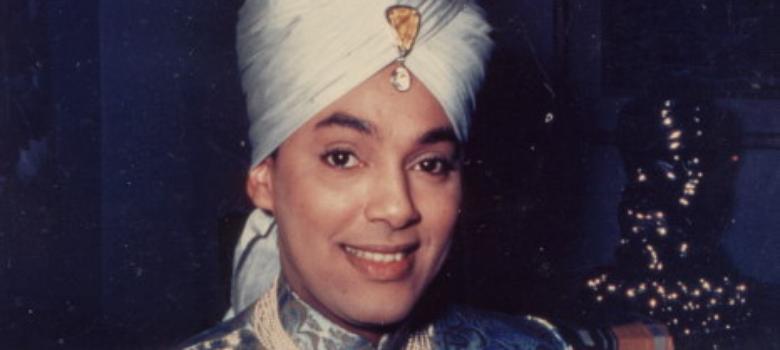
Korla Pandit, the mysterious musician who hid his identity

korlapandit.com

Korla Pandit was born in New Delhi, India, in 1921, the son of a French opera singer and an Indian ‘upper-caste’ government official. He was raised in an upper-class family and moved to England as a child to study music. He immigrated to the United States at the age of twelve, where he studied at the University of Chicago. 

He was quickly recognized for his talent in playing the keyboard, and when combined with his exotic Indian background, which Americans knew little about at the time, he was soon in high demand. By the late 1940s, he regularly appeared on radio shows such as Chandu the Magician and Hollywood Holiday. By 1949, he had his television show, Korla Pandit’s Adventures in Music. 

As his career progressed, his concerts became known for incorporating his music and spiritual ideology, about which he frequently spoke, much to the delight of many fans. For Pandit Korla, fame and fortune had come his way. Among his friends were actors Errol Flynn and Bob Hope, as well as Paramahansa Yogananda, the Indian spiritual leader of the Self Realization Fellowship. 

On the nightclub circuit, he frequently performed with another up-and-coming pianist known as Liberace. Pandit helped Liberace become the consummate performer in some ways. Liberace took nuances from Pandit’s performance and worked them into his own, such as occasionally gazing up from the piano to engage the audience. By the 1970s, however, Pandit’s television work had dried up, so he supplemented his income with personal appearances and concerts. Fortunately, in the 1990s, his oriental allure attracted a new generation of fans and resurrected his career.

Korla Pandit died in October 1998 in California. His wife and two sons survived him. 

If you’re probably thinking, “All very interesting, but not an exceptional story,” you’d be right. Wait till you hear the truly fascinating part of this story which was only discovered after Pandit’s death. 

Korla Pandit’s ancestry claims were blown out of the water by R.J. Smith, editor of Los Angeles magazine, in 2001. While he was born on September 16, 1921, his real name was John Roland Redd, and he was born in St. Louis, Missouri, in the United States, rather than India. Ernest Redd, his father, was an African-American Baptist pastor, and his mother was of Anglo-African ancestry. As a result, John had fair skin and straight hair, making it relatively easy for him to pass himself off as of Indian descent. 

But why the trickery? 

His opportunities as an African-American in the early twentieth century United States were severely limited. At the time, there was a color bar, making it nearly impossible for African-American artists to perform. He could not have joined the Musicians Union, and most venues refused to hire African-American musicians. To get around this bar, John first went by the name Juan Rolando and pretended to be Mexican. By the 1940s, however, he and his wife, Beryl, had come up with the idea of creating the entirely new and exotic persona of Korla Pandit. Beryl made the make-up and clothing, which included a turban. Unlike many performers who choose to use a stage name for professional reasons, Redd had to always maintain the persona of Korla Pandit in public and private life, as revealing his true identity to anyone would have jeopardized his entire career and livelihood. Even after the color line was abolished in the United States, Redd refused to reveal his ethnicity. Even in those more enlightened times, he may have felt that doing so would have harmed his career. 

Redd maintained contact with his extended family, even though he always wore his turban and did not bring his own family with him when he visited. “Among the family, we knew what he was doing, and very little was said about it,” Ernest Redd, his nephew, said. Sometimes, he would drop by, almost like a surprise visit. He might come in the middle of the night and leave before we wake up. He had to distance himself from his family to some extent. They’d go to see him play but never say anything to him. They would attend his performance, then leave, and the family would meet him later.” His deception was so successful that even his sons were unaware of his and their African-American heritage. 

Korla, a documentary about the life of John Roland Redd, was released in 2014 and was marketed as a classic American story of self-invention. All right, but it’s an abomination that he was forced to live a lie simply because of his ethnicity in the ostensibly free country of the United States.

The Connecticut Yankee who came to be known as Higgins Bhagavathar!

My last blog was about how some Indian musicians were influenced by the music of the Beatles, Rolling Stones, and Led Zeppelin, among many others, and became rock stars.  

Jon Higgins and his attraction to music

This is about an American, Jon B. Higgins. South Indian music, known as Carnatic Music, fascinated him. He moved to South India to study Carnatic music and the compositions of Thyagaraja SwamiMuthusamy Dikshitar, and Shyma Shastri. For this, he had to overcome language, culture, and a race barrier that existed (it probably still exists as a form of subtle racism). He overcame all this and sang at the Thyagaraja Aradhana, a festival where the best of the best performed. Not only was he accepted as a front-ranking Carnatic musician, but he was also given the honorific title of Bhagavathar or maestro. 

How I heard about Jon Higgins

Carnatic music, to me, was primitive and boring. Despite this, I do remember the name Jon Higgins. During my first listen, I think his exposition of the Raga Bhairavi (Bhairavi varnam) made me slightly curious about Carnatic music. It was probably the tinge of the American accent, the lack of rusticism or guttural vocalization that the average Carnatic musicians had in those days, and the revelation that this art form was not cloistered strictly for the Brahmanical community. In my later years, I began to learn and devour Carnatic music furiously. I had some fantastic gurus who were very kind and patient with me.

Early Days

On September 18, 1939, Jon was born in the Massachusetts village of Andover. Philips Academy provided his early education, where his father taught English, and his mother taught piano. Jon later earned three degrees from Wesleyan University. A B.A. in History and Music, an M.A. in Musicology, and a Ph.D. in Ethnomusicology. John Higgins is a prominent Wesleyan, and the most famous American interpreter of Indian classical music. In 1973, the distinguished musician earned his Ph.D. in Ethnomusicology. He founded the Indian Music Studies Program at York University, Toronto. He probably was the first Westerner to carve out a niche for himself in South Indian classical vocal music.

His first forays into Carnatic music

Higgins began studying Carnatic music at Wesleyan University under the tutelage of Robert Brown and T. Ranganathan on a Fulbright scholarship. He began studying music with Dr. T. Viswanathan in Chennai. Higgins was so enthusiastic about Carnatic music that he was ready to sing at the Thyagaraja Aradhana held at Thyagarajaswami’s Samadhi. He received much praise from stalwarts and scholars. Not many people seem to be aware that this distinguished musician had also studied Bharatanatyam music under the famous danseuse T. Balasaraswati, sister of T. Viswanathan, his guru, and had even written a thesis on dance music. Later in his career, he worked as a senior research fellow at the American Institute of Indian Studies. 

While most non-Dravidians find microtonal modulation in Carnatic difficult, this outstanding musician overcame this cultural barrier through sheer dedication. He continued to perform Carnatic music and recorded a few albums. 

His return to the USA

He returned to Wesleyan University to teach music and later became the University’s Center for the Arts Director. Wesleyan University still teaches Carnatic music.

Jon had put in countless hours of practice. He had mastered all aspects of a concert presentation, including appreciating accompanying artists such as the violinist’s ‘shabhash’ (bravo) and the mridangist’s (drummer) ‘bhale.’ (wow). 

Stage performances

When he was on stage, he wore a crisp white suit. During one of his concerts, when Justice K. S. Venkataraman acknowledged his musical knowledge and called it the “merit of a previous life,” Jon, ever smiling, humble, and passive, called it the “merit of this life” and attributed it to his knowledgeable guru. Here are some recordings of Higgins Bhagavathar.

Dinamani Vamsha – Raga Harikamboji – Thyagaraja Kriti

The end of a musician

Dr. Jon B. Higgins tragically died on December 07th, 1984, at the age of 45. While walking his dog, he was hit by a drunk hit-and-run driver near his home in Middletown, Conn.

He planned to do a protest concert against apartheid in South Africa but was snatched away too soon. Connecticut state police arrested Thomas Knight of Middlefield, Conn., and charged him with second-degree manslaughter by intoxicated driving.

He is survived by his wife, the former Rhea Padis. His two sons, Luke and Niko, and a brother, Hayden, a jazz pianist known professionally as Eddie Higgins, survive him.

Cultural ambassador

Jon Higgins will be remembered for his role as the cultural ambassador. A person who demonstrated to the world that music has no boundaries. To achieve the highest levels, one must have immense devotion, persistence, passion, and engagement. He was planning a South African concert to protest against the apartheid regime, but it never came about.

Namaskarams, Jon Higgins Bhagavathar, my namaskarams to you.

The man behind the growth of Radio Ceylon

Most of you who lived in India from the 60s until the late 70s must have tuned into Radio Ceylon to listen to film songs. Some of you must have been die-hard fans of that silken voice of Ameen Sayani, presenting the Binaca Geet Mala, a countdown of the top songs from Hindi films. 

Then there was B.H. Abdul Hameed of the Tamizh Sevai, with Tamil film songs. Radio Ceylon even reached remote points in Assam’s tea estates! For the budding rock stars of India, Radio Ceylon was the go-to source for their favorite music. 

Advertisers in the sub-continent flocked to Radio Ceylon. Their top salesman (back handed compliment) was an Indian minister, Balakrishna Vishwanath Keskar, also known as B. V. Keskar.

Keskar was the Minister for Information and Broadcasting from 1952 to 1962 who, amongst other things, banned filmed music from All India Radio, saying that it was morally corrupting.  

Keskar also prohibited the harmonium, saying that it was a Western instrument. Until 1972, the harmonium was banned entirely from the Radio. 

To Keskar’s credit, the man in charge of the Radio pre-independence, Lionel Fielden, a senior BBC producer and then Controller General of Radio, had a similar opinion.

The ban on the harmonium came about after John Foulds, an expert on Western music, said that the instrument was ill-suited to reproducing microtones, an essential aspect of Indian music. So, the harmonium was banned from All India Radio until about 1970.

Keskar hated cricket and predicted the game would die out soon since the British had quit India. He thought cricket was a British legacy and tried to ban cricket commentaries on AIR. Due to intense pressure and backlash, he relented.  

Keskar also tried to ban film music. He then relented a little bit and allowed 10% of airtime. He tried negotiating with the Motion Picture Producers Guild of India, who opposed this quota, which talks broke down, resulting in AIR stopping broadcasting film music for several years. 

BV Keskar also claimed that All India Radio was not likely to air musicians such as Kesarbai Kerkar or Omkarnath Thakur due to their high fees. As a minister, B.V. Keskar also banned the playing of folk films on Radio as he felt they did not have respect for higher culture. 

Film music had an increasing audience in India, and Keskar’s decision to prohibit it over All India Radio allowed Radio Ceylon to take advantage of this opportunity. 

Keskar would be outraged if he heard the music the film industry makes today. Still, it is ironic that some of the most iconic and memorable songs in newly independent India, made during the golden era of Hindi cinema, were once considered objectionable and would have been perhaps stifled by a draconian policy of a single man had a radio channel from a neighboring country not intervened. Filmfare magazine has described Keskar as a cunning person whose decisions were as much calculated shots to damage the movie industry’s image as they were to drive movie music from the market (August 1952 edition). Keskar believed that Indian music had become stale during the Muslim and British rule. B. V. Keskar wanted AIR to work towards the cultural growth of a young nation.

B.V. Keskar also discontinued the practice of advertising film titles along with the songs, as he felt that was marketing. Keskar was also responsible for establishing the Vadya Vrinda as a national orchestra and creating a new genre of lighter music, commissioning the Sitarist Ravi Shankar to lead Vadya Vrinda and to provide light musical alternatives to the broadcasting of classical music. Keskar was the third person to head India’s Ministry of Information & Broadcasting and had a ten-year stint at the helm, making him the longest-serving Minister in the Ministry.

The worst was in 1959, the Minister of information and broadcasting, B. V. Keskar, who is said to have had the barbaric opinion that Indian Christians should not be composing Indian music, refused to allow Anthony Gonsalves to write a piece of music for an animated movie. You can listen to Anthony in a rather painful conversation with Rajan Parrikar, a musicologist born and raised in Goa who moved to the USA in 1988 for graduate study and obtained a Ph.D. in Electrical Engineering at the University of Colorado at Boulder and currently lives in Iceland.

Rajan Parrikar in conversation with Anthony Gonsalves

.  I hate to end a blog this way but let this sting. 

Cited Sources

The Indian Rock stars of the 70’s – Simla Beat Contest.

“Beat, man, beat.”

Origins

Imperial Tobacco Company (I.T.C.) hosted the annual Simla Beat Contest, named after Simla Cigarettes, from the mid-’60s to the ’72 (exact years unknown), which featured a competition between several Indian beat groups from across India. The company also released a Shimla Beat compilation album every year, which included songs from some of the 1960s’ most talented bands.

The bands

Savage was the first Indian band to release a full-length album of Western rock music.

Human Bondage is a Bangalore-based rock and roll band formed in the 1970s. They were widely regarded as India’s best and tightest rock band. It was one of the most popular bands and is also considered a forerunner of the raga rock movement. The band split up in 1976.

The Combustibles rose to prominence on the Bombay rock scene due to their participation in the famed Shimla Beat Battle of Bands competitions and a nationwide tour from 1968 to 1969. The Combustibles performed well in the Shimla Beat Contests of 1968 and 1969. However, that didn’t result in an L.P. recording as in the 1970s and 1971 competitions.

The Black Beats was one of the Shillong, India, bands that competed in the Shimla Beat Contest in 1971.

Madras-based Frustration Amalgamated was the winner of the fifth All India Simla Beat Contest, held in 1972 in the Shanmukhananda hall, Bombay. After they disbanded, I remember watching their frontman Shyam Sundar sing at a restaurant called the Bamboo Hut, off Mount Road (now called Anna Salai) in Madras (Chennai) in probably late 60’s to mid 70’s. One of the often-requested songs was “I Married a Female Wrestler,” sung initially by Earnest Ignatius, an Anglo-Indian Goan. Apparently, the song was written by George Fegrado. Click here to see the video of George’s wife’s interview.

Says Shyam Sundar, the frontman of the band, “I was the lead singer from the Frustrations Amalgamated from Madras, which won the All India Shimla Beat Contest Award in 1972 at Shanmukhananda Hall, Bombay. That year, we won the Best Group Award, the Best Singer Award, and the Best Own Composition Award! Jaya Bhaduri gave us the awards to us. On winning the Shimla Beat Contest, we did a recording at the Royal Gems studio, but nothing came out of it.
Manu (Manohar Roberts, our lead guitarist) is in Chennai and still plays a mean lead guitar and is still in music. Ramji, our drummer, was with the Abhaswaram and is in Chennai, still very much into music. Dumbu, our bass guitarist, is in the U.S.A., and we are trying to get into contact again. Lawrence, our rhythm guitarist, is in Singapore and, I believe, still in music.”

Shyam relocated to Bangalore, had a group called the West Wind, and sang with his keyboard accompaniments and MIDIs, along with a good guitarist, Dominic. He passed away in Bengaluru on November 12th, 2021. Before relocating to Bangalore, he played at the Casino Bar in Cochin while working for a fertilizer company, F.A.C.T. I remember his wife, Hema, who used to be there for every one of his performances, used to help since Shyam had some difficulty walking.

The Mustangs were a Madras (now Chennai) rock band formed in 1965 and broke up four years later. They were one of India’s most popular groups from 1965 to 1968. They began with mostly instrumental surf songs before gradually incorporating vocals. They drew fans from all over the country with their aggressive brand of music, which included surf, blues, and rock. They all performed at Madras colleges in front of mostly Madras school and college students. They even released the first Western L.P. in India in collaboration with H.M.V.


In 1968, they released two 45 R.P.M. records for H.M.V. The first album featured ‘Escape’ and ‘Theme from the movie – Gonks Go Beat,’ while the second was an extended play with ‘Love Is Blue & Lies,’ ‘Nina’s Theme,’ and ‘Summer Wine.’

Derek, George, Kittu, Paddy, and Haroon reunited for a 45-year reunion jam session in Madras (Chennai) and Bangalore in January 2010. Their average age then was around 65! Moral of the story: it’s never too late to jam!

Voodoos
It was Sukumar Nambiar’s idea to form the band. Madhukar was to play lead guitar and harmony vocals and had a musical ear for picking up basic chords and simple lead solos, so he was self-taught.The idea of forming a band happened while listening to records at Suku’s father’s house. Suku’s father, M.N. Nambiar, was a successful and well-known actor with the funds and could cover the expenses.

Mohan Nambiar, Sukumar’s younger brother, played the drums. They were always having difficulty finding a dedicated bass player. The band even had a guy from Singapore who was so desperate to be in the Voodoos that he lied and said he was importing the latest Vox amps and other gear, similar to what The Beatles used. Patrice Dedeyn was the bassist who stayed with them the most extended (son of the then French consular in India.) Rajan Joshua, a ‘dummy-rhythm’ guitarist, was probably the first in a band. Initially, he also sort of forced his way into the band. He’d play even if his guitar wasn’t plugged in. It happened at a Loyola College annual event when there was no outlet for his amp to plug into.

Move to Bombay – Atomic Forest
After finishing high school and college, he relocated to Bombay and began working as an Art Director for advertising firms such as Interpub and Lintas, India.
While continuing to work in advertising, Madhukar led Atomic Forest, one of India’s premier Rock and Roll bands, as their male vocalist in 1972, alongside Neel Chattodpadyaya on lead guitar, Keith Kanga on bass guitar, and Valentine Lobo on drums.
Atomic Forest appeared at The Sneha Yatra Festival, also known as ‘The Indian Woodstock’) and were regulars at prominent Mumbai clubs and discos such as Slip Disc,[8] Blow Up at The Taj Mahal Palace Hotel, and Hell at Hotel Hilltop.

Says Madhukar
I joined the original Atomic Forest in 1971. I did attempt to put a few bands before that. “Burning Ice” was one of them. One gig with “Burning Ice” was hilarious, looking back. We were picked by J.S. magazine (Junior Statesman) to perform at their promotional event. Our part was to sit in the back of an open pick-up truck and sing all the way from Nariman Point to Juhu beach. There were no amps or mikes, just acoustic guitars. Man! And I sang like people were listening to me all along the busy roads of Bombay city. Eventually, we reached Juhu beach and were welcomed by the producer at a thatched-roof shack; the fireplace was dying out, and there were no throngs of fans like we were promised, for which he apologized. These initial efforts to hold bands together were unsuccessful because we had no way of sustaining ourselves. He had to get jobs to survive, which were very low-paying too.

Following his departure from Atomic Forest, he began performing solo as a spot singer at 5-star hotels in India, as well as overseas at Oberoi Lanka and then hotels in South East Asia en route to the United States. Madhukar performed in front of Prime Minister Indira Gandhi in Mumbai. He also sang jingles for commercials, including one for Close-Up toothpaste, which was shown in all Indian movie theaters for eight years.

Remember this ad?

Rockers from India that became superstars
Some of the other rockers at the time became well-known and successful. Farrokh Bulsara, a Panchgani schoolboy who formed The Hectics with his classmates, was the most successful. Later, he would be known as Freddie Mercury, and his voice would be regarded as one of the greatest in rock and roll.

There was Biddu (Appaiah), a Bangalore native who founded the band Trojans and eventually made his way to London. He established himself as a notable songwriter and producer when his composition Kung Fu Fighting was performed by Jamaican singer Carl Douglas and became one of the best-selling singles of all time in 1974. Regrettably, he is better known as an Indipop producer for his song Aap Jaisa Koi Mere.

Then there was Ramesh Shotham, drummer of the 1971 band Human Bondage, who went on to learn the thavil, a Tamil Nadu temple music drum, and become a sought-after World Music percussionist.

Those were the days, my friend!


Cited Sources

Elis R. Dungan, the man who introduced MGR to Tamil films

Birth
Elis R. Dungan, or Dungan Ayya, as he was popularly known, was born on May 11, 1909, in Barton, Ohio, U.S.

In the early 1930s, foreigners were addressed as ‘master’ while Dungan was called Dungan Ayya, a more endearing term than ‘master.’ His first forays into photography came about when he bought a box camera to take pictures for his school yearbook. That was his first brush with photography.

Early days
Later, after having saved up enough money working in a gas station, Dungan traveled to Spain and bicycled through most of Spain. He later ended up in Paris, France, where he got a job in the American Library. Duncan’s interest in photography grew during his two years at the Library, and he began doing exhibitions. The library director asked Duncan to take his photography seriously and said he would sponsor him for a university course. That’s how Duncan returned to America. He enrolled at the University of Southern California in cinematography.

Serendipitous meeting
There he met with M. L. Tandon, serendipitously, the son of a wealthy film producer who invited him to visit India. Tandon wanted Dungan to direct Indian movies and raise them to the level of the existing Hollywood productions for viewers in India and the world. It was to be a six-month trial run. Manik Lal Tandon directed the 1935 Tamil film Bhakta Nandanar (transl. Devotee Nandanar) with K. B. Sundarambal, a Carnatic singer and stage artist, and made his film debut. 

This was also Ellis R. Dungan’s first film. There is no known print of the film, making it a lost film.

In a later interview, Duncan remarked that the six-month stint ended as a fifteen-year journey with the Indian movie industry.

Indian cinema in the 1930s
In the 1930s, the Indian film industry was at a nascent stage. Drama troupes were made to stage their plays in a studio. Nothing had to be done. The actors knew their dialogues, and everyone knew their part. A static camera was placed, and the stage was adequately lit up. This meant boring long shots, and most films had a theatrical feel with the actors exaggerating their emotions and delivering their dialogs at the top of their voices.

Changes to Indian Cinema
Dungan changed all that. He said that he had a tough time sobering down the actors of those days and getting them to deliver the dialogs in a normal tone. Most actors in those days were chosen more for their singing talent than their acting prowess.

Dungan struggled to get the actors to emote naturally during the close-up shots.

Dungan was also credited with using mid-range and close-up shots of the scene instead of a long static shot. He introduced a lot of Hollywood technics in his Tamil films, despite technical limitations at that time.

Around the same time, Himanshu Roy’s Bombay Talkies had hired a German crew led by Franz Osteen. Franz worked from 1935 until 1939 and directed the film Achuth Kanya, which starred Devika Rani and Ashok Kumar and was a super hit.

Ellis R. Dungan popularized contemporary makeup, the moving camera, and cabaret dance numbers for Tamil Cinema and moved Tamil cinema away from stage plays’ influence. Dungan, who trained in Hollywood, introduced some crucial techniques to the industry at its infancy in each department, which would have a unique place in its history.

Dungan also introduced the track and trolley to Indian cinema. In fact for a long time, it was called the Dungan track-and-trolley!

Popular films of Ellis Dungan
Dungan mainly worked on religious and historical films during the earliest days of Tamil filmmaking; the movie is talked about because it has daring close-up scenes. It was with Iru Sagodarargal (1936) that Dungan emerged as the leading filmmaker of the newly developing Tamil film industry. The film was shot in Bombay in the Saroj Filmtone studio. It was pivotal to establish a more polished film language for Tamil films, mainly merely photographed dramas and little else. Iru Sagodarargal (1936) is one of Dungan’s best-known films and one of his favorite. In a language and culture that he knew nothing about and was unfamiliar with Tamil. He hired translators, known as rush directors, who were fluent in English and Tamil.

Although born as an Irish American, Dungan made highly appreciated devotional and historical films like;

  1. Sathileelavathi (1936),
  2. Iru Sahotharargal (1936),
  3. Ambikapathi (1937),
  4. Sakunthalai (1940),
  5. Meera (1945),
  6. Ponmudi (1950) and
  7. Manthirikumari (1950)

The film Ambikapthi, starring the then superstar, M.K. Thiagaraja Bhagavathar, had the famous kissing scene with M.R. Santhalakshmi. It is said many returned to see the kissing scene repeatedly! Many at that time felt that M.K.T. did not know how to act. However, the same film was remade in 1957 with Shivaji Ganesan, one of India’s finest, in the lead. Many felt the earlier Ambikapathi was much better. Dungan’s Ambikapathy was filmed based on a Romeo and Juliet style, including the balcony scene, which resembled a Hollywood production.

Meera, starring M. S. Subbalakshmi Meera is a 1945 Indian Tamil-language musical drama film directed by Ellis R. Dungan and written by Kalki Krishnamurthy. 

The film, based on the life of the 16th century mystic and poet Mirabai, stars M. S. Subbulakshmi as the title character, a zealous devotee of Krishna who considers him to be her husband. 

Despite marrying Rana (Chittoor Nagaiah), she lives her own life, which her husband and family find unacceptable. 

Sadasivam wanted to make a film that would make his singer wife Subbulakshmi’s music accessible to the general public, so he began looking for a good story; Subbulakshmi chose Meera’s story. 

To maintain credibility and historical accuracy, the film was primarily shot on location in North India, including Jaipur, Vrindavan, Udaipur, Chittor, and Dwarka, at Newtone Studio in Madras. 

Meera was released on November 3, 1945, Diwali day, and quickly became a critical and commercial success. 

This prompted the production of a Hindi-dubbed version, with a few scenes reshot, which was released two years later on November 21, and was also a success. 

Despite the fact that the Hindi version made Subbulakshmi a national celebrity, it was her final film as an actress, after which she decided to concentrate solely on her musical career.

Introduction of M.G. Ramachandran
Ellis Roderick Dungan made his directorial debut with Sathi Lilavathi, the first film of the future Tamil Nadu chief minister, M.G. Ramachandran. Dungan had no Indian language skills, an issue that never affected his career as a filmmaker in Indian languages, mainly Tamil.

Dungan directed some renowned Tamil movie actors in his director role, including M. G. Ramachandran in Sathi Lilavathi, T. S. Balaiya, Kali N. Ratnam, and N. S. Krishnan. He was acknowledged for introducing various new techniques in Indian cinema.

Role in the Second World War
During the Second World War, the American Cinematographer made A Short-Return Soldier (1945), a Tamil movie starring T. S. Balaiah, to support the war effort.

From 1941-1945, the United States entered the Second World War. Dungan served as an official photographer for the Madras Government and made wartime newsreels, propaganda films, and a handful of documentaries for The Indian News Parade.

He also filmed the final journey of Mahatma Gandhi.

Return to the USA
Ellis R Dungan returned to the States. Before his final Tamil film, Manthiri Kumari was completed. His wife, Elaine Dungan, who was not an Indophile, didn’t share his passion for making movies and wanted to return to America. So, she gave him an ultimatum, which I am guessing went something like this: either me or the film. So, like any good husband, he dropped his project and returned to the States. T R Sundaram, the studio owner, completed the film. Thus, his last film in Tamil was Manthiri Kumari in 1950. Karunanidhi was the scriptwriter for this film, and much alliteration and social ideology were heavily promoted in the film’s dialogues.

Interestingly, Karunanidhi wanted M.G.R. to be the lead. Still, Dungan felt M.G.R. was not photogenic enough for the role because M.G.R had a cleft in his chin. Ultimately a compromise was reached, and in Mandiri Kumari, M.G.R is seen sporting a small goatee to hide the notch in his chin!

Projects in America
In America, he formed Ellis Dungan Productions, which made documentaries, industrial films, and similar films for almost two decades, starting in 1963.

An American in Madras, a documentary film by U. S. based filmmaker Karan Bali, examines Ellis R. Dungan’s contributions to the art of cinematography and his later years as a director of documentary films. The hour-long documentary on Dungan was made in 2013 using information from West Virginia state archives and interviews with people who knew Dungan.

Ellis R. Dungan, the man credited for launching M.G. Ramachandran into Tamil filmmaking with his 1936 movie Sathi Lilavati, passed away in Wheeling, West Virginia, in 1958. He was paid Rs 100 to make his movie Sathi Lilavati.

“Of all the Tamil stage-movie films that I directed in India, my Meera is considered my best film by my peers and the critics in the field,” said Dungan.

I am inclined to agree.

M.K. Thiagaraja Bhagavathar – the first Tamil film superstar

M.K.T.

MKT’s birth

Mayavaram Krishnasamy Thiagaraja was born on March 1, 1910, to Krishnamurthi Achari and Manikatthammal. His place of birth was close to Mayiladuthurai Town in Mayavaram, Tamil Nadu. The family occupation was making gold ornaments; the Visvabrahmin goldsmiths.

Krishnaswamy Thiagaraja later became a famous South Indian actor in Tamil films. He adopted the stage name Thiagaraja Bhagavathar, also known as M.K.T. He also worked as a producer and Carnatic music singer. M.K.Thiagaraja Bhagavathar is also widely considered the first Tamil cinema superstar.

The first superstar of Tamil films

Critics and movie historians have acknowledged Bhagavathar as the first Tamil cinema superstar. Together with Chinnappa, another famous actor, set the double-star culture that still rules the Tamil industry. MKT achieved demigod status in Tamil Nadu. From 1934 to 1959, Bhagavathar appeared in 14 films, 6 of which were box-office hits. 

Between 1934 and 1944, Bhagavathar made nine films, all hits. The movies were Pavalakodi, Sarangadara (1935), Sathyaseelan (1936), Chintamani, and Ambikapathi , Thiruneelakantar, Ashok Kumar (1941), Sivakavi (1942) and Haridas.

In 1937, Bhagavathar was cast as Bilvamangal in the Chintamani, directed by Y. V. Rao. The film was the second consecutive success for Bhagavathar in 1937, breaking records established by Chintamani. Bhagavathar’s next film was his production, Sathyaseelan (1938), which performed laudably. Bhagavathar’s second movie, Naveena Sarangadhara (1936), was directed by the film’s director again, K. Subramaniam, and was based on the play Sarangadhara.

In 1937, Bhagavathar was offered the lead role in Ambikapathy, made by American film director Ellis R. Dungan. The master filmmaker, K Subramaniam, saw a Hindu mythological drama. The play was Pavalakkodi (Coral vine), where Bhagavathar played the role of Arjuna. Thoroughly impressed by the performance, the genius moviemaker planned a movie in which Bhagavathar would star. Thoroughly impressed with the performance, businessman Lakshmana Chettiar decided to produce a film based on the same story, with Bhagavathar playing the lead role.

One of the immortal melodies of Tamil Cinema, which is classical Carnatic based, Elam inba mayam, was sung by M.L. Vasanthakumari-P. Leela as a duet, in Manamagal (1951), produced and directed by the iconic personality and comedic supremo, N. S. Krishnan.

Haridas – the film that held a record

Madurai-based distributor Royal Talkies released the movie Haridas starring the first Tamil film superstar, M.K. Thyagaraja Bhagavathar, in Tamil Cinema. The movie was released on October 16, Diwali day, 1944. Haridas created the record for the longest consecutive run in a single theater in Broadway theatres for 784 days. This record was, however, broken by Chandramukhi (2005), starring another very popular actor Rajanikanth.

M.K.T. was very popular, but his fame ended when he was arrested in 1944 for murdering Lakshmikanthan. 

First signs of trouble with the press

C. N. Lakshmikanthan was a well-known Madras Presidency film journalist. His foray into journalism began in 1943 when he launched Cinema Thoothu. This film weekly magazine was highly successful due to the extensive gossip columns. Many actors and actresses responded by shelling out big bucks to “buy” his silence. As a result, Lakshmikanthan established a prosperous career. 

Lakshmikanthan attempted to run the magazine with forged documents but was forced to close shop after a few months. Things came to a halt when film actors M. K. Thyagaraja Bhagavathar and N. S. Krishnan, as well as film director Sreeramulu Naidu, submitted a memorandum to Madras Governor Arthur Oswald James Hope, requesting that the magazine’s license be revoked. Governer Hope complied, and the magazine’s license was revoked.

Unfazed, Lakshmikanthan launched a new magazine, Hindu Nesan, in which he continued his scandalous stories about Bhagavathar, Krishnan, and a few other top actors, actresses, and film people of the time. The strategy paid off handsomely, and Lakshmikanthan purchased his printing press.

Life after jail time

Although M.K.T. went on to appear in Tamil films upon release from jail, none of them did very well. Before he was arrested, he had signed on to do another 12 films but lost interest, and the few films he did post-release were unsuccessful. In 1934, the film Pavalakkodi was made by Krishnasamy, Thyagaraja Bhagavathar, which began as a successful stage play performed by an ensemble that toured Tamil Nadu, Sri Lanka, Malaysia, and Singapore, where the play was staged hundreds of times.

He is considered one of the most successful Tamil movie actors ever.

The entry of the atheist movement in the industry

It is believed that M.K.Thyagaraja Bhagavathar’s absence from the film industry allowed Dravidian atheist movements to enter and make their mark on the Tamil film industry.

His end

On November 1, 1959, the superstar M.K.T. died in Madras. 

His mortal remains were brought to his Tiruchi home and buried at the Sangliyandapuram community cemetery.

Cited Sources