
Spirituality’s Biggest Pyramid Scheme 

The Inverted Pyramid Scheme of Enlightenment

Let’s talk about spiritual enlightenment. You know, that lofty goal of self-realization, the grand finale of the cosmic show where you finally get it. We imagine it as a pinnacle, the top of a mighty mountain we must climb, laden with backpacks full of mantras, vegan recipes, and well-thumbed scriptures.

But what if we’ve got it all upside down? What if enlightenment isn’t a mountain, but an inverted pyramid?

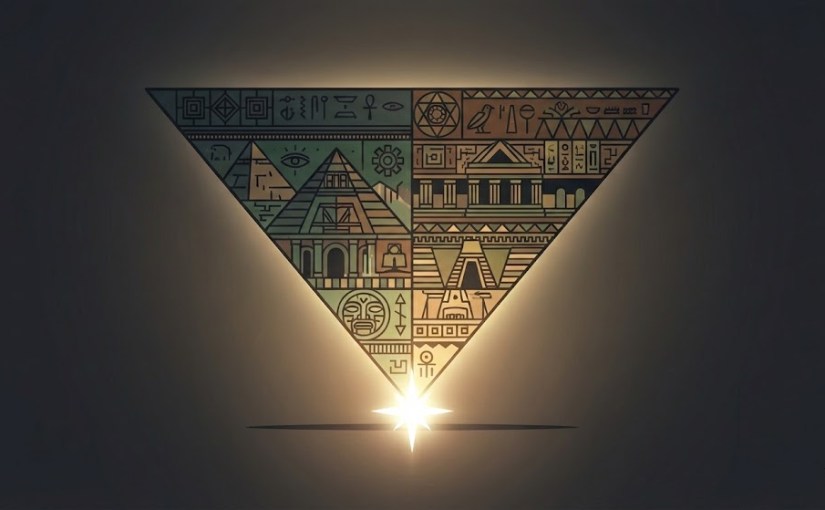
Picture it: a massive, ornate pyramid, balanced precariously on its tiny, sharp point.

That single, infinitesimally small point? That’s the Truth. It’s simple, stable, and unbelievably direct. It’s what’s left when you strip away everything that changes. It’s the silent, constant awareness that’s reading these words right now. It has no name, no form, no frequent-flyer miles. It’s just… is.

The instructions to get there are almost insultingly simple: “You are not your thoughts. You are not your body. You are not your job title or your political opinions. You are the awareness in which all that stuff appears and disappears.” Done. That’s the whole teaching. Pack it up, we’re going home.

Ah, but we humans are never satisfied with simple, are we? We look at that beautiful, simple point and say, “That’s it? I can’t build a five-day retreat around that.”

And so, we build.

From that one simple point, the great, wobbling, inverted pyramid of stuff begins to rise. This is the fluff. The base of the inverted pyramid is a sprawling, chaotic metropolis of doctrines, dogmas, rituals, and rules. It’s the thousands of books explaining the one thing that needs no explanation. It’s the heated debates over whether the cosmic turtle is a sea turtle or a tortoise. It’s the secret handshakes, the special diets, the certificates of enlightenment, and the merch table in the lobby.

We spend our lives exploring this massive, ever-expanding base. We become experts in one corner of the pyramid (“12th Century Gnostic Chanting, Subsection B”), convinced it holds the key. We run from workshop to workshop, collecting spiritual tools like they’re Pokémon, hoping the next one will finally be the one that makes us feel complete. We’re so busy navigating the pyramid’s sprawling surface that we forget the entire structure is resting on the simple point we started with.

The joke, of course, is that you were never on the pyramid. You are the point. You’ve always been the point. All that other stuff—the beliefs, the practices, the frantic search—is just the elaborate, top-heavy structure you built on top of yourself, seemingly in an effort to find yourself.

So, maybe the path isn’t about climbing higher. Maybe it’s about courageously dismantling the pyramid. It’s about letting go of the complex answers and getting comfortable with the simple, silent reality they were meant to explain. It’s about having a good laugh at the absurdity of building a skyscraper just to find the ground you were already standing on.


Pop-Up Cards and Liberation: A Morning Metaphor for Reality

You know those pop-up greeting cards — the ones that look flat and innocent until you open them, and suddenly bam!— an entire Taj Mahal made of paper springs out, usually accompanied by glitter and guilt for not buying a simpler one?

That’s sort of what happens every morning when we open our eyes.

After a good night’s sleep (the rare kind where no one from your childhood WhatsApp group appears in your dreams asking for donations), the moment you wake up, a full 3D world unfolds — people, places, problems, pending bills — all popping up like that elaborate paper diorama.

It’s quite the show.


The Great Morning Unfolding

When you open your eyes, you also pop up — the “me” character, complete with opinions, breakfast preferences, and mild existential anxiety. The whole identity kit just unfolds smoothly like it’s been waiting all night under your pillow.

Some people say, “But Nanda, the world doesn’t vanish when you sleep! It’s still there!”

Maybe. But here’s the trick — the very someone making that argument is also part of your conscious field. That clever, philosophical person pointing out your ‘flaw in logic’? Yep, also a pop-up.

It’s like arguing with a character inside the card about whether the card exists.


Flat When Closed

When the pop-up card is closed, nothing is destroyed. The scene is just folded — the palace, the trees, the smiling couple in matching paper sarees and kurtas — all compacted into flatness.

Similarly, when you’re asleep or in deep meditation, the world — with all its drama and color — folds back into stillness. Not gone, but dormant. Like your boss on a Sunday.

And when you “wake up,” the grand production begins again: light, sound, identity, memory — everything leaps up, shouting “Surprise!” like an overeager birthday card.


The Trick of Believability

The funny thing about pop-up cards is how convincing they can be, especially to children (and occasionally to adults before coffee). You forget it’s just paper cleverly cut and glued.

Likewise, consciousness projects such a convincing show that we forget it’s a projection at all. The mind doesn’t just open the card — it hires a full cast, builds sets, adds background music, and gives you the lead role.

The irony? You’re both the audience and the actor.


Liberation as Folding Back

So what is liberation then? It’s not burning the card or running away from it. It’s simply realizing that whether the card is open or closed — nothing truly new appears or disappears.

The essence was never in the paper palace or the pop-up people; it was always in the space that allowed it to unfold.

That awareness — silent, spacious, unbothered — is the real greeting.

Everything else is just… decoration with a bit of glitter.


Closing Thought

Next time you wake up, watch the show unfold. Don’t rush to start the day. Just notice how the world pops up — your name, your room, your phone, your to-do list — all springing to life from nowhere.

And maybe, before diving in, smile and whisper to yourself:

“Ah, there it is — the morning card. Let’s see what scene consciousness is sending me today.”

(Just don’t try to fold your spouse back into the card when they ask you to make coffee. Enlightenment has limits.)

The Ego: Friend, Foe, or Just Misunderstood?

For centuries, sages, saints, and that one uncle at weddings who insists he knows “the truth of everything” have been shouting in unison: shed the ego! According to them, the ego is the villain of the spiritual soap opera, the moustache-twirling bad guy who blocks us from enlightenment. One modern guru even turned it into a neat acronym: E.G.O = Edging God Out.

Sounds convincing, right? But here’s the twist: without the ego, you wouldn’t even know there was a truth to realize in the first place.

The Double Life of Ego

Think of ego like your neighborhood auto driver. On one day, he’s weaving dangerously through traffic, shouting at pedestrians, and playing film songs at full volume—annoying, loud, and best avoided. On another day, he’s the one who drops you exactly where you need to be, gives you change without grumbling, and even warns you about the pothole near the signal. Same guy, two different roles.

Ego works like that. If you identify it with your endless stream of random thoughts—“what’s for dinner?”, “does my WhatsApp DP look fat?”, “why hasn’t Netflix released Season 2 yet?”—then yes, ego is the troublemaker. But if you recognize ego as the quiet sense of “I am” that sits beneath all this noise, suddenly it becomes a signpost pointing straight toward Truth.

The Shopping Mall Analogy

Picture yourself in a shopping mall. Every shop window is blaring for attention: “Buy me! Eat me! Discount 50%!” These are your thoughts. Your ego, depending on how you use it, can do one of two things:

  1. Chase the mannequins—run around from Zara to Apple Store to the food court, completely distracted.
  2. Stand in the middle of the mall—aware that all these shops exist, but not compelled to enter. Just resting in the fact that you are present in the mall, not the stuff inside it.

One leads to exhaustion (and an empty wallet). The other leads to realization.

The Cosmic Stage Show

Think of life as a stage play. The thoughts, emotions, aches, and identities are like actors. The ego can either insist, “I’m the hero, the villain, the comedian, and also the audience—give me all the parts!” Or it can sit back as the stage itself—the screen upon which the entire drama plays.

It’s the same ego, but which way you flip it makes all the difference.

Why We Need Ego to Drop Ego

Here’s the paradox no one tells you: you need ego to even decide to shed ego. Who else is sitting there reading blogs about spirituality at 11:47 p.m. on a Tuesday? The “I” that seeks the Truth is still ego—but it’s the refined version, the ego that points beyond itself, like a GPS that tells you, “Recalculating route to Infinity.”

So maybe the sages weren’t wrong about letting go of ego. But until you use it to realize what’s beyond, dropping it too soon is like throwing away the car keys because you’re frustrated about potholes. The car’s still the way to get home.

Everyday Example: The Alarm Clock

Think of your alarm clock. It’s annoying, intrusive, and loud. You want to smash it against the wall every morning. But without it, you wouldn’t even wake up to know there is a morning. Ego’s the same. It wakes you up to the sense of “I am”—and from there, you get to see that you are more than the random noise of thoughts and identities.

In short: Ego isn’t the villain. It’s the slightly irritating but ultimately helpful character that gets you to the truth. Shed the noisy part, keep the “I am” part, and you might just find that what you thought was blocking God was really pointing to God all along.

How to Tune Into Your Inner Steady Hum

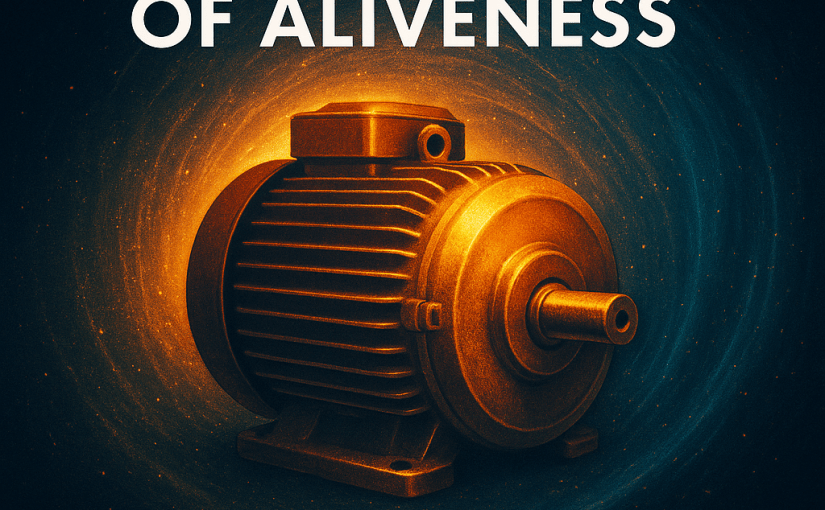
Have you ever walked past a giant generator or one of those industrial motors and felt it in your bones before you even heard it? That low, steady hum… reassuring, powerful, unbothered. It’s just there. Not shouting for attention, not needing to prove itself, but quietly powering the whole building.

That, my friend, is exactly what the sense of “aliveness” feels like.

We’re so used to identifying with thoughts—this endless parade of “should I…”, “what if…”, “oh no…”, “why me…”—that we forget there’s something far more fundamental buzzing underneath. A current that’s been running since before you knew your name, before you knew you had knees that creak when you get up too fast, before you had a list of worries that could rival a grocery bill.

The Dynamo Within

Sit still for a moment. Drop the drama. Forget the story of “you.” What’s left? A hum. Not metaphorical, but a very real sense that something is alive in you. Breathing, pulsing, steady as a ceiling fan in a summer power cut (when the current isn’t steady, you really notice!).

From that humming place, you’ll see your thoughts like little fireflies outside a streetlamp—pretty maybe, sometimes irritating, but clearly not the light itself. Even your precious “identity”—that carefully curated name, job title, Instagram bio—sits outside this hum. The aliveness doesn’t care if you’re CEO of the world or Chief Operator of the Remote Control. It just hums.

Aches, Pains, and Invincibility

Here’s the wild part: even the body’s complaints—sore shoulders, stiff back, that knee that behaves like it’s auditioning for a horror movie soundtrack—can be observed from here. You notice them, yes. But they’re not you. They’re like background noise in a café where the espresso machine hisses, chairs scrape, and the couple at the next table is arguing over pineapple on pizza. None of it stops the café from being a café.

And from here, strangely enough, there’s a feeling of invincibility. Not the Marvel superhero kind where you dodge bullets, but a deeper invincibility. Even mortality feels… well, slightly overrated. Because the hum doesn’t really start or stop—it just is.

Everyday Example: The Fridge

Think of your refrigerator. You don’t stand there all day listening for the motor. But if the hum stops, you immediately sense something’s wrong. Suddenly, all the thoughts appear: “Do I need to call the repair guy? Will my ice cream melt? How fast can I eat three tubs of Ben & Jerry’s?”

Our aliveness is like that fridge motor. It’s constant, reliable, and easily overlooked because it’s always there. But notice it, and suddenly the thoughts about melted ice cream (or anything else) are just noise outside that steady hum.

The Easy Part

Here’s the best news: nobody can deny being alive. This isn’t some mystical achievement reserved for monks in Himalayan caves. You’re alive, right now. The hum is running. Tuning into it doesn’t take effort—it takes not effort. Just notice.

The hard part? We forget. The easy part? We can remember again, any time.

So the next time you find yourself spiraling in thought or getting stuck in an ache, pause. Step back. Listen for the dynamo. That quiet, invincible hum of aliveness.

It’s been there all along, and unlike your fridge, you don’t need to call a repair guy.

Kabir: The Weaver of the Infinite, and the Song of the Inner Beloved

“Ghoonghat ke pat khol re, tohe piya milenge…”
“Lift the veil, beloved — and you shall meet your Eternal Lover.”

The audio version of this blog

In a time divided by caste, creed, and the rigid formalities of religion, one voice emerged from the modest lanes of Kashi. It was not the voice of a scholar, nor of a priest, but that of a weaver — Kabir — whose threads joined the sacred and the everyday, the word and the Wordless.

More than 600 years have passed, and yet his voice rings louder than ever, reminding us of a simple, radical truth: the Divine is within you.

The Weaver and the World: Who Was Kabir?

Born in the 15th century — likely to a Muslim family of the Julaha (weaver) caste — Kabir remains an enigma. Legends say he was found as an infant near a pond in Varanasi and raised by a Muslim couple. Others say he was initiated by the Hindu saint Ramananda. Kabir himself defied labels, calling neither mosque nor temple his home. His religion? Love.

He made his living weaving cloth, but his true vocation was to weave unity across the fragmented landscape of Indian society. Through verses that were sharp, wise, and filled with mystical longing, Kabir sang not about a distant God, but about the Beloved who dwells within the breath.

🎧 Featured Song: “Ghoonghat ke Pat Khol Re” – A Cry of Awakening

In this iconic verse, Kabir speaks directly to the seeker. He says:

“The veil is not on your face, but on your mind.
Remove it — and you will see what has always been.”

The word “ghoonghat” refers to the traditional veil worn by women in northern India. But in Kabir’s poetry, it becomes a symbol — of illusion (maya), of ignorance, of the false belief that the Divine is outside us.

🕊️ Kabir’s Core Teachings: Simple, but Not Easy

1. God Has No Religion

Kabir rejected the labels of Hindu and Muslim, choosing instead to follow sahaj path — the path of naturalness and simplicity.

“Allah and Ram are different words,
but the One behind them is the same.”

2. Ritual Without Love Is Empty

He poked fun at rituals if they lacked bhakti — heartfelt devotion.

“You went to the temple, rang the bell.
But did you ring the bell of your own soul?”

3. The Guru Is the Boat Across the Ocean

Kabir revered the Satguru — the true teacher — as one who can destroy illusion and show the path inward.

“The Guru is greater than God,
for he shows you the path to the Divine within.”

4. Live Fully Awake

To Kabir, the real sin was spiritual sleep — not living consciously.

“Kabir soya kya kare, jo jagay so mare.
Jo mare so ubrejay, jaga hua kya dare?”

“Why sleep through life?
The awakened never fear death.”

🌍 Why Kabir Matters Today

  • He offers direct experience over dogma.
  • He affirms that awakening is possible right now.
  • His poetry is alive across traditions: sung by Sufis, Bhaktas, Bauls, and yogis.

Kabir is not a historical figure to be studied — he is a fire to be caught.

❤️ Kabir’s Love: Fierce, Fiery, and Free

Kabir’s relationship with the Divine was intimate, raw, and immediate. He didn’t seek salvation — he sought the Beloved, not in another world, but in every breath.

“Moko kahan dhoonde re bande,
Main to tere paas mein…”

“Where are you searching for Me, dear one?
I am right next to you. In you.”

🪔 Conclusion: Lift the Veil

To read Kabir is to be challenged. To sing Kabir is to be cleansed. To live Kabir is to tear away the veil and meet the Beloved — not in heaven, but in silence, in song, in surrender.

So once more, close your eyes. Listen:

May Kabir’s voice echo within your soul — until the veil lifts, and the One is seen.

Your House, Your Self: A Chill Take on Life and Beyond

Picture this: you’re standing in the middle of nowhere, just wide-open land stretching out forever. There’s mountains in the distance, a big ol’ sky above, and the ground under your feet. Birds are flapping around up high. Ants are doing their thing on the dirt. There’s some grass and bushes sprinkled around. It’s raw, it’s real, it’s just… there. So, you decide to build a house. You slap up four walls, fence off a chunk of this endless land, and call it yours. Inside, you add more walls—rooms, spaces, your own little world. Boom, it feels like your spot now, separate from all that wild stuff outside.

But here’s the thing about “owning” something—you get attached. Those birds? Their chirping starts to bug you. The ants? Suddenly they’re invaders creeping into your space. You shoo them out. Then, you lock the doors. Finally, you turn your house into a fortress to keep the outside world at bay.

Then one night, a massive thunderstorm rolls through. It’s loud, it’s scary, and it’s shaking your house like it’s made of toothpicks. You start freaking out, thinking, “What if this storm wrecks everything? My house, my space, my whole vibe—gone!” In that panic, you start imagining some big, powerful force that can save you. You call it God, give it a name, maybe even a face. You start tossing out prayers or offerings, like you’re paying for some cosmic insurance to keep your house standing.

Along comes someone else, claiming they’ve got the inside scoop on this God thing. They’re like, “Nah, you’re doing it wrong. I’m tighter with the Big Guy, so listen to me.” You are desperate to keep your house safe. You start trying to impress this person. You hope they’ll put in a good word for you.

But then another storm hits—bigger, badder. Your walls come crashing down, your rooms are toast, and you’re back standing in that same wide-open land. The birds are still flying, the ants are still marching, the grass is still swaying. It’s like nothing changed, but you feel different. Part of you recalls this entire cycle. It feels like déjà vu when you try to hold onto something that was never really yours.

And that’s when you start wondering: Was that space ever mine? Were those walls just a trick I played on myself? This is where things get kinda wild, because this whole setup is like a big metaphor for who we are.

Your House Is Your Body, the Land Is Your Mind

Think of the house as your body, the thing you’re walking around in every day. You build up this idea of “me”—your personality, your likes, your fears, your story. It’s like putting up walls to carve out a little “you” from the giant, endless consciousness that’s all around. Those walls are your skin, your thoughts, your beliefs, all the stuff that makes you feel like a separate person. Inside, you’ve got rooms—your job, your relationships, your dreams, all neatly organized.

The birds and ants? Those are the random thoughts, feelings, or distractions that pop up. They’re only annoying when you’re super attached to keeping your “house” just the way you like it. In the big picture, those thoughts and feelings are just part of the flow. They are like birds in the sky or ants on the ground.

The thunderstorm? That’s life’s way of reminding you nothing lasts forever—change, loss, even death. It shakes up your house, your body, your whole sense of “me.” Scared of losing it all, you turn to something bigger, like God, hoping it’ll keep you safe. You pray, you do rituals, whatever feels right. Then someone comes along saying they’ve got a direct line to that higher power. You follow them, thinking they’ve got the key to keeping your house standing.

But when the storm finally wipes it all out, you’re back in that wide-open land—that big, limitless consciousness. Your body is gone, your “me” fade, but that awareness, that land? It’s still there. It was never yours to own because, guess what? It’s what you are.

The Loop We Keep Living

This whole story is like a loop we’ve been running for ages. We build our houses—our bodies, our identities, our communities, our beliefs—trying to grab a piece of something infinite. We stress about keeping it safe. We pray to powers we hope will protect us. We listen to people who claim they’ve got the answers. But storms always come, and they always take down what we built.

That little memory you feel in the story? That’s your gut telling you this loop doesn’t have to keep going. You start asking: Was it ever mine? Is this “me” I’m so attached to even real? Is that big, endless consciousness something I’m just floating in, or is it actually me?

That’s when things start to shift. You realize the house isn’t a cage—it’s just a temporary setup, a way to experience this wild, infinite land. Your body, your “me,” your walls—they’re tools for living, not for owning. The birds, the ants, the storms? They’re not against you—they’re part of the same big picture you’re in.

Living Free and Easy

Living without clinging to the walls means chilling out in the big, open land without trying to fence it off. It’s about seeing your house—your body, your life—as this cool, temporary thing that’s awesome while it lasts. Let the birds chirp, let the ants march, let the storms roll through. They’re all part of you, like your thoughts and feelings.

You don’t have to ditch the house. Build it, love it, make it yours. Just don’t grip it so tight. When the storm comes, let it do its thing. When the walls fall, no big deal. You’re not just the house—you’re the land, the sky, the mountains, the whole dang scene.

And when you get that, you don’t need a God to save you. You don’t need some guru to show you the way. It’s just you and this big, beautiful, endless vibe—and you’re already right at home.

The Ribhu Gita: The Ultimate Spiritual Shortcut (With a Dash of Humor)

If you’ve ever wondered what the essence of Advaita Vedanta is but don’t have the patience to wade through dense scriptures, then Ribhu Gita is your new best friend. Think of it as the “CliffsNotes” version of enlightenment—direct, no-nonsense, and straight to the point. Even Bhagavan Ramana Maharishi himself held it in the highest regard, specifically recommending Chapter 26 as the essence of Self-Realization.

Now, if Ramana Maharishi tells you something is the most important, you pay attention. So, let’s unpack Chapter 26 of the Ribhu Gita in simple, everyday terms—without getting lost in Sanskrit knots.

Wait… What’s the Ribhu Gita Again?

The Ribhu Gita is part of the larger Shiva Rahasya and is essentially a one-way conversation (the best kind of conversation, some might say) where Sage Ribhu teaches his disciple Nidagha the highest truth: You are already Brahman. You are already free. Now stop complicating things.

That’s it. That’s the whole message. But, of course, humans love overthinking, so Ribhu repeats it in about 2,000 verses just to make sure we get the point.

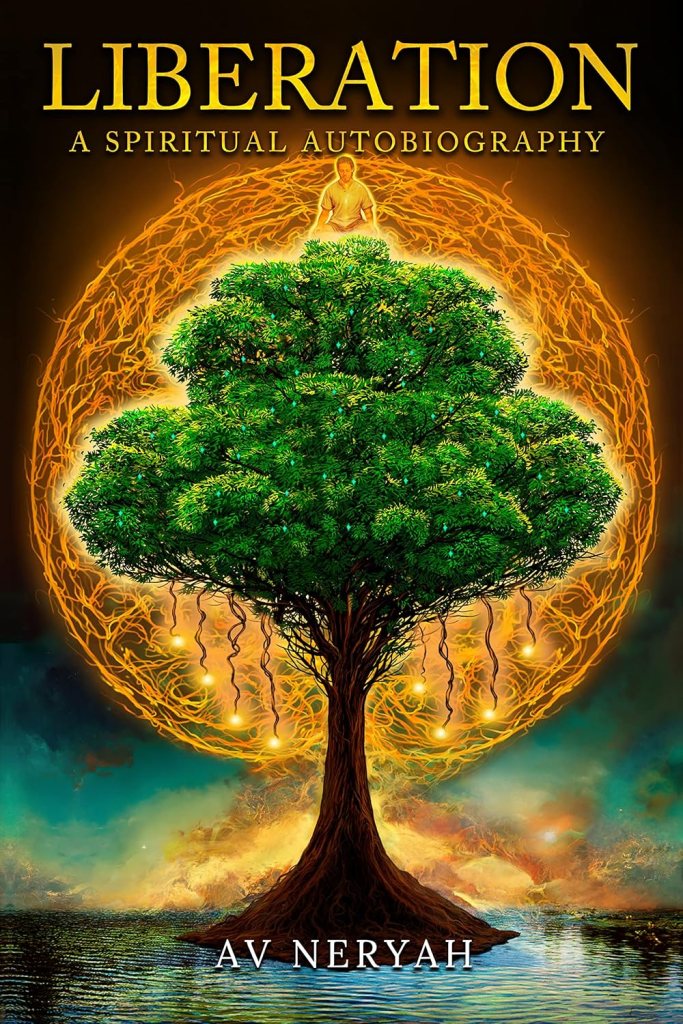
Liberation: A Spiritual Autobiography by Av Neryah is a transformative journey into nondual awakening, blending personal experiences with profound spiritual insights. This compelling memoir serves as both an intimate revelation and a guide for seekers on the path to enlightenment. If you purchase through this link, I earn a small commission at no extra cost to you: Amazon Link.

Chapter 26: The Grand Reveal (Or the Cosmic “Aha!” Moment)

Ramana Maharishi loved Chapter 26 because it’s the ultimate distillation of Advaita Vedanta—it doesn’t bother with rituals, methods, or long philosophical debates. It just drops the truth bomb right in your lap:

✅ You are Brahman.

✅ There is no world, no ego, no suffering—only pure Awareness.

✅ Stop pretending to be anything else.

It’s like when you wake up from a dream where you were being chased by a giant talking banana. The moment you wake up, you instantly know it was all just a dream. You don’t sit around debating whether the banana was real. Similarly, the Ribhu Gita tells you that this waking world is just another illusion—and once you realize that, all your so-called “problems” vanish like morning mist.

Breaking It Down: Ribhu’s Wisdom for the Modern Mind

1. “I am Brahman” – The Ultimate Identity Crisis

Imagine you’re an actor playing a role in a movie. You get so caught up in the character that you forget you’re actually just an actor. Ribhu shakes you awake and says: “Hey, you’re not the role, you’re the pure Awareness behind it all!”

2. “Nothing Ever Happened” – The Cosmic Undo Button

If Brahman is all there is, then whatever we think of as “problems” never really happened in the first place. It’s like getting emotionally involved in a soap opera, only to remember—wait, this is just TV!

3. “Don’t Meditate. Just BE.”

The Ribhu Gita doesn’t ask you to sit in a cave for years chanting mantras (though if you want to, go ahead). Instead, it says, realize you are already That. You don’t become Brahman—you already are. No effort required. It’s like realizing you were wearing your glasses on your head the whole time.

Why This Chapter Matters (And Why You Should Care)

Ramana Maharishi didn’t just love Chapter 26—he recommended chanting it repeatedly until the truth seeps into your bones. Why? Because the human mind is stubborn. It keeps wanting to “do” something to get enlightened. Ribhu says, “Nope, you’re already there. Just realize it!”

So, next time you catch yourself overthinking life, relationships, money, or why WiFi signals are always terrible when you need them most—pause, breathe, and remind yourself:

“I am Brahman. Nothing has ever happened. It’s all good.”

And just like that, the grand cosmic joke is revealed.

Final Thought: If Ribhu Gita were a person, it would be that brutally honest friend who refuses to indulge your drama. Instead of comforting you, they just say, “Dude, wake up. None of this is real.”

And you know what? That’s exactly the kind of tough love we all need.

What do you think? Ready to wake up from the dream? Drop a comment below, unless of course, you’ve already dissolved into pure Awareness. 😆