Remembering P. Jayachandran: The Voice of a Generation

The year was 1979. I was a greenhorn, about a year into my job, in the then Indian Airlines, later known as Air India, and was posted at the Kochi Airport—not the swanky one we see today but the one at the Naval Base, a relic from a time when aviation was more about function than finesse. Back then, Kochi was still called Cochin, and the airport was primarily meant for Coast Guard operations. The runway stretched just about 7500 feet, and the aircraft in use were the sturdy, unglamorous HS 748s, which later made way for the Boeing 737s.

Now, why am I rambling about all this when the topic at hand is a man whose voice melted hearts and whose name was synonymous with melody? Well, dear reader, I am just setting the stage—because if you must know, one of the frequent fliers on the Cochin-Madras (now Chennai) route, Flight IC538, was none other than P. Jayachandran.

Meeting a Legend Over Puttu and Tea

There he was—an aristocratic, slightly rotund man, probably about 5’5”, who often traveled between Cochin and Madras. At that time, I had no clue about the Malayalam or Tamil music scene. My knowledge of music was limited to what played on Chennai’s radios, and the only “melody” I truly appreciated was the sound of the aircraft engine starting on time. But fate, as it often does, had other plans.

It wasn’t at the airport that I truly got to know him, but over several cups of tea and platefuls of puttu at a ramshackle shed just outside what we then called the “terminal.” Either he took a liking to me, or the food was simply too good to pass up, but we ended up sharing many grand breakfasts together. Little did I know then that I was unknowingly rubbing shoulders with greatness.

The Rhythm Behind the Melody

Before he became the celebrated singer we know, Jayachandran was, in fact, a percussionist. He played the tabla (or was it the mridangam I can’t say for sure, but he definitely had rhythm in his veins). This early training in rhythm and beats gave his singing an unmatched sense of timing and fluidity. His deep understanding of taala (rhythm) allowed him to interpret melodies with incredible grace, which later became a defining characteristic of his style.

A Friendly Rivalry with Yesudas

An interesting piece of trivia: during his youth, Jayachandran competed in a music competition at a youth festival. His rival? None other than K.J. Yesudas. Yes, the two titans of playback singing in Malayalam cinema first crossed paths not in a recording studio but on a competition stage. Though Yesudas won that particular contest, it did nothing to deter Jayachandran’s journey. If anything, it was a foreshadowing of the many decades in which both voices would dominate the music industry, often sharing the same playback singing space, yet each retaining a distinct signature.

Jayachandran’s big break came in 1965 when he sang Anuragaganam pole in the Malayalam film Kavyamela, a song that shot him to instant fame. He went on to lend his soulful voice to hundreds of Tamil, Malayalam, and Kannada songs.

The Unassuming Star

Despite being a giant in the industry, Jayachandran remained simple and down-to-earth. My own experience with him reflected this. Years later, after I had left my job and moved to Madras, the music bug finally bit me. I got drawn into Carnatic classical music and found myself needing a guru. Who better to guide me than Jayan ettan (as I respectfully called him)? It was he who recommended me to Trichur Ramachandran, a connection that shaped my musical journey.

A Farewell to a Voice That Never Fades

P. Jayachandran may have left the stage, but his songs continue to live in the hearts of millions. His voice was not just a sound but an emotion—one that carried the essence of love, longing, and devotion. And while I may have met him first as just another passenger on a flight, I now look back and marvel at how life has a way of weaving its own melodies.

Jayan ettan, you will be missed, but your music will forever remain.

Understanding Chris Langan’s CTMU: A Cosmic Perspective

Decoding the CTMU: Chris Langan’s Universe-Sized Brainchild

At nallamadras.com, we often explore fascinating intersections of science, spirituality, and philosophy. From the mysteries of meditation to the connection between music and higher consciousness, we love diving into big ideas that challenge us to think differently. Today, we venture into one of the most ambitious theories out there—the Cognitive-Theoretic Model of the Universe (CTMU) by Chris Langan, often dubbed “the smartest man in America.”

If you’ve enjoyed our previous posts, like “The Interplay of Music and the Cosmos” or Exploring the Philosophy of Oneness”, then buckle up—because the CTMU takes the idea of interconnectedness to a whole new level.

What Is the CTMU? (Breaking It Down)

The CTMU—short for Cognitive-Theoretic Model of the Universe—is Chris Langan’s attempt to explain everything. Yes, everything. It’s a bold framework that combines science, philosophy, and metaphysics into one cohesive theory. In Langan’s words, the CTMU offers a way to “connect mind, matter, and the laws of the universe.” Sounds epic, right? It is. But let’s break it down into digestible pieces.

The Big Ideas of the CTMU

1. Reality as a Self-Simulation

Imagine the universe as the ultimate game of Minecraft, but instead of being created by a programmer, it programs itself. The CTMU suggests that reality isn’t just a physical system—it’s a self-simulating, self-defining process. It’s like the universe is its own coder, constantly evolving and updating itself.

2. The Unity of Mind and Matter

You’ve probably heard debates about whether the mind is separate from the physical world. The CTMU says, “Why not both?” Langan argues that mind and matter are two aspects of the same system. Think of it like a smartphone: the hardware (matter) and the software (mind) work together seamlessly to make the system function.

3. Reality Speaks Its Own Language

Here’s where things get poetic. Langan describes reality as a kind of language. But instead of using words or grammar, it uses logic and structure to “speak itself” into existence. That means every atom, every galaxy, and yes, even you, are part of an ongoing cosmic conversation.

4. The Universe Is Its Own Creator

Who or what created the universe? The CTMU’s answer: the universe created itself. Think of it as a cosmic Russian nesting doll—except this one is infinite, constantly redefining and containing itself.

Why Should You Care About the CTMU?

You might be thinking, “This is fascinating, but how does it apply to me?” Great question. The CTMU isn’t just an intellectual exercise; it offers profound implications for how we see ourselves and our place in the universe.

You’re Not Just in the Universe—You Are the Universe

According to the CTMU, you’re part of the system that defines reality. Everything you think, feel, and do contributes to the greater whole.

Your Thoughts Have Power

If reality is a self-simulating system where mind and matter are intertwined, then your thoughts might play a bigger role than you realize. In essence, the universe might not just be observing you—you’re shaping it, too.

Connecting CTMU to Spirituality

At nallamadras.com, we often explore themes of spirituality and interconnectedness, from meditation techniques to the power of bhajans and kirtans. The CTMU adds a fascinating layer to these discussions.

For example, the idea that the universe is self-aware aligns with spiritual traditions that emphasize oneness and the unity of all existence. Whether you’re drawn to the chants of Krishna Das or the meditative rhythms of shamanic drumming, the CTMU suggests that these practices tap into something fundamental about the universe itself.

Criticism and Why It Doesn’t Diminish Its Value

Of course, the CTMU isn’t without its critics. Some argue it’s too abstract or philosophical to be considered a proper scientific theory. Others say it’s nearly impossible to test or prove.

But let’s be real: when you’re trying to explain everything, a little pushback is inevitable. What makes the CTMU fascinating isn’t whether it’s flawless—it’s the fact that it challenges us to think bigger.

Making It Fun: CTMU and Everyday Life

Let’s lighten things up. If the CTMU is true, it means:

You’re Part of a Giant Simulation: Next time you’re stuck in traffic, just remember—you’re contributing to the cosmic code.

The Universe Is Watching: Not in a creepy way, but in a “we’re all connected” kind of way. Maybe that’s why your coffee tastes better when you’re in a good mood.

Black Holes Are Drama Queens: According to the CTMU, even the universe loves a bit of mystery.

Why the CTMU Matters

Whether you’re a science enthusiast, a spiritual seeker, or just someone who loves asking big questions, the CTMU has something to offer. It’s a reminder that we’re all part of something far bigger than ourselves—a vast, interconnected system that’s constantly evolving.

Chris Langan’s work invites us to see the universe not just as a collection of atoms and forces but as a living, breathing system of which we’re an integral part. And that, in itself, is a pretty profound takeaway.

Curious about how this ties into other concepts we’ve explored? Check out more on spirituality and daily living or the philosophy of interconnectedness.

Let me know what you think—does this cosmic theory expand your perspective, or leave you scratching your head? Either way, the conversation is worth having!

Let me know if you’d like further edits, more links, or tweaks to the tone!

Guru Dutt: The Visionary of Hindi Cinema

Guru Dutt, a name synonymous with poetic storytelling and cinematic brilliance, remains one of the most revered filmmakers in the history of Indian cinema. With timeless classics like Pyaasa and Kaagaz Ke Phool, he created a unique space for himself as a pioneer whose artistry transcended the boundaries of conventional filmmaking. Though his life was tragically short, his legacy continues to inspire filmmakers and cinephiles alike.

Early Life and Background

Born as Vasanth Kumar Shivashankar Padukone on July 9, 1925, in Bengaluru, Guru Dutt hailed from a Saraswat Brahmin family. His parents, Shivashankar Rao Padukone and Vasanthi Padukone, were well-educated individuals. His father worked as a headmaster and later as a banker, while his mother was a teacher and writer. The family moved frequently due to his father’s job, which gave Guru Dutt exposure to different cultures during his formative years.

From an early age, Dutt showed an inclination towards the arts. His mother’s involvement in literature and his uncle’s influence as a writer and philosopher nurtured his creative sensibilities. After completing his early education in Calcutta (now Kolkata), Guru Dutt joined Uday Shankar’s India Cultural Centre in Almora, where he learned dance and drama. This training would later inform his unique cinematic style, which blended visual lyricism with deeply emotional narratives.

Entry into the Film Industry

Guru Dutt’s entry into the film world was serendipitous. After completing his training in Almora, he worked briefly at a telephone company before finding his way to the Bombay (now Mumbai) film industry. His first major break came in 1944 when he joined Prabhat Film Company in Pune as a choreographer. During this time, he forged a lifelong friendship with Dev Anand, another legend of Indian cinema.

It was Dev Anand who gave Guru Dutt his first opportunity to direct. Anand had promised him that if he ever produced a film, Dutt would direct it. True to his word, Dev Anand’s production banner, Navketan Films, launched Guru Dutt as a director with Baazi (1951), a noir-inspired crime thriller that was an instant success.

The Golden Era of Guru Dutt

With Baazi, Guru Dutt established himself as a director who could balance commercial appeal with artistic innovation. His films often dealt with themes of human vulnerability, unrequited love, and societal hypocrisy. This combination of emotional depth and technical brilliance became the hallmark of his work.

Pyaasa (1957): The Eternal Classic

One of Guru Dutt’s most celebrated films, Pyaasa is a poignant tale of a struggling poet, Vijay, who battles rejection and materialism in a callous world. The film’s haunting music, composed by S.D. Burman with lyrics by Sahir Ludhianvi, amplified its emotional resonance. Songs like “Jaane Woh Kaise Log The” and “Yeh Duniya Agar Mil Bhi Jaye” remain timeless masterpieces. Pyaasa was not only a commercial success but also received critical acclaim worldwide, earning a place in several “greatest films of all time” lists.

Kaagaz Ke Phool (1959): Ahead of Its Time

Kaagaz Ke Phool, India’s first CinemaScope film, is often regarded as Guru Dutt’s magnum opus. A semi-autobiographical tale, it portrays the rise and fall of a filmmaker, reflecting Dutt’s own struggles with fame and loneliness. Though it was a commercial failure upon release, the film has since been hailed as a masterpiece, with its evocative visuals and melancholic themes lauded by critics and audiences alike. The iconic song “Waqt Ne Kiya Kya Haseen Sitam,” rendered by Geeta Dutt, captures the essence of the film’s tragic beauty.

Chaudhvin Ka Chand (1960): A Romantic Triumph

Returning to commercial cinema after the debacle of Kaagaz Ke Phool, Guru Dutt directed Chaudhvin Ka Chand, a romantic drama set against the backdrop of Lucknow’s Nawabi culture. The film’s title song, sung by Mohammed Rafi, became an anthem of love and remains one of the most beloved songs in Indian cinema.

Personal Life

Guru Dutt married Geeta Dutt, a celebrated playback singer, in 1953. The couple had three children: Tarun, Arun, and Nina. Their marriage, however, was fraught with difficulties, stemming from Dutt’s intense work schedule, his rumored affair with actress Waheeda Rehman, and Geeta’s struggle with alcoholism. Despite their turbulent relationship, Geeta’s voice became an integral part of Guru Dutt’s films, lending emotional depth to his storytelling.

Legacy as a Filmmaker

Guru Dutt’s films were often described as being ahead of their time. He pushed the boundaries of Indian cinema by experimenting with narrative techniques, lighting, and visual composition. His use of chiaroscuro lighting, inspired by German Expressionism, added a layer of poetic intensity to his frames. Thematically, his films delved into existential angst, societal hypocrisy, and the futility of material pursuits, resonating deeply with audiences long after their release.

Beyond his directorial ventures, Guru Dutt also excelled as an actor. His nuanced performances in films like Sahib Bibi Aur Ghulam (1962), directed by his protégé Abrar Alvi, showcased his ability to convey vulnerability and depth with remarkable subtlety.

The Tragic End

Despite his professional success, Guru Dutt’s personal life was marked by loneliness and dissatisfaction. On October 10, 1964, he passed away at the age of 39 under mysterious circumstances, widely believed to be a suicide. His untimely demise left a void in Indian cinema, but his work continues to inspire filmmakers and audiences around the globe.

Filmography

Here is a list of Guru Dutt’s notable works:

  • Baazi (1951)
  • Jaal (1952)
  • Aar Paar (1954)
  • Mr. & Mrs. ’55 (1955)
  • C.I.D. (1956)
  • Pyaasa (1957)
  • Kaagaz Ke Phool (1959)
  • Chaudhvin Ka Chand (1960)
  • Sahib Bibi Aur Ghulam (1962)

Guru Dutt: The Eternal Legacy

Guru Dutt’s contributions to Indian cinema are immeasurable. He was not merely a filmmaker but a visionary who used the medium of cinema to explore the depths of human emotion and societal complexities. His works, though often melancholic, celebrated the beauty of life and art.

In many ways, Guru Dutt was indeed ahead of his time. His innovative storytelling, technical brilliance, and ability to weave poetry into cinema remain unmatched. Today, as we revisit his films, we are reminded of his genius and the enduring power of his artistry. Guru Dutt’s legacy is a testament to the timeless appeal of cinema that speaks to the heart and soul.

Through his films, Guru Dutt continues to live on, inviting each generation to discover and cherish the magic of his cinematic world.

Sharanagati: Life’s Algorithm, Synchronicity, and Surrender

In case you feel lazy to read, here’s an audio synopsis of this article!

Have you ever wondered if life operates on some hidden algorithm, much like the ones YouTube and Facebook use to serve us cat videos and conspiracy theories? One minute, you’re innocently scrolling, and the next, you’re sucked into a rabbit hole of “10 Ways to Bake Banana Bread.” But what if our body-mind complex works on a similar system, curating our experiences based on our focus? And what if Hindu philosophy has been telling us this for millennia through concepts like sharanagati or surrender?

Trouble Begets Trouble—The Universe’s Auto-Suggestions

There’s an old saying: “Trouble begets trouble.” It’s almost as if the universe runs on the same principle as an algorithm: “If you liked worrying about that minor inconvenience, here are five more crises to spiral into.” Sound familiar? Hindu philosophy would call this the power of the mind’s focus, aptly explained in the Bhagavad Gita (Chapter 6, Verse 5):

“One must elevate, not degrade, oneself by one’s own mind. The mind is the friend of the conditioned soul, and its enemy as well.”

In other words, your mind can be your best friend or that nosy neighbor who keeps bringing up your most embarrassing moments. The choice, apparently, is yours.

The Great Car Color Conundrum

Allow me to confess a minor existential crisis: the time I couldn’t decide between leasing a black or steel-grey car. As if this decision would somehow alter the course of human history, I agonized over it. And then, as if the universe were trolling me, every car I saw on the road was black. It was like a cosmic nudge saying, “Pick black already and move on with your life!”

Psychologists call this the Baader-Meinhof phenomenon, or frequency illusion. Hindu sages, of course, knew this eons ago. They called it smarana—what you hold in your mind manifests in your reality. My fixation on black cars tuned my mental antenna to spot every single one on the road. The universe wasn’t trolling me; it was just playing by the rules of perception. That’s some algorithmic precision!

Parking Spots and Divine Surrender

Now let’s talk about parking. There’s this notoriously crowded street near where I live. Getting a spot there is akin to winning a cosmic lottery. Naturally, I avoided it. But life has a way of forcing us to confront what we despise. Whether it was a dinner invitation or some unavoidable errand, I kept finding myself on that street. At first, I resisted, grumbled, and railed against my bad luck. Then I thought, “Okay, Universe, I give up. You win.”

And just like that, parking spots started appearing out of nowhere. The Gita beautifully captures this shift (Chapter 18, Verse 66):

“Abandon all varieties of duty and simply surrender unto Me. I shall deliver you from all sinful reactions. Do not fear.”

Surrender, or sharanagati, is not about waving a white flag. It’s about aligning with the bigger picture, trusting that the Supreme Algorithm (a.k.a. the Universe, God, or your term of choice) has got this. When I let go of control, the parking gods smiled upon me. Coincidence? Perhaps. But surrendering felt a lot better than fuming.

Synchronicity: Cosmic Humor at Work

Carl Jung called it synchronicity; Hindu philosophy simply calls it lila—the divine play. It’s when events align so perfectly, it feels like a wink from the cosmos. The Isha Upanishad offers profound insight into this interconnectedness:

“The Self is everywhere, within and without. Whoever sees all beings in the Self and the Self in all beings feels no hatred.”

When you recognize the interconnectedness of everything, life stops feeling random and starts feeling orchestrated. Like when you think about an old friend, and they call you out of the blue. Or when you’re searching for answers, and a random podcast or book gives you just the clarity you need. It’s the cosmic algorithm in action, personalized just for you.

The Universe’s Sense of Humor

Let’s not forget that life’s algorithm comes with a built-in sense of humor. It’s like that mischievous friend who knows exactly how to push your buttons but ultimately has your back. You’re trying to plan every detail, and life goes, “How cute. Here’s a completely unexpected curveball.”

Take my parking saga. I spent months stressing over something entirely out of my control, only to realize that surrendering—truly letting go—opened the door to solutions I couldn’t have imagined. The universe, it seems, rewards those who stop micromanaging.

The Vedantic Takeaway

Hindu philosophy isn’t just about renunciation or abstract wisdom; it’s profoundly practical. Whether it’s the Bhagavad Gita urging us to master our minds, the Upanishads reminding us of our interconnectedness, or the concept of sharanagati teaching us the art of surrender, these ideas are as relevant today as ever.

So, do we all have a programmable algorithm within us? Absolutely. Is synchronicity real, or is it just our minds playing tricks? Maybe a bit of both. Is surrender the secret to peace of mind? Definitely worth a try.

In the end, life’s algorithm has a sense of humor. You might as well laugh along with it, trust the process, and enjoy the ride. Who knows? The universe might even throw in a good parking spot as a bonus.

If I Know What I Know and Know What I Don’t Know, Do I Know Infinity? Insights from the IIT Baba of Kumbh Mela

Infinity. Just saying the word makes you feel like a wise sage sitting atop a mountain, contemplating the universe. But what does it really mean? And if you know what you know and know what you don’t know, does that mean you’ve unlocked the secret of infinity? Let’s unpack this cosmic riddle with a good dose of curiosity—and a little humor.

Interestingly, this very idea was recently popularized by the now-famous IIT Baba, a former engineer-turned-mystic discovered at the Kumbh Mela. His take? “The secret to wisdom lies in knowing what you don’t know, for that is where infinity begins.” Intriguing, right? Let’s dive in!

Step 1: Knowing What You Know

Let’s start with the easy part. Knowing what you know is like walking into your favorite coffee shop and confidently ordering your go-to filter coffee without hesitation. It’s the stuff you’ve mastered: your favorite ragas, the lyrics to your preferred bhajans, and maybe even your knack for cracking the perfect dosa batter recipe.

But here’s the thing—what you know is just a tiny drop in the vast ocean of knowledge. You might know how to sing a perfect Alaap, but do you know why your neighbor’s dog barks at precisely 3:17 PM every day? Probably not. And that’s okay.

Step 2: Knowing What You Don’t Know

Now we’re stepping up the ladder of wisdom. Knowing what you don’t know is like shining a flashlight into a dark room and realizing there’s way more space than you ever imagined. It’s humbling, sure, but also exciting. It’s like acknowledging that while you’ve learned 50 ragas, there are hundreds more you’ve never even heard of.

This brings us back to IIT Baba’s statement. He suggests that understanding what you don’t know is like opening the door to infinity itself. Once you realize how much lies beyond your grasp, you begin to appreciate the boundless possibilities of life—and maybe even stop stressing about the things you think you’re supposed to know.

Step 3: Does This Mean You Know Infinity?

Now comes the big question: If you know both what you know and what you don’t know, does that mean you’ve cracked the meaning of infinity? Short answer: no. Long answer: not even close.

Infinity isn’t something you “know.” It’s something you experience when you come face-to-face with the never-ending vastness of the unknown. It’s like walking on a beach and realizing no matter how far you go, there’s always more sand, more waves, and more sunsets to chase.

Think of it this way:

• You know some ragas.

• You don’t know all the ragas.

• But even if you master all the ragas, there will always be improvisations, nuances, and unheard melodies waiting to be explored.

Infinity isn’t a finish line; it’s the eternal realization that the journey never ends.

Step 4: The Cosmic Joke

Here’s the funny part: Infinity is the ultimate cosmic joke. The more you try to grasp it, the more it slips through your fingers. It’s like trying to pin down the meaning of life at 3 AM after one too many cups of chai. Just when you think you’ve got it, another question pops up.

In a recent discourse, IIT Baba joked, “In engineering, we solve for X; in life, we embrace the unknown Y.” This light-hearted analogy captures the shift from seeking concrete answers to embracing life’s mysteries—a transition from the finite to the infinite.

Step 5: The Practical Takeaway

So, what can you do with this newfound (non)understanding of infinity? Here are some tips:

1. Embrace Humility: Knowing what you don’t know is already a sign of wisdom. Celebrate it!

2. Stay Curious: The joy of life isn’t in knowing everything; it’s in discovering new things every day.

3. Enjoy the Journey: Whether you’re learning a new raga, exploring spirituality, or just trying to figure out why your Wi-Fi doesn’t work, remember—it’s all part of the infinite ride.

Conclusion: Infinity Is the Best Kind of Mystery

At the end of the day, infinity isn’t meant to be understood. It’s meant to be lived. It’s the never-ending curiosity that keeps us learning, laughing, and searching for answers (and, occasionally, for our lost car keys).

So, the next time someone asks you, “Do you know the meaning of infinity?” just smile and say, “I know what I know, and I know what I don’t know—and that’s more than enough.”

And then offer them some filter coffee. Because while infinity might be infinite, good coffee is a universal constant.

The Global Love Affair with Sanskrit Chants—And Why Pronunciation Matters

Have you noticed how Sanskrit chants and mantras have taken the world by storm? From yoga studios in New York to meditation retreats in Bali, ancient verses are now a global soundtrack for peace and positivity. It’s truly heartwarming (and a bit mind-blowing) to hear the Hanuman Chalisa or the Gayatri Mantra echoing through spaces where you’d least expect it—sometimes accompanied by a guitar riff or a soft jazz saxophone!

Let’s face it—there’s something magical about these chants. Whether it’s the soothing cadence of a shanti mantra or the pulsating energy of a kirtan, Sanskrit seems to have this uncanny ability to calm the mind and stir the soul at the same time. And modern arrangements with Western instrumentation? Chef’s kiss! Artists have been blending tablas with cellos, harmoniums with keyboards, and even sitars with electric guitars—and somehow, it works beautifully.

But, (and here comes the slightly awkward part), there’s one teeny-tiny issue that sometimes makes us cringe. Pronunciation.

Let’s admit it—Sanskrit isn’t exactly the easiest language to roll off the tongue, especially if you weren’t raised hearing it. But here’s the thing—when mantras are mispronounced, they don’t just lose their charm. According to tradition, they might also lose their shakti (spiritual power). Some die-hard purists even go so far as to say that a botched pronunciation can do more harm than good! Yikes!

For instance, a slight slip in pronunciation can turn “shanti” (peace) into something entirely different. Imagine chanting for peace but accidentally invoking a headache instead—definitely not the vibe we’re going for in meditation class!

But don’t worry—there’s an easy fix. Learning the correct pronunciation isn’t as daunting as it sounds. Many teachers today, especially those blending Eastern and Western music, are making it super accessible. And if you’re serious about perfecting those chants, you might want to work with someone who’s got a strong foundation in Sanskrit and music.

Shameless plug alert! Over at BhaktiMusic.com, you’ll find just that—a teacher who knows the ropes of both Indian and Western music and is well-versed in Sanskrit. Whether you’re a beginner or someone looking to refine your skills, this is a great place to start.

So, the next time you belt out the Hanuman Chalisa or hum along to a shanti mantra, go ahead and enjoy the rhythm and melody—but maybe also take a moment to check if you’re getting the words right. After all, when it comes to mantras, the details matter as much as the devotion.

Happy chanting, and may your mantras always hit the right notes—spiritually and phonetically!

When Music Meets the Divine – Exploring Spiritual Sounds Through Cultures and Instruments

Introduction

Music has always been more than just entertainment—it’s a bridge to something greater. From the soothing strains of bhajans to the rhythmic beats of shamanic drumming and the hypnotic spins of whirling dervishes, spiritual music transcends boundaries and invites us to experience profound moments of peace and connection.

As someone deeply immersed in music and spirituality, I often explore these connections through my own journey of teaching and learning music at bhaktimusic.com—a space where music is more than sound; it’s a tool for self-discovery and devotion. Let’s explore how these traditions continue to inspire and transform lives.

Bhajans – Timeless Devotion with Modern Touches

Bhajans have long been a staple in Indian spiritual practices. Their soulful melodies and repetitive chants create an atmosphere of devotion, whether sung in temples or intimate gatherings.

Popular Bhajans for Reflection:

“Achyutam Keshavam” – Perfect for modern arrangements, including guitar accompaniment.

“Om Jai Jagdish Hare” – A well-loved classic that invites communal singing.

“Hey Govinda Hey Gopala” – Works beautifully with acoustic guitars and fingerpicking styles.

Exploring New Instruments:

Traditionally accompanied by the harmonium and tabla, bhajans today often feature the guitar, blending ancient devotion with contemporary sounds. If you’re curious about integrating instruments into your devotional practice, I often share tips and techniques at bhaktimusic.com, where I teach how to adapt bhajans for guitars and other modern setups.

Krishna Das – Bringing Bhakti to the Global Stage

Few artists have bridged Eastern devotion and Western melodies as effectively as Krishna Das. His soulful renditions of kirtans, including “Om Namah Shivaya” and “Baba Hanuman”, have attracted millions worldwide, proving that bhakti music transcends cultures.

Lessons from Krishna Das’s Style:

• Simplicity Works: He uses repetitive patterns and simple chords that are easy to follow.

• Emotional Depth: His raw voice conveys heartfelt devotion, making his music deeply personal.

• Modern Instruments: Incorporating the guitar alongside traditional instruments has made his music accessible to new audiences.

At bhaktimusic.com, I draw inspiration from Krishna Das’s techniques and offer lessons on how to replicate his style, whether you’re a beginner or someone looking to deepen your practice.

Shamanic Drumming – Rhythms of Nature

Shamanic drumming, often described as the heartbeat of the earth, is used to enter trance-like states for healing and meditation. Its repetitive beats align with natural rhythms, creating a deeply grounding experience.

How to Incorporate Drumming:

Pairing drumming patterns with guitar melodies can add layers to devotional sessions. I often demonstrate such combinations during workshops at bhaktimusic.com to help participants explore this fusion in their own practice.

Whirling Dervishes – Dancing to the Divine

The Sufi whirling dervishes use movement to reach a state of divine ecstasy. Their dance, accompanied by flutes and drums, symbolizes a spiritual journey toward unity with the cosmos.

Bringing Sufi Influences into Practice:

Soft guitar melodies or chimes can capture the flowing, meditative essence of this tradition. At bhaktimusic.com, I share examples of how to adapt Sufi rhythms for modern instruments, keeping their spiritual essence intact.

Why Music and Spirituality Go Hand in Hand

Studies show that music activates areas of the brain associated with emotion and memory, helping listeners reach meditative and joyful states. But long before neuroscience confirmed this, spiritual traditions used music as a tool for devotion, healing, and connection.

Quote to Reflect On:

“Music gives a soul to the universe, wings to the mind, flight to the imagination.” – Plato

Whether you’re learning to play devotional songs or simply listening, music has the power to calm the mind and uplift the soul. And if you’re curious about exploring these practices further, I share techniques and resources at bhaktimusic.com to help you make music an integral part of your spiritual journey.

Conclusion: Music as a Path to the Divine

From ancient bhajans to the hypnotic spins of whirling dervishes, music continues to be a universal language of devotion. Whether you’re chanting Krishna Das’s mantras, tapping into tribal beats, or simply strumming your guitar in quiet prayer, the goal remains the same—connecting with the divine.

And remember, whether you’re just starting your musical journey or refining your skills, bhaktimusic.com is always here to support you with tools and techniques to make your experience more enriching. After all, the right note can open doors to worlds beyond words. 🎶✨

What’s Easier to Accept—Gravity or Reincarnation?

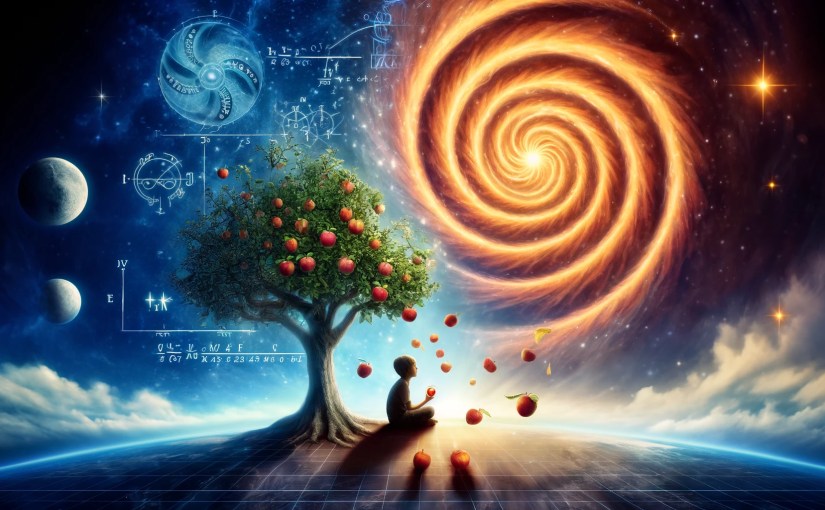
Ever had one of those moments where you drop your phone, watch it fall in slow motion, and think, Why, gravity, why? Well, Isaac Newton had a similar moment—except it was an apple, and instead of cursing, he invented physics as we know it.

Now, what if I told you reincarnation might have as much credibility as gravity? Gasp! Before you throw a physics textbook at me, hear me out.

Science is all about testing ideas, tossing them aside when something better comes along, and then acting like the new theory was obvious all along. So why can’t we apply the same logic to reincarnation? Let’s take a journey through science, skepticism, and maybe even past lives.

Gravity: The OG Mystery Solver

Picture this—Newton’s chilling under an apple tree. Bonk! The apple falls, and instead of rubbing his head and moving on, he goes, “Hmm, what if there’s something pulling it down?” Fast-forward a few equations, and voilà—gravity is born.

But here’s the kicker. Newton’s idea wasn’t the final word. Enter Einstein, who shook things up and said, “Actually, it’s spacetime bending like a yoga pose.” So gravity went from being a mysterious force to a cosmic fabric stretch session.

And guess what? Scientists are still poking holes in this theory and searching for answers. Moral of the story? Science never stops asking questions—even about things we thought were settled.

Reincarnation: The Comeback Kid

Now let’s talk about reincarnation—often dismissed as a topic reserved for mystics and overly curious cats. But what if it’s more than that?

Take this: Dr. Ian Stevenson and Dr. Jim Tucker at the University of Virginia spent decades collecting cases of kids who claimed to remember past lives. I’m not talking about vague statements like “I used to be a queen.” These kids gave names, dates, and towns. Some even described how they died—and their details checked out. Spooky, right?

One child, for example, remembered dying in a plane crash during World War II. He knew the type of plane, the ship it launched from, and even the names of the crew. Either he had an insanely good imagination, or he was onto something. (med.virginia.edu)

So, is this proof? Not quite—but it’s enough to make even the most die-hard skeptic pause mid-eye roll.

Science’s Hypothesis Addiction

Here’s where it gets fun. Science loves hypotheses. Theories are basically science’s way of saying, “We don’t know for sure, but this is our best guess right now.”

Take GLP-1 drugs like Ozempic, for instance. The first hypothesis? They help with weight loss by making you feel full. Then scientists poked around and found that these drugs actually travel to the brain and mess with cravings—not just for food but also for alcohol and cigarettes. (nypost.com)

So, the new hypothesis? GLP-1 drugs are like tiny therapists for your brain, saying, “Put down the cookie and the wine glass.”

What’s the lesson here? Even in hard science, theories evolve. Why should reincarnation be any different?

Memories That Won’t Quit

Now, back to those kids who remember past lives. What’s the explanation? Psychological phenomena? Genetic memory? The Matrix glitching? Or maybe—just maybe—they have been here before.

Take the case of Shanti Devi in India, who claimed she remembered her previous life in a different town. She knew the name of her “past-life husband,” the layout of their house, and details about her death. Investigators verified many of her claims, and even skeptics scratched their heads. (en.wikipedia.org)

Is reincarnation the answer? Well, it’s as plausible as the idea that invisible forces (hello, gravity) keep us glued to Earth.

Why Science Should Chill Out

Let’s face it—science can be a bit of a know-it-all sometimes. But the truth is, it’s constantly reinventing itself. Remember when we thought the Earth was flat? Or that bloodletting cured diseases? Or that Pluto was a planet? (RIP, Pluto.)

Theories come and go faster than fashion trends, and reincarnation might just be waiting for its turn on the runway. After all, if we’re open to dark matter, string theory, and parallel universes, why not give reincarnation a seat at the table?

It’s All About Keeping an Open Mind

If we accept gravity because we see it in action, shouldn’t we at least consider reincarnation when faced with kids spouting suspiciously specific past-life details?

Science is about exploration, not shutting doors. Maybe reincarnation isn’t proven yet, but neither was gravity until Newton turned an apple into a lightbulb moment.

So the next time a toddler starts describing a past life as a 1920s gangster or medieval knight, don’t brush it off. Instead, grab a notepad—you might just be documenting the next big scientific breakthrough.

Who knows? Maybe you were Newton in a past life. Or maybe you were the apple. Either way, stay curious.

Sources and Further Reading:

• University of Virginia Division of Perceptual Studies: med.virginia.edu

• GLP-1 Drug Studies: nypost.com

• Case of Shanti Devi: en.wikipedia.org

Final Thought:

Gravity keeps us grounded. Reincarnation might explain why we feel like we’ve been here before. Both deserve a second look—and maybe even a second life.

Escaping the Matrix: A Journey to Authentic Living

Here’s my take, based on some real-life trial and error. I’ve dabbled in deep religiosity and ritualism—think priests at home, elaborate worship sessions, and enough incense smoke to trigger a fire alarm. Did all that effort bring eternal happiness? Spoiler alert: not even close.

Like everyone else on a quest for answers, I tried all kinds of remedies—even experimenting with medicinal herbs (yes, the kind that makes you question the nature of existence). The outcome? A whole lot of nothing. Zero. Nada. Or as my uncle loves to say, “One big, fat zero!”

Then one day, I stumbled upon something—an idea, a perspective—and it was like trumpets blaring and bells ringing in my head. Suddenly, there it was: the Matrix, clear as day.

Is Everything Part of the Matrix?

Before we talk escape plans, let’s address the elephant in the room: religion, spirituality, and their shiny promises of salvation. Every religion seems to pitch its own flavor of God, saints, angels, heaven, and hell. It’s like a spiritual buffet—but isn’t it all just part of the Matrix?

  • The Concept of God: Is this all-powerful being sitting in the cosmic director’s chair, orchestrating your life like a reality TV show? Or is God just the Matrix’s version of the tech support team—available only when things go horribly wrong?
  • Saints and Angels: Middle management. They’re like the IT guys of the divine world—”Have you tried praying?”
  • Heaven and Hell: The ultimate carrot and stick. Behave, and you get the VIP suite. Mess up, and you’re in the basement forever. Doesn’t this feel suspiciously like part of the control system?

If these concepts are part of the Matrix, then looking to them for escape might be like asking the prison guard for the keys.

The Big Question: Why Escape?

Before you make a jailbreak, ask yourself—why? What’s so bad about this Matrix? Sure, it has its share of heartbreak, traffic jams, and questionable reality TV, but it also has pizza and Wi-Fi. Are we just looking for a way out because we’re wired to think there’s something better?

Escaping isn’t just about leaving the bad behind; it’s about finding something real. So how do we do that? Glad you asked.

Steps to Escape the Matrix (Or at Least Bend It to Your Will)

1. Wake Up (Literally and Figuratively)

  • Practicing Mindfulness: Stop scrolling Instagram like a caffeinated squirrel and pay attention to your life. Meditation can help here. Sit still, breathe, and try not to think about snacks.
  • Questioning Everything: Why do you do what you do? Is it because you want to or because society (read: the Matrix) expects it? From your job to your relationships, start asking, “Is this me?”

2. Detach from the Drama

The Matrix thrives on drama. It’s like that one friend who’s always embroiled in some ridiculous soap opera.

  • Embrace Impermanence: Happiness, sadness, success, failure—they’re all just passing clouds. Stop clinging to them like a toddler with a balloon.
  • Let Go of Labels: Stop defining yourself by your job title, relationship status, or how many followers you have. You’re not a brand; you’re a human.

3. Turn Down the Noise

Modern life is basically the Matrix on steroids—a nonstop barrage of notifications, ads, and unsolicited advice. Silence it.

  • Digital Detox: Try spending a day without your phone. You’ll feel like a lost puppy, but it’s worth it.
  • Simplify: Do you really need 37 pairs of shoes or that subscription box for exotic tea leaves? Probably not. Simplify your life, and you’ll feel less trapped.

4. Connect with the Real

  • Nature: Step outside and connect with nature. Hug a tree—yes, actually hug it. It might feel silly, but it’s surprisingly grounding (just check for ants first; trust me on this one). Watch the sunset, let the colors wash over you, and feel the earth beneath your feet. Nature is like a cheat code for escaping the artificial.
  • Community: Talk to actual humans. Not in a group chat—in person. Share a meal, a laugh, or an awkward silence. Real connection beats digital likes any day.

5. Master Your Mind

The Matrix is strongest where it controls your thoughts. Think about it: every fear, every doubt, every limitation starts in your mind. If you can master your mind—recognize the patterns, question the narratives, and rewrite your inner script—you’re halfway out.

6. Serve Something Bigger

Want to feel like Neo? Do something that matters.

  • Help Others: Volunteer, mentor, or just be kind to that grumpy neighbor. Serving others can break the illusion of separateness.
  • Pursue Your Purpose: What lights you up? Find it and do it.

Will You Ever Fully Escape?

Here’s the kicker: Maybe you can’t completely escape. I remember this one time, nearing the end of a grueling 10-day Vipassana meditation camp. After days of silence and self-reflection, the realization hit me—what if the very pursuit of escape is just another layer of the trap?

So, fellow seeker, the question isn’t just how to escape the Matrix but how to live fully within it without being a prisoner. You’ve got the keys. Now go unlock something magical—just try not to break the Wi-Fi on your way out.

Philosophical Insights: Stones, Dogs, and Perception

As the old saying goes, ‘When you find the stone, the dog is nowhere to be seen. But when the dog is around, there’s no stone to be found.’

Now, I know what you’re thinking. You’re picturing some delinquent youth, pockets bulging with pebbles, desperately searching for a canine target to unleash their pent-up… well, I don’t even want to think about what they’d unleash. Let’s just say it involves poor animal husbandry and a distinct lack of empathy. And then, the cosmic joke: when the stones are plentiful, the streets are eerily devoid of dogs. And when Fido decides to take his morning constitutional, the world’s supply of throwable projectiles mysteriously vanishes.

Let me assure you, dear reader, this isn’t some twisted commentary on the availability of ammunition for canine harassment. This is deep. This is philosophical. This is the kind of profound wisdom that makes you stare blankly into the middle distance and question the very fabric of reality.

You see, the proverb isn’t about actual stones and actual dogs. It’s about a stone statue of a dog. Mind. Blown.

Think about it. When you focus on the material, the cold, hard, grey stone that comprises the statue, the illusion of the dog vanishes. It’s just a lump of rock, shaped vaguely like a four-legged creature. The artistry, the lifelike representation, the very essence of “dog-ness” disappears.

But then, when you step back and admire the statue for its artistry, for the way the sculptor has captured the curve of a tail or the alert tilt of a head, the stone disappears. You’re no longer seeing a collection of minerals; you’re seeing a dog. A frozen, silent, eternally vigilant dog, but a dog nonetheless.

This, my friends, is a metaphor for… well, pretty much everything, really.

Take my garden gnome, for example. (Don’t judge me. Everyone has their coping mechanisms.) When I focus on the chipped paint, the slightly wonky hat, the unsettlingly vacant stare, I see a cheap, mass-produced piece of kitsch. It’s just painted resin, destined to fade and crack in the harsh glare of the afternoon sun. The material is all I see.

But then, when I squint a little, and maybe tilt my head, I can almost see him as a tiny guardian, watching over my petunias, warding off evil slugs with his pointy hat. He becomes a whimsical symbol of domestic tranquility. The gnome-ness takes over. The resin disappears. (Mostly.)

This principle, this stone-dog duality, extends to our interactions with other people, too. When we focus on their flaws, their annoying habits, the time they “borrowed” our favorite sweater and returned it smelling faintly of curry, all we see is the stone. We see the imperfections, the rough edges, the things that irritate us.

But when we choose to focus on their good qualities – their kindness, their humor, the fact that they occasionally bring us coffee – the dog emerges. We see the whole person, the complex and imperfect but ultimately valuable individual.

The problem, of course, is that we can’t seem to see both at the same time. We’re constantly shifting our focus, zooming in and out, oscillating between stone and dog, between flaw and virtue. It’s exhausting. It’s like trying to simultaneously pat your head and rub your stomach, except instead of a mild coordination challenge, you’re grappling with the fundamental nature of human perception.

So, the next time you find yourself fixated on someone’s shortcomings, remember the stone and the dog. Remember that there’s more to them than their rough edges. And maybe, just maybe, try looking at your garden gnome from a slightly different angle. You might be surprised at what you see. Or, you might just see a chipped piece of resin. Either way, at least you’ve given your brain a good workout.